Locations:





Findings call for changes to allocation system, researchers say
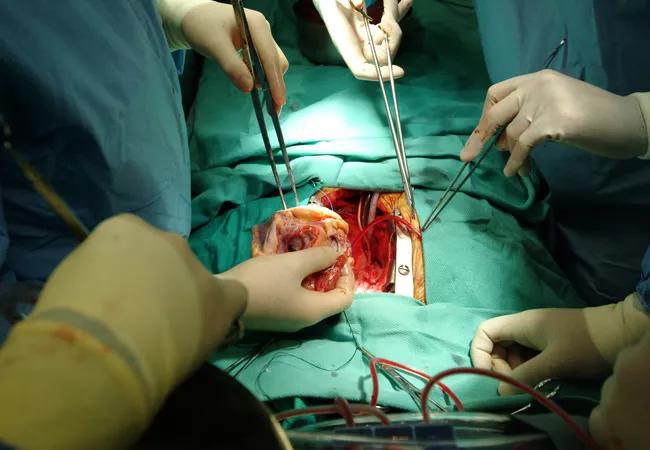
Image content: This image is available to view online.
View image online (https://assets.clevelandclinic.org/transform/fe374c59-1b01-4088-99f6-151b26806bf7/Ht-transplant_650x450_jpg)
Heart Transplant
The allocation system for donor hearts should be revised to reflect differences in survival on the heart transplant waiting list based on patients’ type of underlying heart disease. So concludes an analysis of a large national transplantation registry recently published in JACC Heart Failure.
Advertisement
Cleveland Clinic is a non-profit academic medical center. Advertising on our site helps support our mission. We do not endorse non-Cleveland Clinic products or services. Policy
The study, led by Eileen M. Hsich, MD, Associate Director of the Heart Transplant Program at Cleveland Clinic, is the first to document differences in adult survival on the heart transplant waiting list on the basis of type of heart disease.
The study group, which included several Cleveland Clinic investigators plus collaborators from Duke University and the University of Pittsburgh Medical Center, used data from the Scientific Registry of Transplant Recipients to examine all adult U.S. heart failure patients awaiting transplantation between 2004 and 2014 (N = 30,747).
The primary end point was time to all-cause mortality at last patient follow-up.
During a median follow-up of 3.7 months, 4,943 patients died. After adjustment for possible confounding variables, the following conditions were associated with the highest risk of death during the wait for transplant:
Disorders associated with lower waitlist mortality were dilated cardiomyopathy, ischemic cardiomyopathy, hypertrophic cardiomyopathy and valvular heart disease.
Gender played a role as well, with women being at significantly lower risk for death with restrictive cardiomyopathy relative to men but at significantly higher risk for death with ischemic cardiomyopathy and with “other” heart diseases (predominantly prior heart transplantation).
The current heart transplant allocation system is based on severity of illness, as defined by the use of mechanical circulatory support, inotropes and mechanical ventilation. Findings from the new analysis suggest that adding heart disease type to the list of factors to be accounted for may change allocation priorities, the researchers note.
Advertisement
“Poor survival among patients with certain heart disease types may be due to differences in the underlying disease or the possibility that these cohorts are not easily rescued with inotropes or mechanical circulatory support,” says Dr. Hsich. “The reasons remain unclear but provide the rationale for the OPTN/UNOS policy and bylaw proposal to include type of heart disease as a tier in the new allocation system” (OPTN/UNOS = Organ Procurement and Transplantation Network/United Network for Organ Sharing).
She cites hypertrophic cardiomyopathy as an example of why some revision is in order. The new analysis shows that patients with hypertrophic cardiomyopathy had among the lowest mortality rates and were most likely to have an implantable cardioverter defibrillator among all patient groups. “The improved outcomes for patients with hypertrophic cardiomyopathy suggest that disease-specific guidelines can indeed be effective in reducing mortality and improving care,” Dr. Hsich notes.
“Our data support a change in the allocation system to prioritize restrictive cardiomyopathy, congenital heart disease and prior heart transplantation,” Dr. Hsich concludes.
But she’s quick to add that further research is needed to better define the risk factors for these and other subgroups: “Differences in mortality among advanced heart failure patients with different types of cardiomyopathy beg the question as to whether devices and medical therapy to treat heart failure should be prospectively studied based on type of heart disease.”
Advertisement
Advertisement
A sampling of outcome and volume data from our Heart & Vascular Institute
Concomitant AF ablation and LAA occlusion strongly endorsed during elective heart surgery
Large retrospective study supports its addition to BAV repair toolbox at expert centers
Young age, solid tumor, high uptake on PET and KRAS mutation signal risk, suggest need for lobectomy
Surprise findings argue for caution about testosterone use in men at risk for fracture
Residual AR related to severe preoperative AR increases risk of progression, need for reoperation

Findings support emphasis on markers of frailty related to, but not dependent on, age
Provides option for patients previously deemed anatomically unsuitable
 Search