Locations:





 Search
Ureteral anatomy has no impact on surgical outcomes
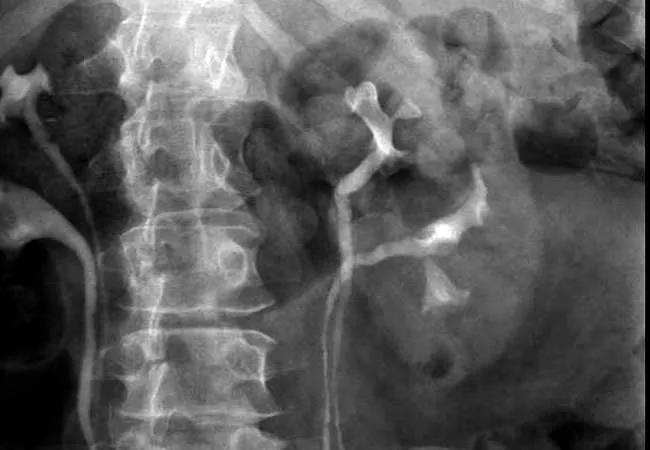
Image content: This image is available to view online.
View image online (https://assets.clevelandclinic.org/transform/3be46bde-48bb-4e0d-b946-bbd36f0ad1cd/650x450-Monga-Ureteral-anatomy_jpg)
650×450-Monga Ureteral anatomy
Ureteroscopy is safe and effective, no matter the ureteral anatomy, according to a Cleveland Clinic study.
Advertisement
Cleveland Clinic is a non-profit academic medical center. Advertising on our site helps support our mission. We do not endorse non-Cleveland Clinic products or services. Policy
Ureteral duplication is a common congenital abnormality – albeit a relatively rare phenomenon – in the urinary tract, affecting about 1 percent of the population. Patients with known duplication are cautioned prior to surgery for urinary stone disease that the ureter may be “tight” and surgery may be more difficult.
Manoj Monga, MD, FACS, FRCS, Director, Cleveland Clinic’s Center of Endourology & Stone Diseases in the Glickman Urological & Kidney Institute, and his team undertook the first study to compare urolithiasis treatment outcomes in patients with and without ureteral duplication. “Two Are No Different Than One: Ureteral Duplication Appears to Have No Effect on Ureteroscopy Outcomes” was published in the Journal of Endourology.
The team hypothesized that the complex anatomy of a duplicated ureter might decrease the efficacy and increase the risk of ureteroscopy (URS). A retrospective analysis of surgical outcomes of urolithiasis in patients with ureteral duplication revealed these patients had longer operative times, but preoperative knowledge of the abnormality did not affect operative time. The additional operating time was attributed to the surgeon gaining access to and fully examining each system as an independent renal unit.
“To our surprise, outcomes were the same whether patients had duplicated systems or not,” Dr. Monga says. “The safety and efficacy of the procedures were identical to those without duplication.”
This finding supports current practice and suggests that no additional imaging is necessary in patients with ureteral duplication. The study’s population of patients with this abnormality undergoing urinary stone treatment also represents the largest reported in the literature.
“Urologists do not need to caution patients with duplicated systems that outcomes with ureteroscopy may not be as effective,” Dr. Monga says. “Ureteroscopy is safe and effective in a patient with ureteral duplication.”
Advertisement
Advertisement

Clinicians should individualize dosing practices based on patient risk factors and preferences
Pioneering and refining the approach in pyeloplasty, nephrectomy and more
Fully-automated process uses preop CT, baseline GFR to estimate post-nephrectomy renal function

Could mean earlier treatment, but also could have negative effects

Unlike earlier pills, new drugs do not cause liver toxicity

Male factors play a role in about half of all infertility cases, yet men often are not evaluated
Surgeons choreograph nearly simultaneous procedures, sharing one robot between two patients

Identifying barriers in the renal genetic assessment of Black patients