Locations:





New R35 funding will help pursue neuroprotective therapies
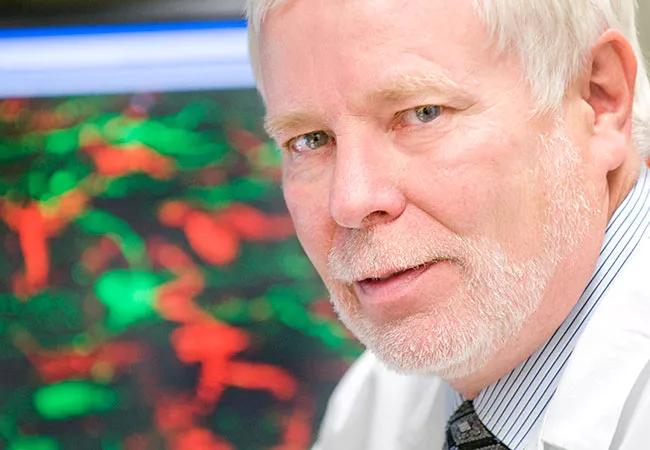
Image content: This image is available to view online.
View image online (https://assets.clevelandclinic.org/transform/a87980cf-c988-44b9-97a7-715da177039c/17-NEU-547-Trapp-17006_046_650x450_jpg)
17-NEU-547-Trapp-17006_046_650x450
A veteran Cleveland Clinic neuroscientist is among the first 30 recipients of a new National Institute of Neurological Disorders and Stroke (NINDS) grant program aimed at boosting funding stability to encourage researchers’ creativity.
Advertisement
Cleveland Clinic is a non-profit academic medical center. Advertising on our site helps support our mission. We do not endorse non-Cleveland Clinic products or services. Policy
Bruce Trapp, PhD (pictured above), Chair of the Department of Neurosciences in Cleveland Clinic’s Lerner Research Institute, was granted an R35 Research Program Award for his work on the pathogenesis of neurological disability in primary diseases of myelin. The award will support his entire program of NINDS research for five years, with the potential for extended funding for up to three more years.
The new R35 program is designed to enable “proven investigators to pursue long-range, innovative research instead of continually writing and submitting grant applications,” according to an NINDS press release.
“Diseases of myelin are the leading cause of permanent neurological disability in young adults, with the exception of head trauma,” says Dr. Trapp. “The work my lab will pursue under this award is to investigate how nerve fibers die as a result of myelin disease. Our studies are aimed at identifying new ways to treat diseases of myelin and curb neurological disability progression in patients with myelin disease.”
He explains that the R35 award will consolidate three NINDS R01 grants that investigate mechanisms of myelin-induced neurodegeneration, with the goal of addressing three key questions:
1) Are demyelination and neuron degeneration independent events in multiple sclerosis (MS)? ”In 1998, our lab established that demyelination is a major cause of neurodegeneration in MS brains,” explains Dr. Trapp. “But recent experiments support the concept that demyelination and neurodegeneration can be independent events in some MS brains. Neuronal death independent of demyelination opens a new arena in MS research that could result in novel neuroprotective therapies for MS patients.”
Advertisement
2) How does demyelination affect neurons and their synaptic connections? “We hypothesize that demyelination alters neuronal gene expression, modulates neuronal function, and decreases memory and learning — and that remyelination will reverse these changes,” he says.
3) How does subpial cortical demyelination occur? “We propose that subpial cortical demyelination occurs by mechanisms separate from the immune-mediated mechanisms that demyelinate white matter — and that novel therapies are required to prevent subpial demyelination,” he notes.
“Development of neuroprotective therapies is the top challenge the myelin research community faces,” Dr. Trapp says. “R35 funding will consolidate our efforts to identify new treatment targets that cause axonal and neuronal degeneration in myelin diseases.”
Some of the Trapp lab grants consolidated under the R35 award are discussed in this prior Consult QD post.
Advertisement
Advertisement

New study advances understanding of patient-defined goals
Testing options and therapies are expanding for this poorly understood sleep disorder
Real-world claims data and tissue culture studies set the stage for randomized clinical testing
Digital subtraction angiography remains central to assessment of ‘benign’ PMSAH

Cleveland Clinic neuromuscular specialist shares insights on AI in his field and beyond
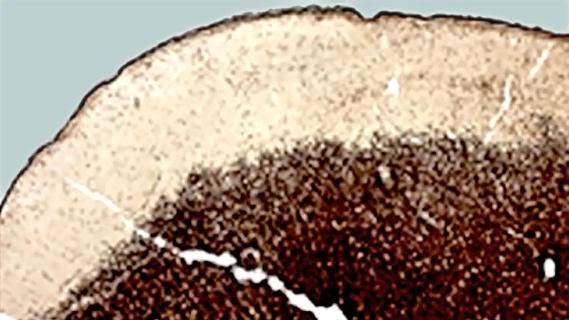
Findings challenge dogma that microglia are exclusively destructive regardless of location in brain
Neurology is especially well positioned for opportunities to enhance clinical care and medical training
New review distills insights from studies over the past decade
 Search