Locations:





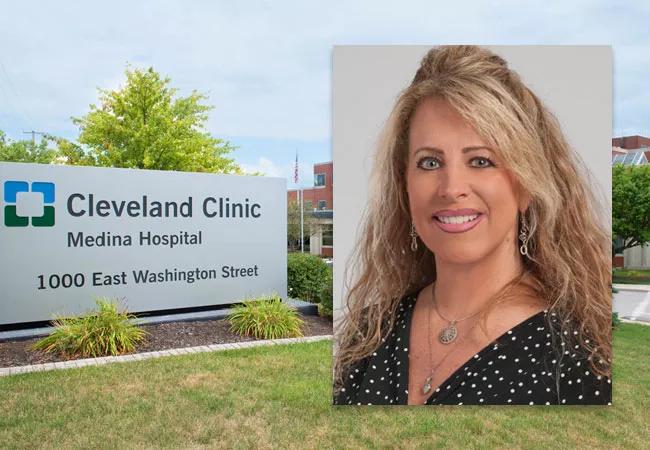
Image content: This image is available to view online.
View image online (https://assets.clevelandclinic.org/transform/d936c93b-eb0d-488b-bc9d-13642bdbedf8/18-NUR-4157-2-fettoCNOMedina-650x450_jpg)
18-NUR-4157-2-fettoCNOMedina-650×450
Taking on any new nursing leadership position is exciting – but it can also be overwhelming. Although you’ve been preparing for your new role your entire career, the reality is that in the coming days, weeks and months, you will be implementing changes, pushing boundaries and testing waters to be the successful leader you know you can be.
Advertisement
Cleveland Clinic is a non-profit academic medical center. Advertising on our site helps support our mission. We do not endorse non-Cleveland Clinic products or services. Policy
Cleveland Clinic’s Julie Fetto, MBA, BSN, RN, NE-BC, OCN, recently passed her one-year anniversary as a first-time chief nursing officer (CNO). In this Q&A, Fetto, who is CNO for Cleveland Clinic Medina Hospital, shares what her first year as a CNO was like, what she expected and what she didn’t, as well as advice for other first-time CNOs.
A: I ‘didn’t know what I didn’t know.’ I spent a lot of time the first year – especially the first few months – getting to know the people and culture. Like a sponge, I soaked it all in, learning anything and everything I could about my colleagues, fellow leaders, nursing team, other caregivers, and patients to do my job to the best of my abilities.
A: Of course! Although I was new to Medina Hospital, I had been working within Cleveland Clinic health system for years. Because of my prior experience, I expected that the Medina Hospital nursing team would have the same dedication to Cleveland Clinic Nursing’s mission, vision and values. And that was certainly true. Something I didn’t expect, however, was how deeply rooted in the community Medina caregivers are. Not only do our caregivers consistently focus on community health and wellness, the community as a whole has a significant impact on all that we do within our hospital, which is very positive and keeps us grounded.
A: I learned how important it is to establish trusting relationships. From the day I started in my new position, I made it a priority to establish and cultivate relationships among my colleagues, fellow hospital and health system leaders, and other stakeholders. I rounded with caregivers almost daily. I shadowed nurses within all units and care areas, which also delivered added insight and perspective on the work being done. I made it a point to be at the hospital leadership table. The extra effort I placed on relationship building proved extremely beneficial – invaluable really. Almost immediately, it was apparent that nursing was the heartbeat of the hospital and deeply impacted all other caregivers, disciplines and departments.
Advertisement
A: First, stay close to your peers because they will be invaluable throughout your transition. Your peers can offer an abundance of support, guidance and thoughtful suggestions. Additionally, they are great resources for the many, many questions you will have. My peers helped me tremendously – as did my leader and mentor, Cleveland Clinic’s Executive Chief Nursing Officer Kelly Hancock. Her support and guidance have been unwavering and her inspiration has been instrumental in building my confidence. I also recommend all first-time CNO’s check out the book, The First 90 Days by Michael D. Watkins. The book’s concepts are invaluable – especially those that relate to taking your time to listen, assess and get to know the people and culture. I can’t reiterate enough how important it is to spend time rounding, shadowing and building relationships.
Advertisement
Advertisement
Nurses play key role in comprehensive lifetime treatment program

Customized bots improve speed, efficiency by streamlining daily clinical, clerical tasks

Nurses play pivotal role in patients’ ability to recover in the comfort of their own homes
New protocol reduces costs, increases patient and caregiver satisfaction

Advocating for patient safety is imperative in fast-paced surgical settings

M-Power program improves the perinatal experience for people who have survived abuse

Advice for those pursuing a WOC nursing career

Veteran nurse shares his experience as a caregiver and community volunteer
 Search