Locations:





Survey finds big knowledge deficits around body shape, healthy diet
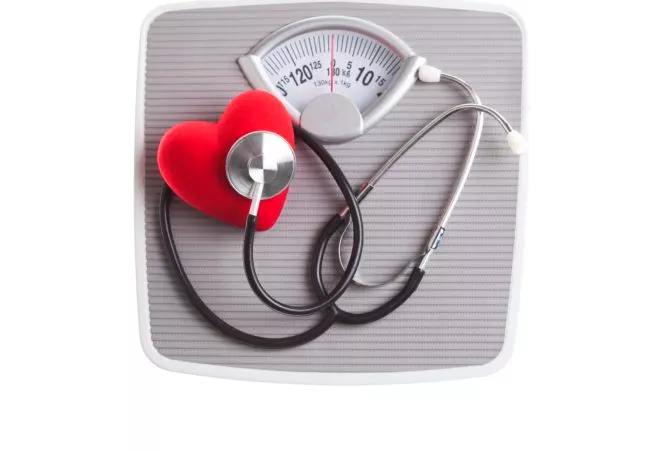
Image content: This image is available to view online.
View image online (https://assets.clevelandclinic.org/transform/62298a92-5c47-4985-871b-700c5e690e0e/heart-month-2019-GettyImages-166228610-650x450_jpg)
Stethoscope and heart on Bathroom Sacles
Americans’ knowledge of how their weight affects their heart health is a mixed bag, with misperceptions generally exceeding understanding of the best evidence.
Advertisement
Cleveland Clinic is a non-profit academic medical center. Advertising on our site helps support our mission. We do not endorse non-Cleveland Clinic products or services. Policy
So finds a new national survey on perceptions of heart health and weight conducted by Cleveland Clinic, which also suggests that lack of public awareness about the health gains to be achieved with even modest weight loss could represent an opportunity to overcome inertia around shedding unhealthy excess pounds.
Awareness that maintaining a healthy weight is linked to heart health is widespread, with 88 percent of the survey’s 1,002 respondents indicating an understanding of that connection.
What’s more, 74 percent agreed that improving their heart health is a major motivator in wanting to lose weight.
However, awareness started to break down when respondents were asked about connections between overweight/obesity and specific cardiometabolic conditions. Rates of awareness of such a connection by condition type were as follows:
Misperceptions also extended to lifestyle and related issues:
Advertisement
“Most Americans understand abstractly that being overweight or obese is not good for their health, but it seems our society isn’t grasping that the risks of the leading causes of death and disability — including stroke, cancer and coronary artery disease — are all increased by excess weight,” says Steven Nissen, MD, Chair of Cardiovascular Medicine at Cleveland Clinic. “Clinicians need to do a better job of educating patients about the major consequences of carrying excess weight and the benefits of losing it.”
Better education of patients may prove more promising than it often is, given the public’s lack of awareness of the health difference event modest weight loss can make.
Specifically, the survey found that only 16 percent of respondents recognized that losing 5 percent of one’s body weight is enough to yield heart health benefits. Many more thought that the weight-loss threshold for heart health benefits was 15 percent of body weight (30 percent of respondents) or 20 percent of body weight (23 percent of respondents), and 19 percent of respondents thought they needed to lose 25 or 30 percent of their weight to see health gains.
“These findings give hope that there’s an opportunity to persuade patients they can achieve weight loss that’s meaningful for their heart health — and overall health — more easily than they may have realized,” observes Leslie Cho, MD, Section Head of Preventive Cardiology at Cleveland Clinic.
Indeed, the survey suggests a sizeable portion of patients are open to conversations with their physician that could lead to education about the gains possible with modest weight loss. For instance, when presented with eight potential sources of nutrition advice, 44 percent of respondents said they are most likely to turn to their doctor first for advice — far more than for any other source.
Advertisement
At the same time, only 22 percent of respondents said they had discussed heart health in relation to their weight with their doctor.
“Overall, the survey findings point to a need for greater patient awareness of how weight impacts their heart as well as an opening for physicians to engage patients on this topic more often,” Dr. Cho concludes. “These findings can challenge all of us to start these conversations with patients. Pointing out that patients only need to lose 5 percent of their body weight to start seeing important health benefits may be a good way to begin.”
The Cleveland Clinic survey was conducted online among a nationally representative probability sample of adults in the continental United States (N = 1,002) in September 2018. Full results are available here.
Advertisement
Advertisement
A sampling of outcome and volume data from our Heart & Vascular Institute
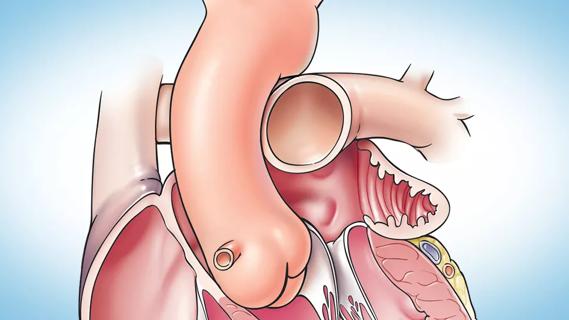
Concomitant AF ablation and LAA occlusion strongly endorsed during elective heart surgery
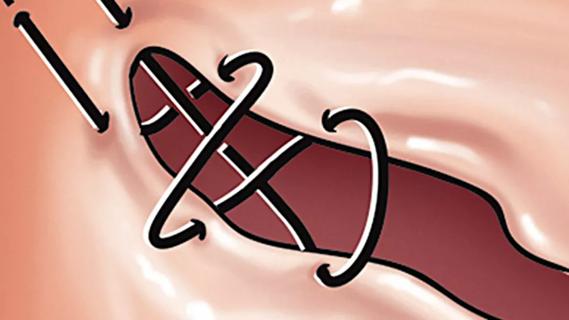
Large retrospective study supports its addition to BAV repair toolbox at expert centers
Young age, solid tumor, high uptake on PET and KRAS mutation signal risk, suggest need for lobectomy
Surprise findings argue for caution about testosterone use in men at risk for fracture
Residual AR related to severe preoperative AR increases risk of progression, need for reoperation

Findings support emphasis on markers of frailty related to, but not dependent on, age
Provides option for patients previously deemed anatomically unsuitable
 Search