Locations:





Prehabilitation can help improve outcomes after spine surgery
Frailty and older age don’t necessarily go hand in hand. A relatively healthy 85-year-old who exercises and doesn’t smoke may be less frail than a 65-year-old smoker who is sedentary and has multiple medical concerns. That’s an important distinction when caring for patients with chronic back pain and spinal conditions, says Augusto Hsia Jr., MD, a medical spine specialist in Cleveland Clinic’s Center for Spine Health.
Advertisement
Cleveland Clinic is a non-profit academic medical center. Advertising on our site helps support our mission. We do not endorse non-Cleveland Clinic products or services. Policy
In the newest episode of Cleveland Clinic’s Neuro Pathways podcast, Dr. Hsia discusses the importance of screening for frailty when preparing patients for spinal surgery. The 10-minute audio interview touches on:
Click the player below to listen to the podcast now, or read on for a short edited excerpt. Check out more Neuro Pathways episodes at clevelandclinic.org/neuropodcast or wherever you get your podcasts.
Podcast content: This podcast is available to listen to online.
Listen to podcast online (https://www.buzzsprout.com/2243576/13534569)
Dr. Hsia: Prehabilitation is the process of maximizing functional capabilities in our elderly patients prior to spine surgery. The goal is to decrease perioperative and postoperative complications, as well as to improve outcomes after spine surgery.
If the patient already has problems with gait, speed and strength, physical therapy can improve them, like in patients who have sarcopenia. People who take multiple medications have high risk of delirium. If we address that issue, we are more successful postoperatively. That’s together with diabetes control and medical assessment and management of heart disease and COPD prior to surgery. It’s better to do these things preventatively rather than postoperatively.
Podcast host Alex Rae-Grant, MD: Is there anything we could be changing in our practice to reduce frailty in our patient population?
Advertisement
Dr. Hsia: Yes, definitely. Half of the component of frailty is in physical deconditioning, so we should encourage patients to exercise daily, for strength training and neural reconditioning. We also should try to avoid opiate-type medication that may cause more problems postoperatively. And certainly, other medical risk factors should be sought out and treated.
Advertisement
Advertisement
New study advances understanding of patient-defined goals
Testing options and therapies are expanding for this poorly understood sleep disorder
Real-world claims data and tissue culture studies set the stage for randomized clinical testing
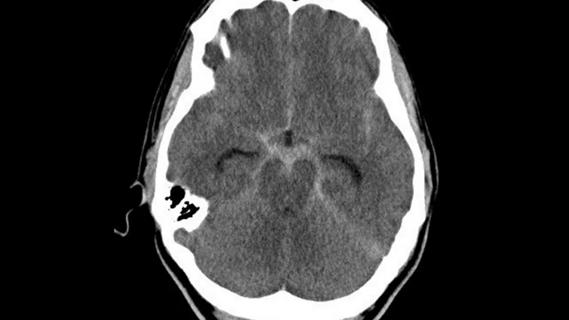
Digital subtraction angiography remains central to assessment of ‘benign’ PMSAH

Cleveland Clinic neuromuscular specialist shares insights on AI in his field and beyond
Findings challenge dogma that microglia are exclusively destructive regardless of location in brain
Neurology is especially well positioned for opportunities to enhance clinical care and medical training
New review distills insights from studies over the past decade
 Search