Locations:





Study examines pre- and postoperative benefits
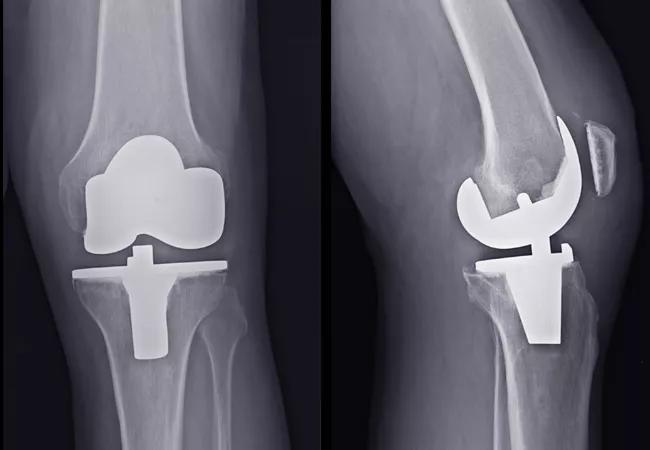
Image content: This image is available to view online.
View image online (https://assets.clevelandclinic.org/transform/53fd21fe-cd94-42c7-a478-3276f643be21/17-ORT-1250-Calabrese-Hero-Image-650x450pxl_jpg)
17-ORT-1250-Calabrese-Hero-Image-650x450pxl
By Gary J. Calabrese, PT, DPT
Advertisement
Cleveland Clinic is a non-profit academic medical center. Advertising on our site helps support our mission. We do not endorse non-Cleveland Clinic products or services. Policy
Postoperative quadriceps muscle weakness coupled with muscle atrophy contributes to impaired knee function following knee surgery. Similarly, patients with knee osteoarthritis (OA) have characteristically demonstrated quadriceps muscle weakness leading to reduced ability to generate force, and thus compromised function.
Unfortunately, there is a paucity of research studying the effects of rehabilitation methods to combat these deficits. This includes the use of neuromuscular electrical stimulation (NMES) to enhance quadriceps strength. NMES has not been well-studied for knee surgeries other than in postoperative anterior cruciate ligament reconstruction rehabilitation.
To address this lack of data, Cleveland Clinic’s Orthopaedic & Rheumatologic Institute has designed a study to assess applying NMES to the quadriceps in the preoperative and postoperative phases of a total knee replacement care algorithm. Our hypothesis is that using NMES both pre- and postoperatively can improve functional outcomes following total knee replacement (TKR).
The current standard for rehabilitation after TKR consists of guided exercise therapy for up to 12 weeks. This includes inpatient, home and outpatient therapy. The surgery and rehabilitation are highly successful at reducing or eliminating pain experienced preoperatively. However, quadriceps femoris muscle (QFM) strength, overall function, and knee range of motion are often worse than preoperative levels for as long as six months after surgery and in some cases for many years. Such quadriceps muscle strength impairments after TKR have been largely attributed to voluntary activation deficits and can lead to diminished functional performance such as decreased gait speed, decreased balance that can lead to falls, and decreased stair-climbing and chair-rise abilities.
Advertisement
It has previously been shown that preoperative QFM strength is predictive of postoperative function, but the benefit of prehabilitation remains in question. To date, only one pilot study has assessed the benefits of NMES when initiated preoperatively. This study included only 14 patients (nine NMES, five control), but demonstrated that preoperative NMES usage may lead to greater QFM strength gains after TKR.
Since physical therapy alone does not adequately restore or improve upon preoperative functional capabilities in a consistent and timely manner, it has been suggested that NMES used adjunctively with postoperative rehabilitation will alleviate quadriceps muscle activation deficits.
Early NMES use after TKR has the potential to reduce knee extensor lag and increase walking speed, as well as improve QFM strength, knee range of motion and function. However, NMES initiated one month after TKR did not lead to improved QFM strength or function beyond the standard benefits gained from exercise alone, thus suggesting that the timing of NMES application after TKR is important.
The specific aims of our study are to assess:
Advertisement
The challenges for current rehabilitation programs is that most do not address quadriceps muscle activation deficits in the first two to four weeks after TKR. Instituting exercise programs that stress strong quadriceps muscle contractions utilizing NMES — both before and after surgery — to facilitate muscle activation can help improve the preoperative strength baseline and may help reverse quadriceps weakness in patients who have knee osteoarthritis that has been reported to worsen after surgery.
Mizner RL et al. Preoperative quadriceps strength predicts functional ability one year after total knee arthroplasty. J Rheumatol. 2005;32:1533–1539.
Villadsen A. Neuromuscular exercise prior to joint arthroplasty in patients with osteoarthritis of the hip or knee. Dan Med J. 2016:1–19.
Stevens-Lapsley JE et al. Early neuromuscular electrical stimulation to improve quadriceps muscle strength after total knee arthroplasty: a randomized controlled trial. Phys Ther. 2012;92:210–226.
Levine M, et al. Comparing conventional physical therapy rehabilitation with neuromuscular electrical stimulation after TKA. Orthopedics. 2013;36:e319-324.
Dr. Calabrese is Senior Director, Cleveland Clinic Rehabilitation and Sports Therapy.
Advertisement
Advertisement
Biologic approaches, growing implants and more
Study reports zero infections in nearly 300 patients
How to diagnose and treat crystalline arthropathy after knee replacement
Study finds that fracture and infection are rare
Center will coordinate, interpret and archive imaging data for all multicenter trials conducted by the foundation’s Osteoarthritis Clinical Trial Network
Reduced narcotic use is the latest on the list of robotic surgery advantages
Cleveland Clinic specialists offer annual refresher on upper extremity fundamentals
Cleveland Clinic orthopaedic surgeons share their best tips, most challenging cases and biggest misperceptions
 Search