Locations:





The backstory to 21 years of topping the U.S. News rankings
Image content: This image is available to view online.
View image online (https://assets.clevelandclinic.org/transform/0fe99c02-86b7-489a-8b2f-70df91e65814/HVI21-690x380_jpg)
HVI21-690×380
The annual U.S. News & World Report “America’s Best Hospitals” survey isn’t what it used to be. It’s much better. The criteria being evaluated have undergone continual refinement over the years. But one thing has remained constant for more than two decades: Cleveland Clinic’s leadership in the Cardiology & Heart Surgery category.
Advertisement
Cleveland Clinic is a non-profit academic medical center. Advertising on our site helps support our mission. We do not endorse non-Cleveland Clinic products or services. Policy
The persistence of Cleveland Clinic’s No. 1 ranking in this category over 21 consecutive years, across all changes in survey methodology, may be rightfully taken as a robust indicator of its heart program’s overall quality and its commitment to continuous improvement.
“These rankings motivate us to maintain and improve our already-high standard of care for the many patients who entrust us with their lives,” says Lars G. Svensson, MD, PhD, Chairman of Cleveland Clinic’s Sydell and Arnold Miller Family Heart & Vascular Institute.
How has Cleveland Clinic been able to earn and re-earn No. 1 status over such a long haul? The complex answer to that question may be broken down into five factors:
Cleveland Clinic delivers patient care services through integrated practice units it calls institutes. Each institute combines medical and surgical departments related to the treatment of one organ system or disease area into a single organizational entity, at one location, under a single leadership team.
The Miller Family Heart & Vascular Institute combines Cardiovascular Medicine, Thoracic and Cardiovascular Surgery, Vascular Surgery, and all their subspecialties into one organizational unit located in a million-square-foot facility on Cleveland Clinic’s main campus outfitted with the most advanced medical and surgical equipment.
The Miller Family Heart & Vascular Institute takes advantage of Cleveland Clinic’s collaborative model of medicine as a physician-led, not-for-profit group practice. Lines of authority are clear, incentives are aligned among professional staff and support personnel, and the team acts as a unit to implement policies and achieve greater efficiencies.
Advertisement
“We owe a great deal to our dedicated and talented teams, disease centers, physicians, nurses and mid-level providers who diligently keep Patients First,” says Dr. Svensson.
Cleveland Clinic leapt to the forefront of cardiovascular care in the 1950s and 1960s as its cardiologists and surgeons collaborated in the development of moving coronary angiography, coronary artery bypass graft surgery, and refinement of the technologies and techniques surrounding these procedures. Around that same time, Cleveland Clinic innovators performed pioneering stopped-heart surgeries using a novel membrane oxygenator and were among the first to develop prototypes for an artificial heart.
Over the years, Cleveland Clinic has continued to be in the vanguard of innovation in ventricular-assist devices, endovascular repair of aortic aneurysms, minimally invasive valve surgery, and percutaneous approaches to coronary procedures and aortic and mitral valve procedures. It has likewise led countless multicenter clinical trials of new devices and medications.
Scores of new innovations are currently being developed or tested at Cleveland Clinic. These range from a pediatric artificial heart no larger than a fountain pen to attempts to alter the course of cardiovascular disease through manipulation of gut bacteria. Cleveland Clinic cardiac surgeons and cardiologists were involved in the development and testing of TAVR (transcatheter aortic valve replacement) and now have achieved the world’s best results from this minimally invasive breakthrough.
Advertisement
Cleveland Clinic’s reputation for excellence and its patient-focused organizational model enable it to recruit and retain a core of high-achieving physicians in all cardiac and vascular specialties. Here they have the opportunity to apply their skills to one of the nation’s highest-acuity patient populations, challenging themselves to restore health to patients ineligible for treatment at other facilities because they have too many comorbidities or are deemed too old or frail.
These specialists have achieved lower than expected in-hospital mortality for almost every major cardiac intervention and achieved 0 percent mortality in some common and some complex procedures. Cleveland Clinic is among only 1 percent of U.S. hospitals to earn the highest (three-star) score in all three categories of the Society of Thoracic Surgeons’ quality ratings for adult cardiac surgery (Jan. to Dec. 2014), and it has achieved three-star ratings across all thoracic/lung surgery categories as well.
Physicians in the Miller Family Heart & Vascular Institute enhance their knowledge and the science of medicine through research and education. In 2014, the institute’s physicians published a combined total of 750 scientific papers, books and book chapters.
Cleveland Clinic’s heart team has been keeping meticulous computerized records of procedures and outcomes since 1971. In 1998, the Department of Thoracic and Cardiovascular Surgery began to publish outcomes and volumes data to make these data publicly available. The scope and detail of data reported in these annual publications have increased every year. All cardiac subspecialties are expected to establish quality benchmarks for various procedures and work toward continuous quality improvement.
Advertisement
Cleveland Clinic has one of the largest and busiest heart programs in the world. In 2014, Miller Family Heart & Vascular Institute staff saw patients at over 480,000 patient visits and cared for patients across more than 13,500 hospital admissions. They performed some 4,200 cardiac surgeries, 2,800 valve surgeries, 1,250 coronary artery bypass graft procedures, 105 robotic procedures and 65 heart transplants. Patients came from 82 countries and all 50 states.
This extraordinary volume of cases has enabled Cleveland Clinic to systematically improve and reduce variability of outcomes across the whole spectrum of cardiovascular diagnosis, treatment and rehabilitation. Patients engage with highly experienced caregivers at every stage of their treatment, and they give the Miller Family Heart & Vascular Institute higher than expected scores on most patient satisfaction measures.
“As the healthcare environment continues to change rapidly, we are as committed as ever to maintaining the best outcomes for patient care,” says Dr. Svensson.
Advertisement
Advertisement
A sampling of outcome and volume data from our Heart & Vascular Institute
Concomitant AF ablation and LAA occlusion strongly endorsed during elective heart surgery
Large retrospective study supports its addition to BAV repair toolbox at expert centers
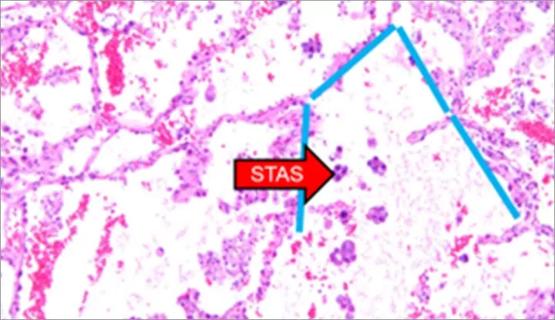
Young age, solid tumor, high uptake on PET and KRAS mutation signal risk, suggest need for lobectomy
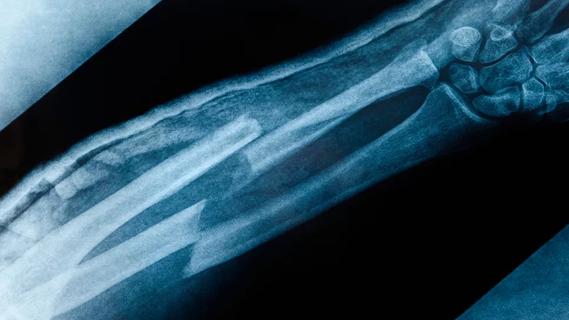
Surprise findings argue for caution about testosterone use in men at risk for fracture
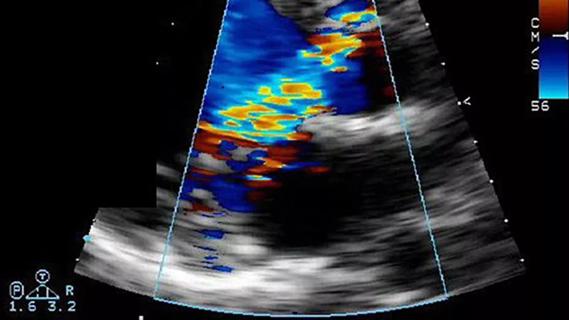
Residual AR related to severe preoperative AR increases risk of progression, need for reoperation

Findings support emphasis on markers of frailty related to, but not dependent on, age
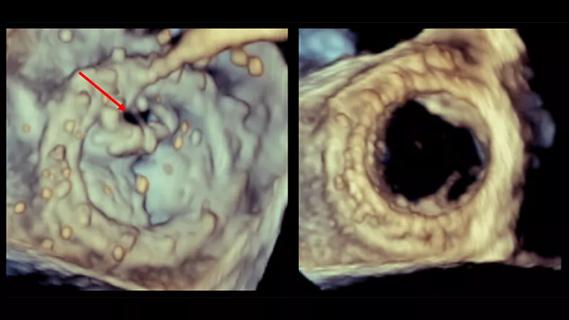
Provides option for patients previously deemed anatomically unsuitable
 Search