Locations:





Risks and rewards of supplementation must be carefully weighed for older men with secondary hypogonadism
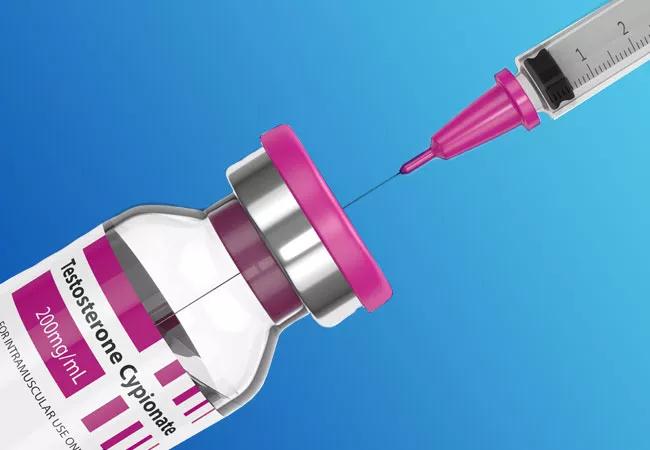
Image content: This image is available to view online.
View image online (https://assets.clevelandclinic.org/transform/f6307d18-be8e-4f18-8a74-ab15add53714/19-END-1288-Testosterone-CQD_jpg)
19-END-1288-Testosterone-CQD
Testosterone replacement therapy (TRT) for hypogonadism has been a source of controversy in the endocrine community since 2010, when the first study was published suggesting that the application of testosterone gel was associated with increased risks of cardiovascular-related adverse events.1
Advertisement
Cleveland Clinic is a non-profit academic medical center. Advertising on our site helps support our mission. We do not endorse non-Cleveland Clinic products or services. Policy
Several prospective randomized clinic trials have evaluated the benefits of TRT on sexual function, mood and bone mineral density; however, the cardiovascular and overall mortality risks associated with TRT remain unclear. A variety of studies regarding the safety and efficacy of TRT for hypogonadism have been conducted since 2010 with diverse study populations, potential differences in study design and, consequently, mixed results.
Researchers from Cleveland Clinic conducted a retrospective analysis using electronic health record (EHR) data of 165 men over 40 years old with secondary hypogonadism who received TRT treatment at the institution between the years 2005 – 2010.2 These patients were matched with 210 men with secondary hypogonadism that were not exposed to TRT. For purposes of this study, secondary hypogonadism was defined as having at least two testosterone levels at or below 220 mg/dL, with one level obtained between 7-10 am. In an attempt to isolate the population of patients for whom there is the most concern regarding TRT and cardiovascular risk (secondary hypogonadism related to chronic disease, obesity, etc.), the researchers excluded men with primary hypogonadism, secondary hypogonadism related to overt hypothalamic pituitary pathology, human immunodeficiency virus infection, metastatic cancer and select contraindications to TRT. There was modest prevalence of cardiovascular disease in both groups: 20.0% in the treatment group compared with 17.1% in the comparison group. Patients were assumed to have used TRT if a prescription was documented in the EHR, and not based on pharmacy data or compliance rates. This is a recognized limitation of this study, which relied only on structured data available in the EHR.
Advertisement
“We sought to identify a group of patients who physicians are most concerned about in terms of TRT-related cardiovascular risk,” states Kevin Pantalone, DO, the lead author on the study. “We found that TRT neither increased nor reduced the risk of myocardial infarction, stroke, or all-cause mortality.”
Symptoms of hypogonadism, also referred to as testosterone deficiency, include sexual issues such as erectile dysfunction and decreased libido, as well as issues with fatigue, depression and irritability. Patients with hypogonadism may also present with anemia, decreased bone density, reduced muscle mass and weight gain. They tend to have increased comorbidities. Treatment for men with low serum testosterone may not always be necessary, but can increase quality of life by reducing symptoms and may improve overall health by reducing the number or impact of comorbid conditions.
“Physicians still have limited and conflicting evidence about whether or not an adverse cardiovascular risk is associated with TRT in patients with hypogonadism. Our study suggests that TRT does not offer a protective or adverse effect on cardiovascular risk; however, we clearly need appropriately powered cardiovascular outcomes trials to evaluate the safety of TRT therapy,” Dr. Pantalone continues. “The only clear indication for TRT supplementation in older males with low serum testosterone is to improve symptoms of androgen deficiency, provided that the benefits of treatment outweigh the potential risks.”
Advertisement
1Basaria S, Coviello AD, Travison TD, et al. Adverse events associated with testosterone administration. N Engl J Med. 2010;363:109-22.
2Pantalone KM, Joyce George J, Ji X, et al. Testosterone Replacement Therapy and the Risk of Adverse Cardiovascular Outcomes and Mortality. Basic Clin Androl. 2019 Mar 29;29:5.
Advertisement
Advertisement
Radiofrequency ablation significantly reduces symptom severity, shrinks nodules

Maternal-fetal medicine specialists, endocrinologists and educators team up

Giving young patients a hand as they take charge of their own health

Case illustrates how easily condition can mimic preeclampsia
Analysis examines surgical resection of rare pituitary tumors
Screening and medication key to better outcomes
Spinal cord stimulation can help those who are optimized for success
Incidence, outcomes and management
 Search