Locations:





Using an imaging-guided approach
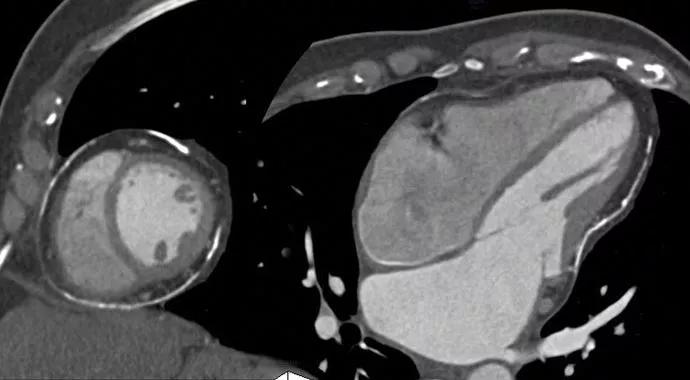
Image content: This image is available to view online.
View image online (https://assets.clevelandclinic.org/transform/197a2839-f9f2-43a5-a2fe-402b914fae7e/Pericarditis-690x380_jpg)
Pericarditis-690×380
Pericarditis can be tricky to diagnose. Inflammation of the sac around the heart causes symptoms that often resemble other cardiac and pulmonary diseases. Imaging modalities from chest X-ray to MRI can help confirm a diagnosis. But accurate, evidence-based guidelines for pericardial disease have not been available. Until now.
Advertisement
Cleveland Clinic is a non-profit academic medical center. Advertising on our site helps support our mission. We do not endorse non-Cleveland Clinic products or services. Policy
A recent expert consensus statement “Multimodality Cardiovascular Imaging of Patients with Pericardial Disease,” has been issued by the American Society of Echocardiography, in conjunction with other major cardiovascular imaging societies. Allan Klein, MD, Director of Cleveland Clinic’s Center for the Diagnosis and Treatment of Pericardial Diseases, chaired the writing group of 15 U.S. authors — which included four other Cleveland Clinic experts.
“There is a strong demand for evidence-based guidelines to help clinicians diagnose and stage pericardial disease,” says Dr. Klein. “Physicians in all settings need to understand its spectrum of presentation, as well as how to identify the presence of inflammation and calcification in order to provide timely, appropriate treatment.”
Dr. Klein explains that the guidelines are intended for use in primary care, emergency departments, and rheumatology and cardiology subspecialty practices. “We see a low awareness of the signs and symptoms of pericardial disease across the board,” he says. “The disease is often not identified on imaging. Aggressive conditions that are identified are often treated for an inappropriate duration.”
Pericarditis, says Dr. Klein, is “an equal-opportunity disease.” It affects patients of all ages, from teenagers to older adults, including many with systemic lupus erythematosus or recent open heart surgery. The etiology may be infective, auto-immune, post-myocardial infarction, autoreactive or idiopathic. It may be acute, recurrent or constrictive. Symptoms are often puzzling, and diagnosis may be complicated by the condition’s appearance in combination with myocardial or valve disease. (As an example of the guidelines’ diagnostic insights, Dr. Klein offers this pearl to help identify constrictive pericarditis: “Have the patient stand or sit upright, then look for distended veins in the neck and an elevated jugular venous pulse. These are clear clinical signs.”)
Advertisement
Dr. Klein believes that undertreatment of acute or recurrent inflammatory pericarditis is the leading reason for incomplete disease resolution. “By the time I see patients, many have had up to five or 10 recurrences.”
While many cases can be treated appropriately outside a dedicated center for pericardial disease, immediate referral to an expert center is advised when a patient presents with advanced symptoms or doesn’t respond to therapy, in view of the condition’s high morbidity with many recurrences and mortality from advanced heart failure. Within one or two days of an outpatient visit to Cleveland Clinic’s Center for the Diagnosis and Treatment of Pericardial Diseases, a patient will be seen by multiple subspecialists and undergo blood and advanced imaging tests with pericardial protocols, heart catheterization (if needed), appropriate medical treatment and surgery, if necessary.
“Imaging-guided treatment of pericarditis is undergoing a renaissance,” Dr. Klein observes. “Our goal in developing these guidelines is that the disease become more widely recognized and appropriately treated so that patients can feel better and get back on their feet.”
Advertisement
Advertisement

OMT may be right for some with Graves’ eye disease

Perserverance may depend on several specifics, including medication type, insurance coverage and medium-term weight loss

Integrate climate-related health information and counseling into your practice
Physicians discuss a specific case example, and PICC pros, cons and alternatives

A snapshot of the 2020 GINA report

A review of available interventions
Abstinence from combustibles, dependence on vaping
An historical view of the disease
 Search