Locations:





Cohort study provides insights on TAVR in an understudied group
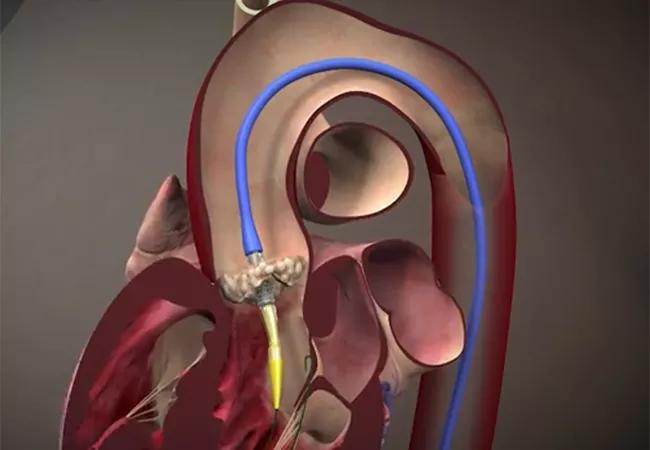
Image content: This image is available to view online.
View image online (https://assets.clevelandclinic.org/transform/ae723e59-c0c5-4db0-9eb8-ebfcbfc2ff85/19-HRT-6073-TAVR_650x450_jpg)
19-HRT-6073-TAVR_650x450
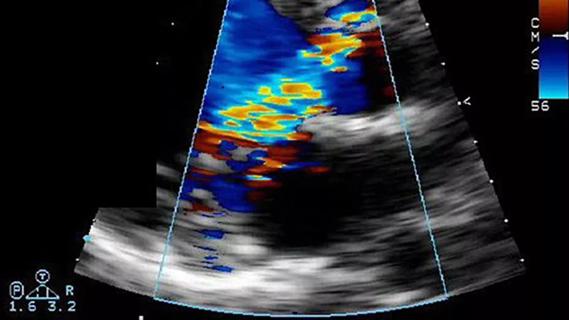
Survival following transcatheter aortic valve replacement (TAVR) appears to be better in patients with mixed aortic valve disease — i.e., both aortic stenosis and aortic regurgitation — than in those with pure aortic stenosis, according to the largest study of the question reported to date.
Advertisement
Cleveland Clinic is a non-profit academic medical center. Advertising on our site helps support our mission. We do not endorse non-Cleveland Clinic products or services. Policy
The survival advantage was greatest among patients who developed residual aortic regurgitation following TAVR, found the retrospective investigation, which was conducted at Cleveland Clinic and published in JACC: Cardiovascular Interventions (2019;12:2299-2306).
“The trials that supported approval of TAVR for patients with severe aortic stenosis at high or intermediate surgical risk largely excluded patients with significant mixed aortic valve disease,” says the study’s senior and corresponding author, Samir Kapadia, MD, Chair of Cardiovascular Medicine at Cleveland Clinic. “Guidelines from major societies address TAVR for mixed aortic valve disease only by recommending that decisions be based on whichever lesion is predominant. We conducted this analysis to get a better understanding of TAVR outcomes in the setting of mixed aortic valve disease, especially since it is believed to have a more aggressive natural history than pure aortic stenosis.”
The study compared outcomes among all patients who underwent TAVR at Cleveland Clinic from 2014 through 2017 according to whether they had isolated aortic stenosis (AS) (i.e., no or trivial aortic regurgitation) or mixed aortic valve disease (MAVD) (AS with associated aortic regurgitation that was mild, moderate or severe). The primary endpoint was all-cause mortality.
After exclusion of patients with prior AVR or whose TAVR was done via a non-transfemoral route, 1,133 patients were included in the study — 445 with pure AS and 688 with MAVD. The patient groups were comparable except for a significantly higher median body mass index and higher rates of diabetes mellitus and atrial fibrillation in the pure AS arm and a significantly higher rate of prior stroke or transient ischemic attack in the MAVD arm.
Advertisement
Over median follow-up of 27 months, the following key outcome findings emerged:
“These findings suggest that hearts that were previously exposed to aortic regurgitation — in the form of mixed aortic valve disease — before TAVR may be better able to tolerate mild aortic regurgitation after TAVR, which could explain our observation of better survival in the patients with mixed disease, which notably extended specifically to those who had post-procedural regurgitation,” says Dr. Kapadia.
He hypothesizes that this could be due to remodeling of the left ventricle resulting from volume overload related to the prior aortic regurgitation. In contrast, the ventricle is apt to be hypertrophied and have minimal compliance in patients with pure AS, reducing its tolerance of aortic regurgitation following TAVR.
Advertisement
“In any case,” Dr. Kapadia notes, “these findings should not be used to support tolerating any degree of post-TAVR paravalvular regurgitation, in view of the demonstrated deleterious effect of regurgitation on patient outcomes.”
“It’s worth noting that similarly mixed results have been observed in studies of survival among patients with mixed aortic valve disease following surgical AVR,” says James Yun, MD, a Cleveland Clinic cardiothoracic surgeon who was not involved in the current analysis.
He adds, however, that whether the current findings extend to surgical AVR remains to be determined. “Large, prospective, randomized trials are needed to ultimately validate these interesting findings with regard to TAVR for mixed aortic valve disease, and certainly with regard to surgical AVR or aortic valve repair in the setting of mixed disease,” Dr. Yun observes.
“The incidence of mixed aortic valve disease is projected to rise due continued aging of the population and a parallel increase in degenerative valve disease,” concludes Dr. Kapadia. “So this will be a growing research priority.”
Advertisement
Advertisement

A sampling of outcome and volume data from our Heart & Vascular Institute
Concomitant AF ablation and LAA occlusion strongly endorsed during elective heart surgery
Large retrospective study supports its addition to BAV repair toolbox at expert centers

Young age, solid tumor, high uptake on PET and KRAS mutation signal risk, suggest need for lobectomy
Surprise findings argue for caution about testosterone use in men at risk for fracture
Residual AR related to severe preoperative AR increases risk of progression, need for reoperation

Findings support emphasis on markers of frailty related to, but not dependent on, age
Provides option for patients previously deemed anatomically unsuitable
 Search