Locations:





 Search
Achieves nutritional autonomy in majority of patients
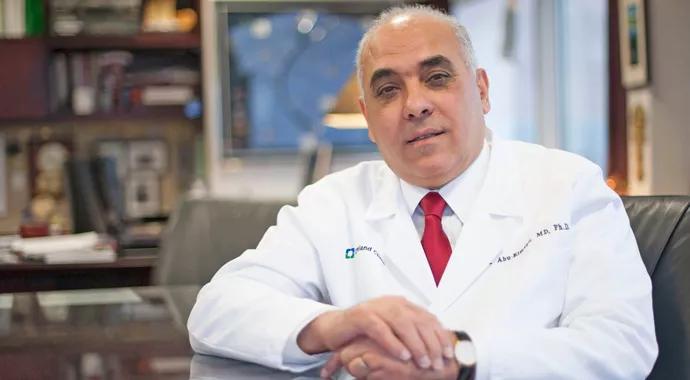
Image content: This image is available to view online.
View image online (https://assets.clevelandclinic.org/transform/f6115af8-624f-439d-9c4a-307f57dbb4d0/DR_Kareem_690x380_jpg)
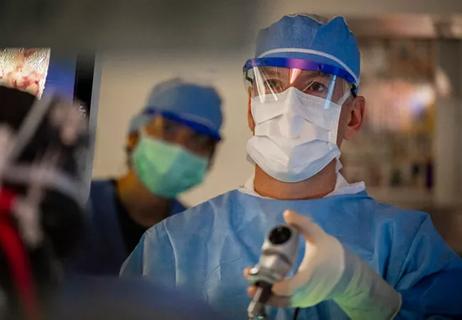
DR.Kareem_690x380
Bariatric surgery is the most effective therapy to induce weight loss and reduce metabolic comorbidities. Mortality rates are extremely low, with generally acceptable postoperative complications. Nevertheless, with their gut anatomy altered, some bariatric patients develop long-term technical and nutritional complications resulting in gut failure.
Advertisement
Cleveland Clinic is a non-profit academic medical center. Advertising on our site helps support our mission. We do not endorse non-Cleveland Clinic products or services. Policy
For these patients, innovative surgical techniques, including visceral transplantation, can restore gut anatomy and nutritional autonomy with a high rate of success, said Cleveland Clinic surgeons at the 135th Annual Meeting of the American Surgical Society in April 2015.
Kareem Abu-Elmagd, MD, PhD, Director, Center for Gut Rehabilitation and Transplantation, and colleagues from Cleveland Clinic and the University of Pittsburgh Medical Center conducted the first study addressing this rare, life-threatening morbidity. They reviewed the outcomes of 1,500 patients referred with gut failure and found 142 (9 percent) had a history of bariatric surgery. Of this group, 131 (92 percent) were evaluated and received multidisciplinary care.
The patients had undergone restrictive (19 percent), malabsorptive (5 percent) or combined (76 percent) bariatric procedures. Gut failure was attributed to catastrophic gut loss in 42 percent, technical complications in 33 percent and dysfunctional syndromes in 25 percent. Duration of total parenteral nutrition (TPN) ranged from 2 to 252 months.
The researchers classified bariatric surgery-related gut failure into three types by underlying etiology and associated pathophysiology: Type I, catastrophic, which included strangulation and vascular occlusion; Type II, technical complications, such as gastric/enteric fistulae, loss of gut continuity and strictures/adhesions; and Type III, dysfunctional syndromes, a collection of malabsorptive, restrictive and motility disorders.
Advertisement
Autologous reconstructive procedures aimed at re-establishing gut continuity were performed in 116 (92 percent) of the 131 study patients. “Our goal was to normalize gut physiology and restore nutritional autonomy without transplantation,” said Dr. Abu-Elmagd.
Surgical plans were guided by gut-failure type, existing gut anatomy and surgical candidacy.
A first-stage operation including foregut reconstruction was considered for Type-I patients with intra-abdominal infection and ultra-short gut syndrome. With Type II, one-stage autologous reconstruction with possible bariatric-surgery reversal was planned for patients with disconnected gut, gastrointestinal fistulae and short-gut syndrome. Intestinal lengthening was performed in selected patients to enhance gut rehabilitation. In patients with isolated pathology, the altered bariatric anatomy was preserved. With Type III, surgery was limited to reversal of bariatric surgery when technically feasible.
“With the need for organ replacement, first-stage reconstruction may reduce risk and technical difficulty at time of transplantation. It may also eliminate the need for simultaneous foregut-organ replacement,” Dr. Abu-Elmagd explained. “With short gut syndrome, dismantling of BS and intestinal lengthening is essential for successful gut rehabilitation.”
Visceral transplantation was indicated for patients with ultra-short gut syndrome and TPN failure. The number of transplanted organs was dictated by extent of gut loss and coexistence of liver failure.
Advertisement
Twenty-five visceral transplants were performed in 23 patients. Of these, 21 (84 percent) were liver-free and four (16 percent) included the liver. Modified multivisceral allografts including stomach, duodenum, pancreas and intestine were required for two patients with prior total gastrectomy and one for severe gastroparesis as part of a global dysmotility.
Treatment was not complication-free. However, overall survival with surgical treatment, including transplantation, was 96 percent at 1 year, 84 percent at 5 years, and 72 percent at 10 and 15 years. Survival was better in patients with Type III gut failure vs Types I and II.
After visceral transplantation, survival was 91 percent at 1 year and 69 percent at 5 years, with overall graft survival rates of 88 and 64 percent.
Nutritional autonomy was achieved in 92 (81 percent) of the 113 survivors. In addition, eight of the 18 patients who died achieved nutritional autonomy before death.
“Despite patients’ complexity, the achieved long-term survival further supports the therapeutic advantages of bariatric surgery,” said Dr. Abu-Elmagd. “We hope this study increases physician awareness of such a rare but serious complication with the hope of improving safety and optimizing patient care through a multidisciplinary team approach.”
For more information, contact Dr. Abu-Elmagd at abuelmk@ccf.org.
Advertisement
Advertisement

Strong patient communication can help clinicians choose the best treatment option
ctDNA should be incorporated into care to help stratify risk pre-operatively and for post-operative surveillance

The importance of raising awareness and taking steps to mitigate these occurrences
New research indicates feasibility and helps identify which patients could benefit

Treating a patient after a complicated hernia repair led to surgical complications and chronic pain
Standardized and collaborative care improves liver transplantations
Fewer incisions and more control for surgeons

Caregiver collaboration and patient education remain critical