Locations:





New article reviews time-to-treatment data and looks ahead to emerging outcomes and cost studies
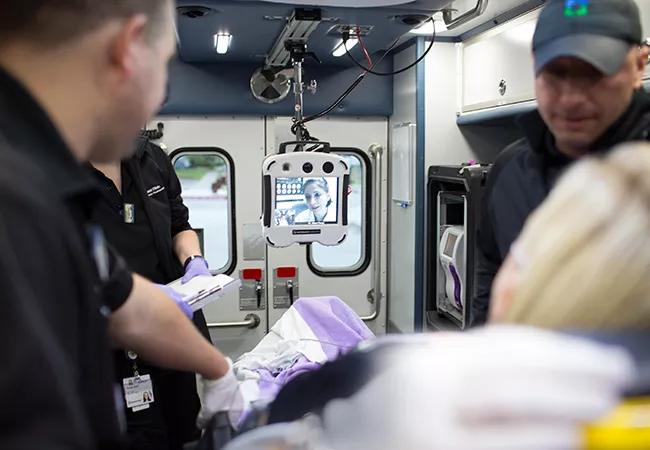
Image content: This image is available to view online.
View image online (https://assets.clevelandclinic.org/transform/7625e274-95e5-4b69-bd58-9d5ad582d310/650x450-Mobile-Stroke_jpg)
650×450-Mobile-Stroke
The future of mobile stroke units (MSUs) is bright, argue three Cleveland Clinic stroke neurologists in an article in the February 2018 issue of Endovascular Today.
Advertisement
Cleveland Clinic is a non-profit academic medical center. Advertising on our site helps support our mission. We do not endorse non-Cleveland Clinic products or services. Policy
“The improvement to time to treatment [with MSUs] is now well established in multiple data sets from around the world,” write M. Shazam Hussain, MD; Ken Uchino, MD; and Andrew Russman, DO, all with Cleveland Clinic’s Cerebrovascular Center.
One of those data sets is from Cleveland Clinic, which in July 2014 deployed one of the very first MSUs in the U.S. and has since reported significant reductions in time to treatment for patients with acute ischemic stroke managed in the Cleveland Clinic MSU compared with those managed in traditional emergency department settings.
The team’s Endovascular Today piece briefly reviews those results and similar findings from the earliest published experience with MSUs, which came from programs in Germany.
“The MSU concept is gaining traction in the United States and around the world,” Drs. Hussain, Uchino and Russman note, “with at least 15 active programs and many others in development.”
The authors also touch on the growing use of CT angiography by MSUs and on MSUs’ increasing role for field triage of patients with emergent large vessel occlusions for intra-arterial revascularization therapy.
They conclude with a look at the emerging wave of initial clinical outcomes data for patients managed on MSUs and a consideration of the nuanced cost-effectiveness issues around MSUs. “The incorporation of telemedicine may further improve cost-effectiveness [of MSUs],” they write, “as one physician can cover many MSUs as well as other duties rather than being committed to travelling with the ambulance.”
Advertisement
The Endovascular Today article is available here.
Advertisement
Advertisement

New study advances understanding of patient-defined goals
Testing options and therapies are expanding for this poorly understood sleep disorder
Real-world claims data and tissue culture studies set the stage for randomized clinical testing
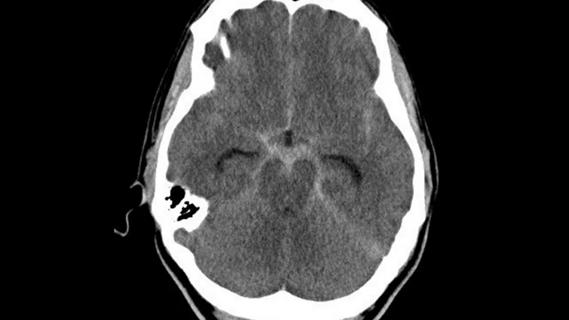
Digital subtraction angiography remains central to assessment of ‘benign’ PMSAH

Cleveland Clinic neuromuscular specialist shares insights on AI in his field and beyond
Findings challenge dogma that microglia are exclusively destructive regardless of location in brain

Neurology is especially well positioned for opportunities to enhance clinical care and medical training
New review distills insights from studies over the past decade
 Search