Locations:





Nurses research BP monitoring in ICUs
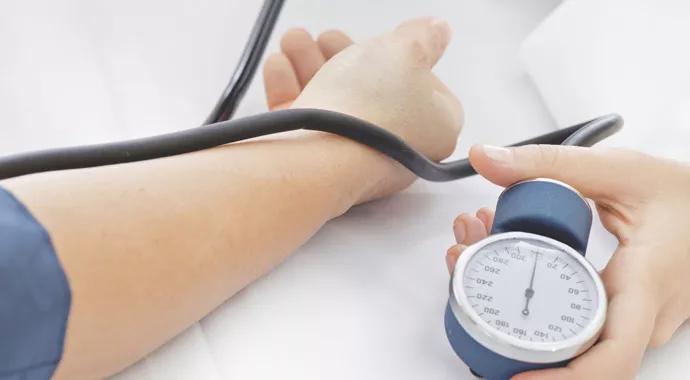
Image content: This image is available to view online.
View image online (https://assets.clevelandclinic.org/transform/a9aac2ca-f371-4434-9f69-46fcda89b85f/bp_690x380_jpg)
bp_690x380
When two float nurses at Cleveland Clinic’s Hillcrest Hospital began questioning blood pressure (BP) monitoring practices in the regional hospital’s three intensive care units, they latched onto a research project. Last winter, Susan McCrudden, BSN, RN and Jayne Rosenberger, BSN, RN initiated a project examining the implications of inter-arm BP differences in patients admitted to three ICUs at the 500-bed, tertiary care hospital in an eastern suburb of Cleveland.
Advertisement
Cleveland Clinic is a non-profit academic medical center. Advertising on our site helps support our mission. We do not endorse non-Cleveland Clinic products or services. Policy
Nurses wondered why the coronary care ICU obtained sequential inter-arm BP at admission and the cardiovascular/surgery ICU and the medical/surgical ICU took a BP in one arm. They considered recommending a practice change so all ICUs were consistent and began reviewing literature on both sequential and simultaneous inter-arm BP monitoring. Most research was conducted in hospitalized medical/surgical or ambulatory patients. That’s when Nancy M. Albert, PhD, CCNS, CHFN, CCRN, NE-BC, FAHA, FCCM, Associate Chief Nursing Officer in Cleveland Clinic’s Office of Research and Innovation, suggested the two nurses conduct a research study in the ICU setting.
Rosenberger, principal investigator, and McCrudden, study coordinator, received approval for the research project from Cleveland Clinic’s Institutional Review Board in December 2013. Their purpose was threefold:
Nurses collected data on 427 patients in Hillcrest Hospital’s three ICUs between January and March 2014. They were assisted in the research by Carol McCullough, BSN, RN, co-investigator; Joni Kime, BSN, RN, co-investigator; Lu Wang, MS, statistician; and Dr. Albert, who served as a mentor.
Before beginning data collection, McCrudden and Rosenberger met with Shared Governance Committees on all three units to introduce the study. They also distributed study announcement flyers to recruit nurses who would champion the research. “We wanted to be sure there were experts in each unit,” says Rosenberger. “We recruited nurses we thought could help maintain internal validity of the study.”
Advertisement
McCrudden and Rosenberger worked on the units on the first day of the study. Each unit received the same BP devices and case report forms that spelled out procedures to staff nurses and provided areas to record data. Then, sheets were collected and placed into binders kept at the nurses’ stations.
Now that data has been collected and analyzed, nurses are preparing a manuscript for publication in a peer reviewed journal as well as a conference presentation. McCrudden and Rosenberger had important results, some of which are shared here:
Since discharge destination differed based on inter-arm differences in BP > 15 mmHg, these results have implications on patient assessment in ICUs. Further, critical care units routinely dispense vasoactive medications that affect BP. Knowing that inter-arm BP differences could exist, it would be important to learn the BP in both arms and base drug dose on the arm with a higher BP.
Advertisement
“It’s a matter of best practice,” says Rosenberger. She and McCrudden hope that their research on the implications of inter-arm blood pressure differences ultimately benefits the nursing community at large.
Advertisement
Advertisement
Nurses play key role in comprehensive lifetime treatment program
Customized bots improve speed, efficiency by streamlining daily clinical, clerical tasks
Nurses play pivotal role in patients’ ability to recover in the comfort of their own homes
New protocol reduces costs, increases patient and caregiver satisfaction
Advocating for patient safety is imperative in fast-paced surgical settings

M-Power program improves the perinatal experience for people who have survived abuse

Advice for those pursuing a WOC nursing career

Veteran nurse shares his experience as a caregiver and community volunteer
 Search