Locations:





Considering nurse perceptions of prediction making
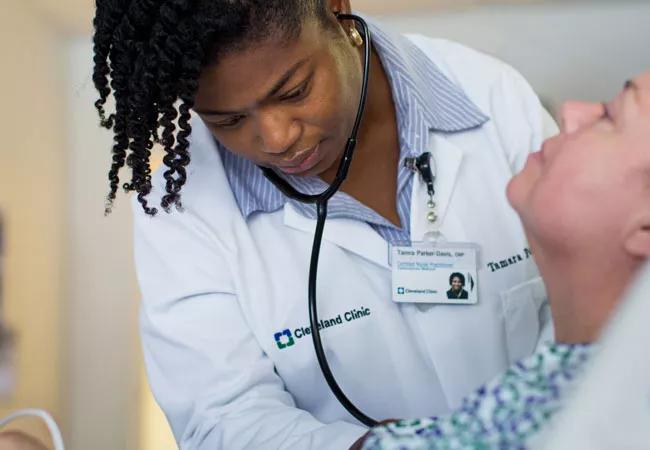
Image content: This image is available to view online.
View image online (https://assets.clevelandclinic.org/transform/ffc9ec7c-a4e5-44a6-acbe-6c8a5234699e/predicting_650x450_jpg)
predicting_650x450
Clinical nurses often presume what might happen with a patient: She’ll probably need assisted living upon discharge. I doubt he’ll head home today due to increasing ammonia levels. But what happens when nurses are asked to document such predictions about their patients’ outcomes? Mark McClelland, DNP, RN, CPHQ, a nurse scientist in Cleveland Clinic’s Office of Nursing Research and Innovation, conducted a phenomenological study to find out.
Advertisement
Cleveland Clinic is a non-profit academic medical center. Advertising on our site helps support our mission. We do not endorse non-Cleveland Clinic products or services. Policy
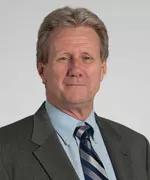
Image content: This image is available to view online.
View image online (https://assets.clevelandclinic.org/transform/e409659f-3801-46c8-8290-d86a6b84f54c/McClelland_150x180_jpg)
Mark McClelland, DNP, RN, CPHQ
“I believe that the nursing process mirrors the scientific process,” says Dr. McClelland. “I’ve got a strong interest in helping nurses develop a scientific approach to their care.” A very important part of a scientist’s work is making predictions, yet there is very little information in the literature about nurses making predictions about their patients’ outcomes.
Dr. McClelland’s team completed an initial study of 15 nurses on eight medical-surgical and step-down units in four hospitals. The purpose of the “Make Two Predictions” study was to explore the following questions:
Participants were asked to follow the Predict, Reconcile, Reflect and Learn (PRRL) Process and document it in a research log for two to three weeks. Developed by the research team, the PRRL Process is as follows:
Advertisement
During the data collection period, nurses made a variety of predictions – some accurate and others not. For instance, one prediction was that a patient would be able to control his blood sugar without insulin upon discharge. (That proved accurate.) Another prediction was that a patient would develop aspiration pneumonia. (That was not accurate.)
Using a semi-structured interview guide, Dr. McClelland interviewed participants upon completion of data collection. Although the data is still being analyzed, five themes emerged.
The next steps are to further analyze and characterize the predictions made by the nurses in this study to create a prediction typology. Then Dr. McClelland would like to repeat the study engaging all the nurses on several units to learn how the social network affects the PRRL Process.
Advertisement
Ultimately, the PRRL Process could be a valuable educational tool for nurses. “Because we’ve gotten evidence that this changes thinking a bit, I believe the process may be used to assess a nurse’s competency and help teach younger nurses how to view patients differently,” says Dr. McClelland.
Photo credit Annie O’Neil.
Advertisement
Advertisement

Nurses play key role in comprehensive lifetime treatment program
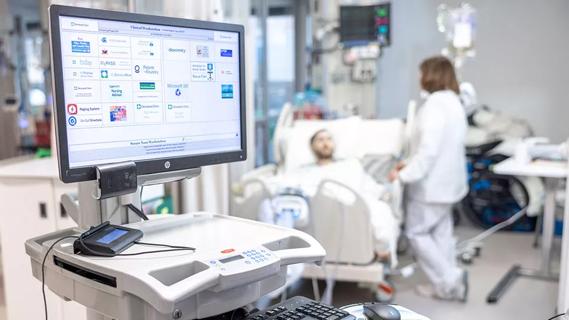
Customized bots improve speed, efficiency by streamlining daily clinical, clerical tasks
Nurses play pivotal role in patients’ ability to recover in the comfort of their own homes
New protocol reduces costs, increases patient and caregiver satisfaction

Advocating for patient safety is imperative in fast-paced surgical settings

M-Power program improves the perinatal experience for people who have survived abuse

Advice for those pursuing a WOC nursing career

Veteran nurse shares his experience as a caregiver and community volunteer
 Search