Locations:





Working with a dedicated cadre of stroke specialists helps curb cerebrovascular accidents
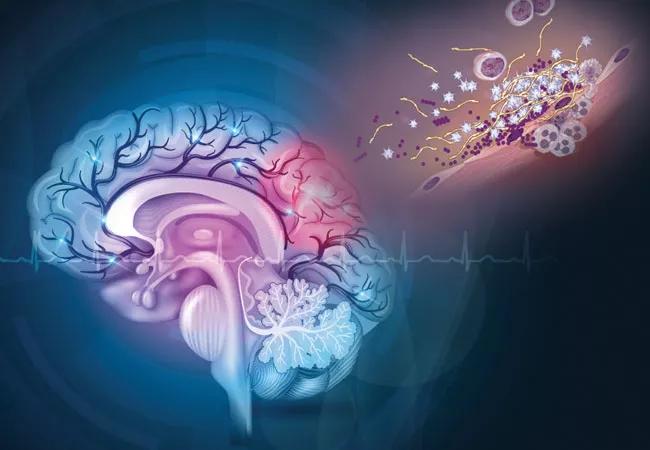
Image content: This image is available to view online.
View image online (https://assets.clevelandclinic.org/transform/221692d6-75a7-47fa-9bdd-8cbad9516d51/21-NEU-2056671_stroke-evaluation-in-endocarditis_650x450_jpg)
anatomic illustrations of a stroke and of endocarditis pathogenesis
A major complication of infective endocarditis (IE) is embolic stroke caused by bits of infective material that break off from a heart valve vegetation and travel to the brain. Cardiac surgery can be a definitive treatment for IE, remove the source of potential embolism and reduce the risk of subsequent stroke. At the same time, there is concern that hemodynamic instability can increase the size of a potential stroke and that the anticoagulation for cardiopulmonary bypass may increase the risk of bleeding — all of which can worsen the outcome of IE patients who are already very ill.
Advertisement
Cleveland Clinic is a non-profit academic medical center. Advertising on our site helps support our mission. We do not endorse non-Cleveland Clinic products or services. Policy
To mitigate the risk of a cerebrovascular accident resulting from IE repair, Cleveland Clinic takes care to routinely image the brain and include a stroke specialist in the preoperative evaluation of IE patients.
“When endocarditis patients have shown any neurological deficit, or when stroke is confirmed or suspected, we help weigh the risks and benefits of taking these patients to surgery,” says Dolora Wisco, MD, a vascular neurologist in Cleveland Clinic’s Cerebrovascular Center with a specialty interest in IE.
“It helps a great deal to have a neurologist who focuses on stroke and IE as part of the team,” says infectious disease specialist Nabin Shrestha, MD. “The stroke neurologists we work with see a lot of IE, so they understand the nuances.”
Cardiothoracic surgeon Shinya Unai, MD, agrees. “It has been very, very helpful to have stroke specialists engaged in the care of our IE patients,” he says. “It enables urgent or emergency cases to undergo a thorough evaluation by a stroke specialist, including a cerebral angiogram, in the morning, after which we can perform surgery later in the afternoon. There is no benefit of waiting once the diagnosis is made and there is an indication for surgery.”
While Dr. Wisco or one of her stroke colleagues may be consulted to give the “all clear” signal for surgery, they are also consulted when an IE patient exhibits weakness, confusion or symptoms of a transient ischemic attack. This may prompt a noncontrast CT or an MRI to rule out hemorrhagic stroke or hemorrhage.
Advertisement
The findings often spur a back-and-forth between the stroke specialist, the infectious disease specialist, the cardiothoracic surgeon and potentially a neurosurgeon or neurointerventionalist.
“If the patient is in a coma or has encephalopathy, the neurologist can help work up the cause, determine if there is permanent damage and treat reversible causes, such as seizures,” Dr. Wisco says. “We can also discuss neurological prognosis, which can help set expectations for family members and help decide the course of treatment.”
If the patient has had an embolic stroke and has large vegetations on a heart valve, the question may not be whether to operate, but when. “I may make a case to take the patient to surgery earlier, if it makes sense, in order to lower the risk of more clots embolizing to the brain,” she explains.
When a patient with IE has suffered a brain hemorrhage, heart surgery ideally should be postponed for four weeks — or at least two weeks if they’ve had a large stroke — to minimize the risk of further bleeding or hemorrhagic transformation. In these cases, the stroke neurologist can help the surgeons, cardiologists and infectious disease physicians determine whether the surgery can be performed earlier or if it is more prudent to delay.
“After a brain hemorrhage occurs as a complication of IE, the risk of bleeding in the brain during surgery decreases over time,” says Dr. Shrestha. “But some patients still suffer additional strokes while waiting for surgery, and heart failure may worsen while waiting. If the risk of surgery is too high, we will put the patient on antibiotics and support them in every way we can in hopes of tiding them over until they can be considered for surgery again.”
Advertisement
Mycotic aneurysms may be coiled before the cardiac IE surgery is performed. “We have seen a decrease in the incidence of stroke with this approach over the last several years,” says Dr. Unai. “It’s rare to have a large or significantly debilitating stroke after IE surgery.
While enlisting a stroke specialist to consult on IE cases is not unusual, Cleveland Clinic’s group practice model means that these consultations can happen swiftly and with a core group of cerebrovascular specialists who develop expertise in IE and camaraderie with the rest of the IE team. “The team knows we are highly interested and invested in the outcomes of these patients,” Dr. Wisco says.
She also recognizes the value of a team with shared goals. “The close working relationship we have is unique, as is the multidisciplinary decision-making it fosters,” she concludes. “It enables us to provide the best care in an expeditious manner for these very complex patients.”
Advertisement
Advertisement

New study advances understanding of patient-defined goals

Testing options and therapies are expanding for this poorly understood sleep disorder
Real-world claims data and tissue culture studies set the stage for randomized clinical testing
Digital subtraction angiography remains central to assessment of ‘benign’ PMSAH

Cleveland Clinic neuromuscular specialist shares insights on AI in his field and beyond

Findings challenge dogma that microglia are exclusively destructive regardless of location in brain

Neurology is especially well positioned for opportunities to enhance clinical care and medical training

New review distills insights from studies over the past decade
 Search