Locations:





Difference in outcomes from REDUCE-IT attributed to faulty comparator
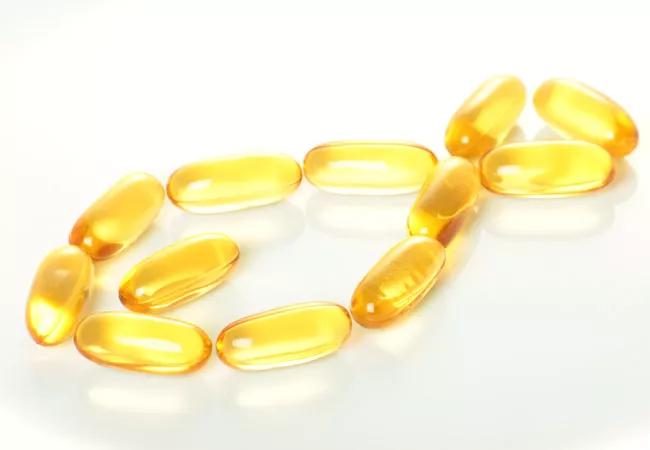
Image content: This image is available to view online.
View image online (https://assets.clevelandclinic.org/transform/7461f266-b964-4086-ab8a-ec5fd1b11fb7/21-HVI-2099211-CQD-Secondary-analysis-STRENGTH-trial-omega-3psd_jpg)
21-HVI-2099211-CQD-Secondary-analysis-STRENGTH-trial-omega-3psd
Achieving high plasma levels of the omega-3 fatty acid eicosapentaenoic acid (EPA) provides no cardiovascular benefit to statin-treated patients at high cardiovascular risk. So determined a secondary analysis of the STRENGTH trial presented at the American College of Cardiology’s virtual 2021 Annual Scientific Session and published online in JAMA Cardiology on May 16.
Advertisement
Cleveland Clinic is a non-profit academic medical center. Advertising on our site helps support our mission. We do not endorse non-Cleveland Clinic products or services. Policy
“This secondary analysis was undertaken to find an explanation for the opposite conclusion reached in REDUCE-IT, which reported that administration of purified EPA substantially lowered cardiovascular risk,” says STRENGTH’s senior author, Steven Nissen, MD, Chief Academic Officer of Cleveland Clinic’s Heart, Vascular & Thoracic Institute. “Evidence from our analysis does not show a benefit even in patients achieving the highest blood levels of EPA.”
The role of omega-3 fatty acids — EPA and docosahexaenoic acid (DHA) — in mitigating cardiovascular risk is of great interest, as icosapent ethyl (a purified form of EPA) is FDA-approved to treat hypertriglyceridemia and reduce cardiovascular risk. Over-the-counter fish oil supplements containing omega-3 fatty acids are widely promoted to help prevent heart disease.
The omega-3s have been tested in multiple trials. Among contemporary large, long-term trials, only REDUCE-IT demonstrated benefit (N Engl J Med. 2019;380:11-22). That trial, which randomized more than 8,000 statin-treated patients at high cardiovascular risk to icosapent ethyl or mineral oil as a placebo, reported a large reduction in major cardiovascular events, with a hazard ratio (HR) of 0.75 (95% CI, 0.68-0.83).
In contrast, the multicenter STRENGTH trial (JAMA. 2020;324:2268-2280), with over 13,000 high-risk, statin-treated patients, found no effect on a composite of adverse cardiovascular outcomes (HR = 0.99; 95% CI, 0.90-1.09). This randomized, double-blind trial used 4 grams daily of a carboxylic acid derivative of omega-3s that results in a high level of EPA and a moderate increase in DHA. For placebo, STRENGTH used corn oil. The trial was ended early for futility, as recapped here.
Advertisement
The STRENGTH trial investigators focused on three possible explanations for the divergent outcomes in the two trials:
Plasma EPA and DHA levels were available in the STRENGTH data at baseline and at 12 months in 5,175 patients taking omega-3s and in 5,207 patients taking corn oil. The median achieved EPA level in the top tertile was 151 µg/mL, which compared favorably with the median EPA level for the treatment group in REDUCE-IT, reported as 144 µg/mL.
The secondary analysis compared STRENGTH’s primary endpoint (a composite of cardiovascular death, nonfatal myocardial infarction, nonfatal stroke, coronary revascularization and unstable angina requiring hospitalization) for this top tertile versus the placebo. The analysis found no treatment effect: HR = 0.98 (95% CI, 0.83-1.16).
Association of DHA levels with the primary outcome were also analyzed to detect any indication of harm. The result was again no treatment effect: HR = 1.02 (95% CI, 0.86-1.20).
Sensitivity analyses were also performed on changes in EPA and DHA plasma levels, red blood cell EPA and DHA levels, and primary and secondary prevention subgroups. Again, no treatment effects were found.
Dr. Nissen cites the following major points from this analysis:
Advertisement
“REDUCE-IT appears to be a false-positive study, with the observed benefit of EPA a consequence of comparing the drug to mineral oil, which has adverse cardiovascular effects,” concludes Dr. Nissen.
Dr. Nissen adds that both studies found that administration of omega-3 fatty acids has risks. In STRENGTH and REDUCE-IT alike, the incidence of atrial fibrillation significantly increased in the treatment groups. REDUCE-IT also found increased bleeding associated with treatment.
He suggests that REDUCE-IT be repeated with an inert comparator. He also says that it would be interesting to see a head-to-head comparison of corn oil versus mineral oil.
“More data is always helpful to drive medicine forward,” says Dr. Nissen. “But based on the current evidence, I recommend icosapent ethyl or fish oil supplements only to lower triglycerides, not to reduce cardiovascular risk.”
“What is consistent across these trials is that fish oil increases atrial fibrillation,” observes Leslie Cho, MD, Co-Section Head of Preventive Cardiology at Cleveland Clinic. “Based on both STRENGTH and REDUCE-IT, we do not recommend fish oil supplements for patients with, or at increased risk of, atrial fibrillation.”
Dr. Cho adds that the two studies underscore the importance of placebos in controlled trials. “It is concerning that there was an increase in usCRP and LDL cholesterol in the placebo arm in REDUCE-IT,” she says. “A true placebo should not produce such changes. Distressingly, placebo composition is often not specified in other large trials. It is crucial that we demand a certificate of analysis for placebos.”
Advertisement
Advertisement
A sampling of outcome and volume data from our Heart & Vascular Institute
Concomitant AF ablation and LAA occlusion strongly endorsed during elective heart surgery
Large retrospective study supports its addition to BAV repair toolbox at expert centers
Young age, solid tumor, high uptake on PET and KRAS mutation signal risk, suggest need for lobectomy
Surprise findings argue for caution about testosterone use in men at risk for fracture
Residual AR related to severe preoperative AR increases risk of progression, need for reoperation

Findings support emphasis on markers of frailty related to, but not dependent on, age
Provides option for patients previously deemed anatomically unsuitable
 Search