Locations:





Case study of an inventive endovascular strategy
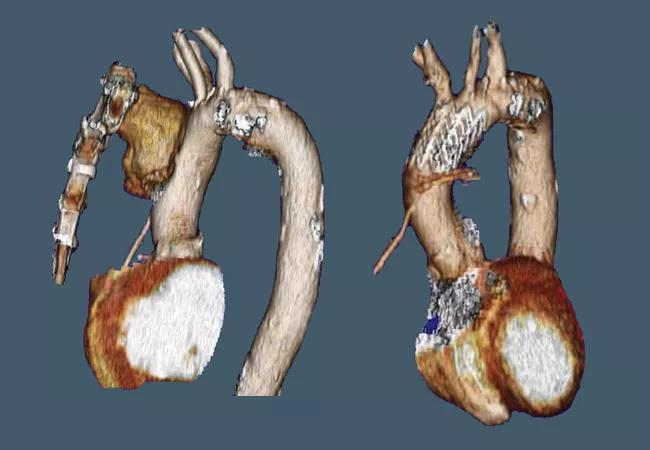
Image content: This image is available to view online.
View image online (https://assets.clevelandclinic.org/transform/be0b4a5e-4fc1-4f41-89a0-7a0236f47659/16-HRT-1192-Image-of-Note-CQD-650x450_jpg)
Stent Grafting for an Ascending Aorta Pseudoaneurysm in an 86-Year-Old
Advertisement
Cleveland Clinic is a non-profit academic medical center. Advertising on our site helps support our mission. We do not endorse non-Cleveland Clinic products or services. Policy
An 86-year-old man who was living independently presented in early 2016 with a large pseudoaneurysm on the ascending aorta (Figure 1) in close proximity to widely patent grafts from a previous coronary artery bypass procedure.
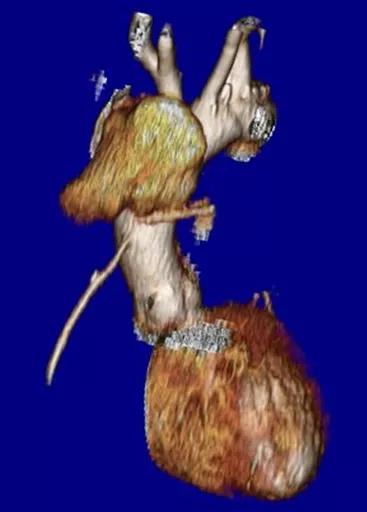
Image content: This image is available to view online.
View image online (https://assets.clevelandclinic.org/transform/1667c7d2-9964-401d-b207-0460db4b3f0f/Roselli-inset-1-cropped_jpg)
Figure 1. CT of the pseudoaneurysm on presentation.
Further inspection on CT scan showed the pseudoaneurysm to be immediately adjacent to the back of the sternum (Figure 2), further complicating management of this highly functional but still quite elderly patient.
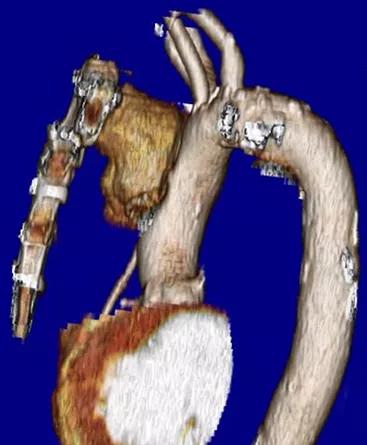
Image content: This image is available to view online.
View image online (https://assets.clevelandclinic.org/transform/76f694fa-222a-4f56-9b88-ff46c504f430/Roselli-inset-2-cropped_jpg)
Figure 2. Preoperative CT showing proximity of the pseudoaneurysm to the sternum.
After weighing options, the surgical team in Cleveland Clinic’s Aorta Center devised a plan to address the pseudoaneurysm by placing a stent graft (Figure 3) delivered through the right axillary artery.
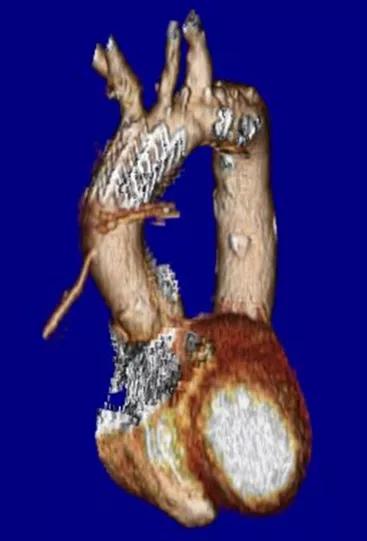
Image content: This image is available to view online.
View image online (https://assets.clevelandclinic.org/transform/2949dae0-70aa-4c81-b2a9-f8f056fd115b/roselli-inset-3-cropped_jpg)
Figure 3. CT showing the implanted stent graft.
After extubation the next morning, the patient was back on his feet and out of the ICU within two days. He continues to fare well.
Cleveland Clinic’s ability to develop inventive endovascular strategies like this stems from its unmatched aortic surgery volumes, which consistently approach or exceed 1,200 annually (N = 1,185 in 2015). Its mortality rates for thoracic aorta surgery procedures consistently outperform expected rates (e.g., 2015 observed/expected ratio of 0.8) despite an abundance of complex cases like the one profiled here.
For more outcomes and volume information from Cleveland Clinic’s Miller Family Heart & Vascular Institute, visit clevelandclinic.org/outcomes.
Advertisement
Dr. Roselli is a cardiothoracic surgeon and Director of Cleveland Clinic’s Aorta Center.
Advertisement
Advertisement
A sampling of outcome and volume data from our Heart & Vascular Institute
Concomitant AF ablation and LAA occlusion strongly endorsed during elective heart surgery
Large retrospective study supports its addition to BAV repair toolbox at expert centers
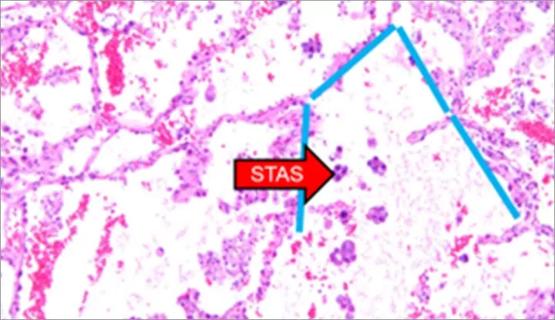
Young age, solid tumor, high uptake on PET and KRAS mutation signal risk, suggest need for lobectomy
Surprise findings argue for caution about testosterone use in men at risk for fracture
Residual AR related to severe preoperative AR increases risk of progression, need for reoperation
Findings support emphasis on markers of frailty related to, but not dependent on, age
Provides option for patients previously deemed anatomically unsuitable
 Search