Locations:





Laws are the main modifiable factor behind stroke center certification
Image content: This image is available to view online.
View image online (https://assets.clevelandclinic.org/transform/c7e8b143-3203-422a-8564-767e18759ec9/Uchino-690x380_jpg)
Uchino-690×380
Does your geographic area have a certified primary stroke center (PSC)? If so, state legislation likely played a big part in making it possible.
Advertisement
Cleveland Clinic is a non-profit academic medical center. Advertising on our site helps support our mission. We do not endorse non-Cleveland Clinic products or services. Policy
That’s the conclusion of a new study in Stroke published by researchers with Cleveland Clinic’s Cerebrovascular Center who set out to investigate the factors affecting PSC distribution in the United States.
The researchers found that four factors are independently associated with PSC certification:
“Of these factors, the most important one that we have the ability to change is state legislation,” says lead study author Ken Uchino, MD, a staff neurologist in the Cerebrovascular Center. “This suggests that if we can change legislation in more states to increase the number of hospitals certified as primary stroke centers, we can improve access to standardized care for patients with acute ischemic stroke.”
The goal of stroke center certification is to improve stroke care by drawing stroke patients into the most capable centers. Many states have implemented legislation or other policies (referred to as “stroke legislation” hereafter) that allow emergency medical services (EMS) to bypass the nearest hospital and send ambulances directly to a certified PSC for rapid administration of guideline-directed therapy. This process appears to have improved measurable processes of care, as well as mortality.
Efforts to establish certified stroke centers originated with the Brain Attack Coalition in 2000. The Joint Commission began certifying PSCs in 2003 in conjunction with the American Heart Association and American Stroke Association, and together they’ve served as the certifying body for 74 percent of PSCs. The remaining PSCs have been certified by other organizations and several states that have their own stroke certification programs.
Advertisement
Dr. Uchino and his colleagues searched available databases to identify all PSCs certified in the United States through 2013. They found that 32 percent of U.S. adult acute-care hospitals with an emergency department were certified as PSCs as of December 2013.
Whereas the overall number of PSCs grew from 2009 to the end of 2013, that growth was substantially larger (16 percent) in states with stroke legislation than the 6 percent growth in states without stroke legislation.
By the end of 2013, the proportion of hospitals that were PSC-certified varied from 4 percent to 75 percent (median, 13 percent) in states without stroke legislation, whereas it ranged from 13 percent to 100 percent (median, 43 percent) in states with stroke legislation (P < .001 for the difference). The majority of states with fewer than 25 percent of hospitals PSC-certified had no stroke legislation.
Hospitals that were larger both in number of beds and in annual admissions were more likely to be PSC-certified than were smaller hospitals.
Certified hospitals were also more likely to be located in metropolitan areas with at least 2.5 million people. The researchers speculate that this may be due to competition with other hospitals, availability of stroke specialists or prioritization of certifying bodies to more populated areas for maximal impact. Only 4 percent of PSC-certified hospitals were located in rural areas.
Geographic location played a role too. Hospitals in the South and Midwest were far less likely to be PSCs than were hospitals in the Northeast and the West. “This is consistent with the known geographic variation in utilization of intravenous thrombolysis and stroke fatality rates across the country,” explains Dr. Uchino.
Advertisement
The fact that only 32 percent of all acute-care U.S. hospitals with emergency departments had received PSC designation by the end of 2013 leaves some 147 million U.S. residents without assured access to the standard of care for acute stroke, the researchers note.
“Establishing stroke legislation in more states might help improve the proportion of hospitals that are certified PSCs,” says Dr. Uchino.
Cleveland Clinic’s Cerebrovascular Center includes The Joint Commission-certified Comprehensive Stroke Center on its main campus and a network of eight certified PSCs throughout Northeast Ohio. Together these facilities manage one of North America’s highest stroke-related patient volumes, with more than 3,200 stroke discharges and 1,100 surgical/interventional procedures annually.
Advertisement
Advertisement

New study advances understanding of patient-defined goals

Testing options and therapies are expanding for this poorly understood sleep disorder
Real-world claims data and tissue culture studies set the stage for randomized clinical testing
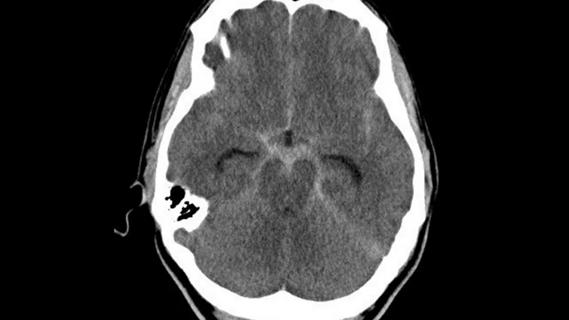
Digital subtraction angiography remains central to assessment of ‘benign’ PMSAH

Cleveland Clinic neuromuscular specialist shares insights on AI in his field and beyond

Findings challenge dogma that microglia are exclusively destructive regardless of location in brain

Neurology is especially well positioned for opportunities to enhance clinical care and medical training

New review distills insights from studies over the past decade
 Search