Locations:





Using donor organs efficiently to help the most patients
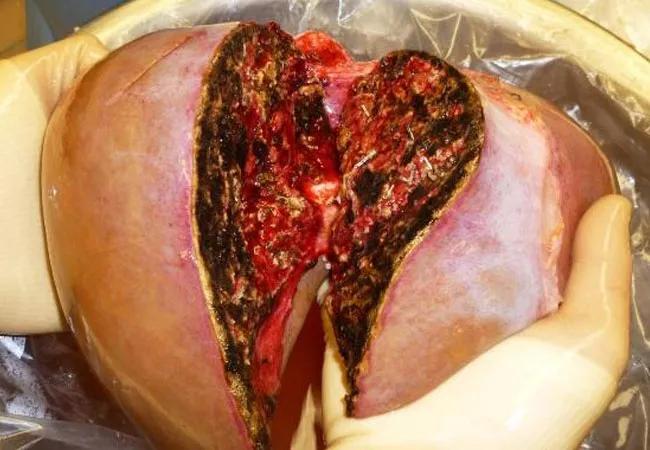
Image content: This image is available to view online.
View image online (https://assets.clevelandclinic.org/transform/72913233-f591-4374-8759-52274de580f5/Split-Liver_jpg)
Split-Liver
Advertisement
Cleveland Clinic is a non-profit academic medical center. Advertising on our site helps support our mission. We do not endorse non-Cleveland Clinic products or services. Policy
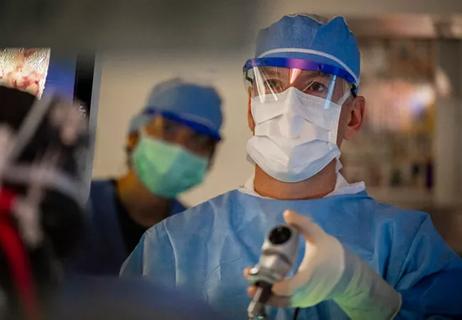
As one of the solutions for severe donor shortage in liver transplantation, Cleveland Clinic performed two liver transplants simultaneously from one deceased donor by splitting a liver graft into two hemiliver grafts.
This highly complex procedure requires an experienced surgical team with expertise in both transplant surgery and hepatobiliary surgery. Because splitting a whole liver graft creates two smaller partial grafts, the risk of liver transplant failure is generally considered to be higher than liver transplantation using a whole liver graft. As a result, this procedure remains underutilized.
The patients are a 65-year-old female with primary biliary cirrhosis and a 54-year-old male with hepatitis C-related cirrhosis and hepatocellular carcinoma. Both were listed for liver transplantation at Cleveland Clinic. A brain-dead donor became available and the decision was made to proceed with split-liver transplantation. Our donor team split the whole liver in situ before the liver was procured from the donor. The split liver grafts were brought back to Cleveland Clinic’s main campus to be simultaneously transplanted into the two recipients. Despite complex vascular and biliary anastomoses, both recipients did very well with excellent liver graft function. The patients were discharged from hospital in six and nine days, respectively.
Advertisement
Advertisement
Advertisement

Strong patient communication can help clinicians choose the best treatment option
ctDNA should be incorporated into care to help stratify risk pre-operatively and for post-operative surveillance

The importance of raising awareness and taking steps to mitigate these occurrences
New research indicates feasibility and helps identify which patients could benefit

Treating a patient after a complicated hernia repair led to surgical complications and chronic pain
Standardized and collaborative care improves liver transplantations
Fewer incisions and more control for surgeons

Caregiver collaboration and patient education remain critical
 Search