Locations:





Protection against neurodegenerative diseases suggested
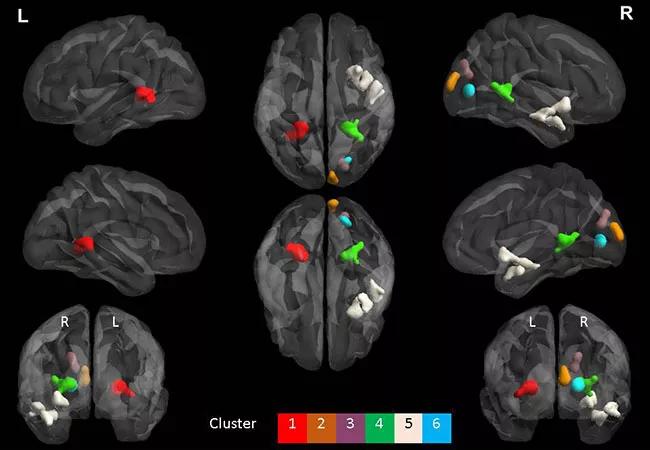
Image content: This image is available to view online.
View image online (https://assets.clevelandclinic.org/transform/e135b35a-2197-4c24-a8d0-6a0068f11b67/16-NEU-2799-Banks-650x450_jpg)
16-NEU-2799-Banks-650×450
Compared with controls, trained wine experts have significantly enhanced structural and functional measures in specific areas of the brain associated with memory and olfaction. So finds a new study from Cleveland Clinic Lou Ruvo Center for Brain Health, Las Vegas, which also notes that because these brain areas usually show the earliest signs of degeneration in Alzheimer’s and Parkinson’s diseases, boosting these areas through training might offer protection against neurodegeneration.
Advertisement
Cleveland Clinic is a non-profit academic medical center. Advertising on our site helps support our mission. We do not endorse non-Cleveland Clinic products or services. Policy
“Our findings hint at mechanisms of neural plasticity in adults,” says Sarah Banks, PhD, ABPP/CN, Head of the Neuropsychology Program at Lou Ruvo Center for Brain Health and lead author of the study, published in Frontiers in Human Neuroscience. “A busy brain helps expand regions, and developing some sort of expertise fine-tunes specific areas.”
Thirteen Master Sommeliers and 13 control subjects without specialized wine knowledge underwent a variety of tests to detect structural and functional brain differences between sommeliers and lay people. The title of Master Sommelier is conferred by the Court of Master Sommeliers after extensive training over several years and successful completion of four examinations. A large part of the training involves developing a knowledge of wines through smell. Controls were matched to the sommeliers as closely as possible by age and sex.
MRI data were obtained while study participants undertook olfactory tasks using a custom-designed mask that allows air pumped over liquids to be delivered under the nose. Participants were presented with odors from red wines, white wines and other liquids, and asked to identify each. Additionally, visual testing was done by having subjects identify pixelated images of fingerprints or zebra patterns.
Structural assessments using voxel-based morphometry indicated that sommeliers had significantly enhanced volume in regions in the right and left entorhinal cortex, the right insula and the left hippocampus, as seen in Figure 1. The thickness of the cortex in the right entorhinal region was found to be positively correlated with years as a Master Sommelier.
Advertisement
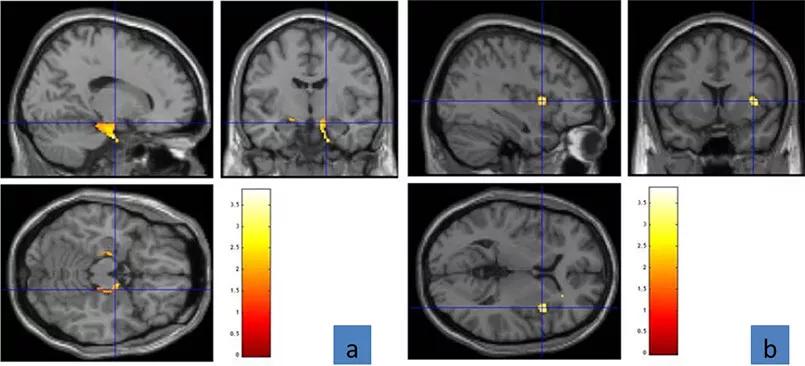
Image content: This image is available to view online.
View image online (https://assets.clevelandclinic.org/transform/afb49e09-32bd-4216-9cfb-299b002beff8/16-NEU-2799-Banks-inset1_jpg)
Figure 1. Regions of enhanced volume in sommeliers as compared with controls in the entorhinal cortices (a) and the right insula (b). Reprinted from Banks et al., Frontiers in Human Neuroscience (2016 Aug 22;10:414).
Functional regional activation differences were detected in areas involving the right olfactory and memory regions, with heightened activation specifically for sommeliers during an olfactory task, as seen in Figure 2. As expected, these differences were not apparent when subjects underwent visual testing. According to the study authors, this indicates that the enhanced areas of the brain seen in sommeliers are not generalized but specific to their training.
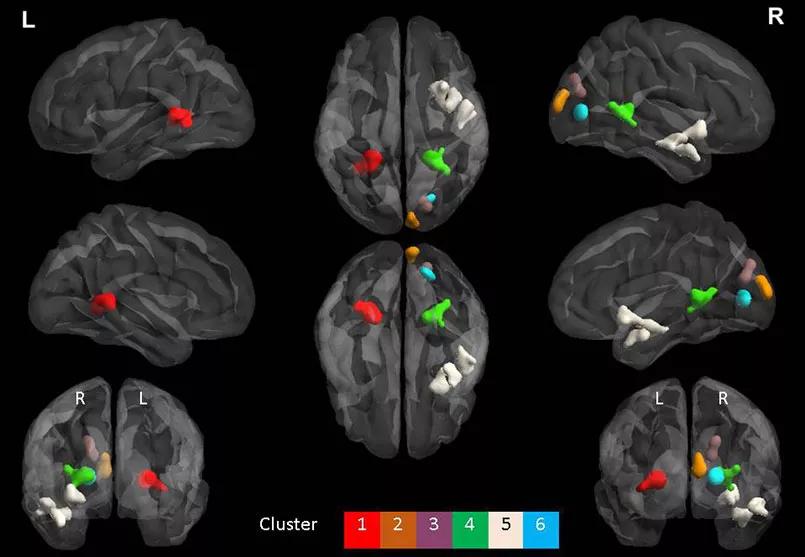
Image content: This image is available to view online.
View image online (https://assets.clevelandclinic.org/transform/17dcada3-fbe2-4edf-b020-b5396770cf1f/16-NEU-2799-Banks-inset2_jpg)
Figure 2. The six clusters that were significantly different during interaction between group and task. Reprinted from Banks et al., Frontiers in Human Neuroscience (2016 Aug 22;10:414).
“Overall, our results indicate that sommeliers’ brains show specialization in regions of the olfactory and memory networks, and also in areas important to integrating internal sensory stimuli and external cues,” explains Dr. Banks. “These are the regions where we would expect to find differences in people who have been trained in skills that would most use these brain areas.”
Dr. Banks and her co-authors note that the brain areas that showed heightened brain structure and function in sommeliers are those that are particularly sensitive to aging and neurodegenerative diseases. One of the most interesting findings, she says, is that the right entorhinal cortex continued to increase in thickness with years of experience, whereas one would expect it to instead be thinning with age.
Advertisement
Given the positive effects found in the sommeliers’ brains, Dr. Banks speculates that some form of training may be clinically useful to help fend off neurodegenerative diseases common in the aging population.
“While it’s impractical to design a clinical intervention identical to Master Sommelier training, it would be interesting to see if smaller-scale, targeted training could also have beneficial effects to these critical brain areas,” says Dr. Banks. “It’s encouraging to see evidence that life experience has the potential to change brain structure in detectable ways.”
She notes that the easy availability of Master Sommeliers in Las Vegas, with its multitude of high-end restaurants, makes it possible for the Lou Ruvo Center for Brain Health to conduct distinctive research of this type. She adds that this study joins a body of other brain research focused on experts — such as musicians and taxi drivers — but is unusual in that it obtained structural and functional brain data simultaneously.
The Lou Ruvo Center for Brain Health researchers plan further exploration of brain region connectivity in Master Sommeliers.
Advertisement
Advertisement

New study advances understanding of patient-defined goals
Testing options and therapies are expanding for this poorly understood sleep disorder
Real-world claims data and tissue culture studies set the stage for randomized clinical testing
Digital subtraction angiography remains central to assessment of ‘benign’ PMSAH

Cleveland Clinic neuromuscular specialist shares insights on AI in his field and beyond
Findings challenge dogma that microglia are exclusively destructive regardless of location in brain
Neurology is especially well positioned for opportunities to enhance clinical care and medical training
New review distills insights from studies over the past decade
 Search