Locations:





World experts converge on Cleveland Sept. 16-17
Image content: This image is available to view online.
View image online (https://assets.clevelandclinic.org/transform/3405bf48-7947-4830-9681-b17f50cb387f/16-HRT-1201-HVI-CME-CQD-650x450_jpg)
Heart CME
On a Friday and Saturday in mid-September, world experts in pediatric and congenital heart disease from five nations and all corners of the U.S. will gather in Cleveland for a singular live CME event.
Advertisement
Cleveland Clinic is a non-profit academic medical center. Advertising on our site helps support our mission. We do not endorse non-Cleveland Clinic products or services. Policy
If you’re a provider specializing in pediatric or congenital heart disease, here are five reasons to find a way to join them at the Cleveland Clinic InterContinental Hotel & Conference Center on Sept. 16-17, 2016.
The name of the day-and-a-half-long conference — “1st Annual Advances in Pediatric and Congenital Heart Care: From Single Ventricle to Failing Fontan” — is spot-on. The program will walk participants through all aspects of single-ventricle heart disease, from fetal detection of single-ventricle anatomy through post-Fontan procedure management issues such as whether or not to anticoagulate patients.
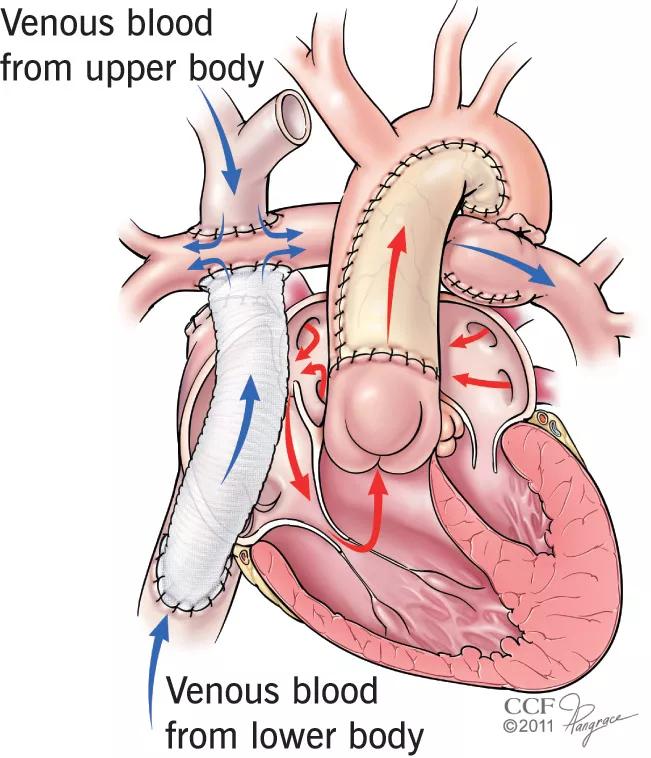
Image content: This image is available to view online.
View image online (https://assets.clevelandclinic.org/transform/fcbfc5c8-61c4-43c8-9f7d-67475d7fd4cf/16-HRT-1240-NajmSaarel-CQD-inset_jpg)
Faculty will explore a wide range of relevant issues along the way, including:
“One of the biggest challenges in pediatric and adult congenital cardiology is managing patients with single-ventricle heart disease,” says course co-director Elizabeth (Tess) Saarel, MD, Chair, Pediatric Cardiology, Cleveland Clinic Children’s. “This collaborative conference brings together leading clinicians worldwide to discuss the history, clinical successes, challenges, and ideas for future research and treatment of univentricular heart disease.”
Physicians and surgeons from Canada, Japan, Saudi Arabia, Turkey and the U.K. will join experts from leading U.S. institutions like Texas Children’s, Rady Children’s Hospital and The Children’s Hospital of Philadelphia to complement a stellar faculty of Cleveland Clinic clinician-educators. The latter are drawn from Cleveland Clinic Children’s, which earned national recognition for cardiology and heart surgery in U.S. News & World Report’s “Best Children’s Hospitals” rankings for 2016-17, as well as from Cleveland Clinic’s top-ranked Miller Family Heart & Vascular Institute.
Advertisement
The result is that attendees will have access to an unparalleled assembly of expertise in pediatric and adult patients with single-ventricle anatomy.
“Univentricular hearts represent early surgical challenges and possible late failures,” says course co-director Hani Najm, MD, Chair, Pediatric and Congenital Heart Surgery at Cleveland Clinic. “Handling such challenges and late failures is the essence of improving survival. This conference draws on the experience of world-renowned experts to help attendees better address these issues.”
Two of the celebrated guest faculty are giants in the field who will be delivering special keynote-style addresses:
Apart from the two keynote-style addresses, all speakers will deliver focused 15-minute presentations designed to highlight practical essentials and allow plenty of time for dynamic panel discussions including Q&A sessions with the audience.
A highlight of Saturday morning will be pro/con debates on two active controversies in the field:
Advertisement
If the above clinical and academic fire power isn’t quite enough to draw you to the conference, consider that, despite the stereotypes, Cleveland’s weather is typically heavenly in mid-September, at the cusp of autumn.
For more info on the course or to register, visit ccfcme.org/pediatric-congenital.
This activity has been approved for AMA PRA Category 1 Credit™.
Advertisement
Advertisement
A sampling of outcome and volume data from our Heart & Vascular Institute
Concomitant AF ablation and LAA occlusion strongly endorsed during elective heart surgery
Large retrospective study supports its addition to BAV repair toolbox at expert centers
Young age, solid tumor, high uptake on PET and KRAS mutation signal risk, suggest need for lobectomy
Surprise findings argue for caution about testosterone use in men at risk for fracture
Residual AR related to severe preoperative AR increases risk of progression, need for reoperation

Findings support emphasis on markers of frailty related to, but not dependent on, age
Provides option for patients previously deemed anatomically unsuitable
 Search