Locations:





Identifies patients who are unlikely to succeed in managing this complex disease

Image content: This image is available to view online.
View image online (https://assets.clevelandclinic.org/transform/e3a6b3c9-028a-4669-b259-8de330da4a02/heart_brain_690x380_jpg)
heart_brain_690x380
An easy-to-administer test called Mini-Cog, may allow clinicians to identify which heart failure patients suffer from cognitive impairment. In a study presented at the 2014 American College of Cardiology Scientific Sessions, in Washington DC, patients who performed poorly on Mini-Cog were approximately twice as likely to be readmitted or die within 30 days of discharge than patients who aced the test.
Advertisement
Cleveland Clinic is a non-profit academic medical center. Advertising on our site helps support our mission. We do not endorse non-Cleveland Clinic products or services. Policy
The three-part quiz first asks the patient to memorize three unrelated words—for example, apple, penny, and table. In step two, the patient is asked to draw a clock with its hands at 8:20. Then the patient is asked to recall the three memorized words. The test is graded on a five-point scale, with two points awarded for the clock drawing and one point for each correct word. A score of two or less indicates a high likelihood of cognitive impairment.
The “Mini-Cog” was originally developed as a quick and easy way for healthcare professionals to identify patients suffering from dementia. Eiran Gorodeski, MD, MPH, Cleveland Clinic staff cardiologist and Director of the Center for Connected Care, and his clinical and research teams were the first to apply the test to hospitalized heart failure patients.
The test was incorporated into inpatient care protocols and administered to 720 patients admitted to Cleveland Clinic with heart failure. When Dr. Gorodeski and colleagues reviewed the test results, they found 23 percent of the patients showed evidence of cognitive impairment. At 47 percent, the 30-day readmission rate for these patients was more than twice as high as for the patients with a low likelihood of cognitive impairment (22 percent).
The correlation, says Dr. Gorodeski, lies in the patients’ declining ability to following the complex self-care routine essential in managing heart failure. “Patients who have difficulty with attention, memory, reasoning, planning and execution are unlikely to take their medications as instructed, watch their salt intake, weigh themselves daily and recognize the signs of worsening heart failure,” he says.
Advertisement
“Much of our effort to stem the tide of heart-failure readmissions has focused on teaching patients how to care for themselves after discharge. This might be a losing battle, if a quarter of heart failure patients are cognitively impaired,” he adds.
Not all patients who scored low on the Mini-Cog fared equally poorly, however. The rate of 30-day readmission depended on whether the patient was discharged home or to a skilled nursing facility. Patients who performed poorly on the Mini-Cog and were discharged to a facility experienced a significant delay in the interval before their first readmission event or death.
This finding presents an opportunity for clinicians to use the results to initiate a conversation with patients and their family about most appropriate post-discharge venue of care.
“Perhaps more emphasis should be placed on identifying the correct discharge location for patients based on their mental and physical needs,” says Dr. Gorodeski.
With one in five heart-failure patients readmitted to the hospital within 30 days of discharge, regular use of the Mini-Cog has the potential to stem the tide, and even reverse it. Dr. Gorodeski encourages clinicians to incorporate the simple test into their patient care routine.
“Cognitive impairment is frequently subtle, and you have to look for it,” he says.
Advertisement
Advertisement

A sampling of outcome and volume data from our Heart & Vascular Institute
Concomitant AF ablation and LAA occlusion strongly endorsed during elective heart surgery
Large retrospective study supports its addition to BAV repair toolbox at expert centers
Young age, solid tumor, high uptake on PET and KRAS mutation signal risk, suggest need for lobectomy
Surprise findings argue for caution about testosterone use in men at risk for fracture
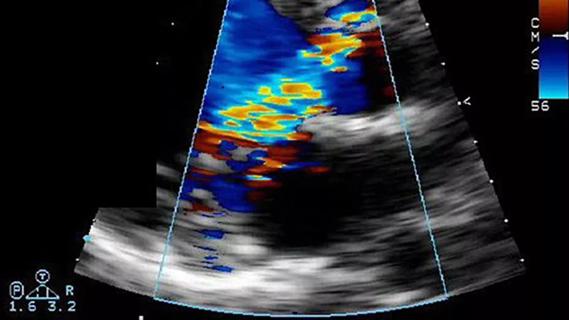
Residual AR related to severe preoperative AR increases risk of progression, need for reoperation

Findings support emphasis on markers of frailty related to, but not dependent on, age
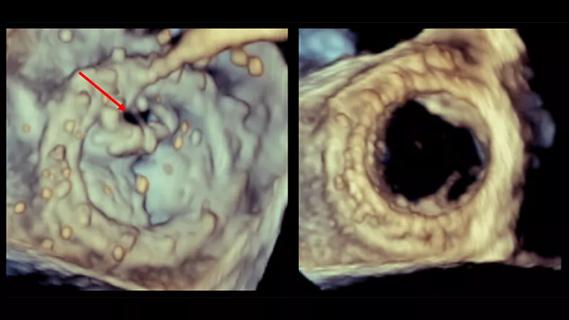
Provides option for patients previously deemed anatomically unsuitable
 Search