Locations:





Next step in the career of a versatile interventional cardiologist
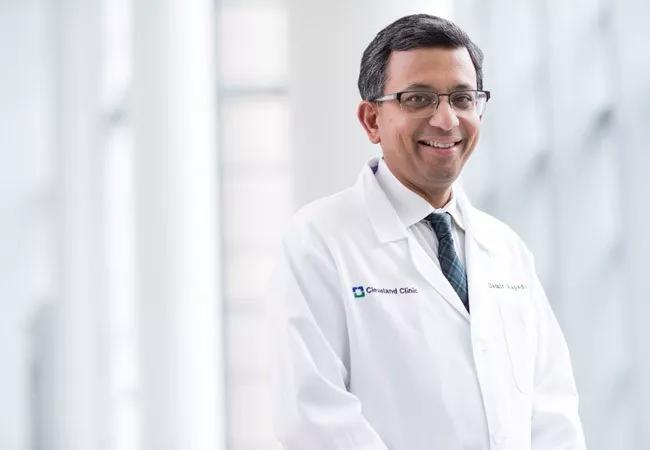
Image content: This image is available to view online.
View image online (https://assets.clevelandclinic.org/transform/503847e7-b1d0-446d-b40d-d43fea0f3e10/19-HRT-3765-samir-kapadia-650x450_jpg)
19-HRT-3765-samir-kapadia-650×450
Cleveland Clinic’s Robert and Suzanne Tomsich Department of Cardiovascular Medicine has a new Chair — Samir Kapadia, MD.
Advertisement
Cleveland Clinic is a non-profit academic medical center. Advertising on our site helps support our mission. We do not endorse non-Cleveland Clinic products or services. Policy
Dr. Kapadia, shown above, succeeds Steven Nissen, MD, who had served as Department Chair since 2006. Dr. Nissen will now be directing academic and research activities as Chief Academic Officer in Cleveland Clinic’s Miller Family Heart & Vascular Institute.
Trained as an interventional cardiologist, Dr. Kapadia joined Cleveland Clinic in 2003, serving as Director of the Sones Cardiac Catheterization Laboratories since 2009 and as Section Head of Invasive and Interventional Cardiology since 2014. He is also Professor of Medicine at the Cleveland Clinic Lerner College of Medicine of Case Western Reserve University.
He received his medical degree with highest honors from Smt. NHL Municipal Medical College in Gujarat, India, in 1989. In 1993, he completed his internship and residency in internal medicine at Baylor College of Medicine, Houston, where he was named outstanding resident. He completed fellowships in cardiology and interventional cardiology at Cleveland Clinic in 1998 and 2000, respectively, and served as chief interventional fellow. After his training, Dr. Kapadia served from 2000 to 2003 as an interventional cardiologist at the VA Puget Sound Health Care System, Seattle, and held an academic appointment at the University of Washington.
Dr. Kapadia’s wide-ranging clinical interests include:
Advertisement
He is a widely published clinical researcher, contributing more than 450 articles and abstracts to the medical literature and playing a leadership role in numerous major cardiovascular trials, including the recent PARTNER 3 and COAPT investigations. He is also an accomplished innovator, with 15 patents to date.
Dr. Kapadia’s many editorial appointments include service as chief editor of Textbook of Interventional Cardiology: A Global Perspective (2017) and as associate editor of JACC Cardiovascular Interventions. He is a member of various professional societies, including the American Heart Association, American College of Cardiology and Society for Vascular Medicine.
“Dr. Kapadia has been a dedicated researcher, educator, innovator and devoted physician to his many patients,” says Lars Svensson, MD, PhD, Chair of the Miller Family Heart & Vascular Institute. “We look forward to his energy and enthusiasm taking our cardiology team to the next level of national recognition as new innovations are implemented.”
“I am absolutely delighted to have Dr. Kapadia succeed me as Chair of Cardiovascular Medicine,” adds Dr. Nissen. “He has the rare combination of exceptional skills in the triad of research, patient care and education. The department will maintain its preeminence in the years ahead under his energetic and innovative leadership.”
For his part, Dr. Kapadia says: “I am thrilled and honored to lead our world-renowned team of cardiologists at Cleveland Clinic. I hope to lead with example, fostering innovation, accountability and respect.”
Advertisement
Advertisement
A sampling of outcome and volume data from our Heart & Vascular Institute
Concomitant AF ablation and LAA occlusion strongly endorsed during elective heart surgery
Large retrospective study supports its addition to BAV repair toolbox at expert centers
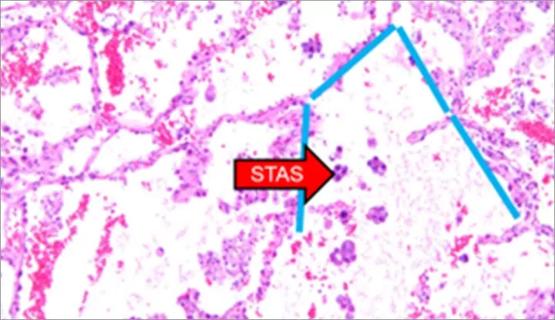
Young age, solid tumor, high uptake on PET and KRAS mutation signal risk, suggest need for lobectomy
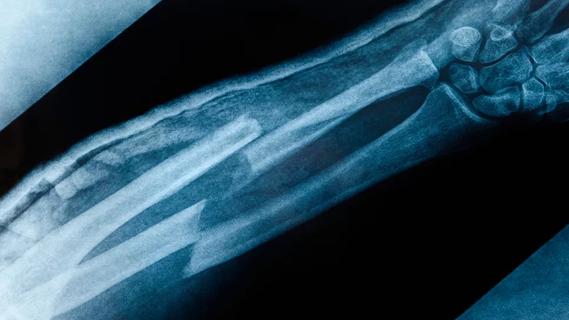
Surprise findings argue for caution about testosterone use in men at risk for fracture
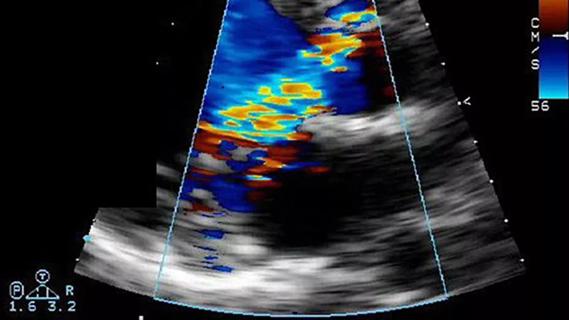
Residual AR related to severe preoperative AR increases risk of progression, need for reoperation
Findings support emphasis on markers of frailty related to, but not dependent on, age
Provides option for patients previously deemed anatomically unsuitable
 Search