Locations:





Multicenter study demonstrates rate of complications
Image content: This image is available to view online.
View image online (https://assets.clevelandclinic.org/transform/48d524c2-5bd2-42cc-adfb-c2e9fdecbd24/16-ORT-2676-Goodwin-Hero-Image-650x450pxl_jpg)
16-ort-2676-goodwin-hero-image-650x450pxl
By Joel Kolmodin, MD, and Ryan Goodwin, MD
Advertisement
Cleveland Clinic is a non-profit academic medical center. Advertising on our site helps support our mission. We do not endorse non-Cleveland Clinic products or services. Policy
Bone morphogenetic protein (BMP) is used extensively in adult spine and fracture surgery, with well-documented safety and effectiveness. Though its use in pediatric patients is increasing, its safety and efficacy in the pediatric population is not well-defined in the literature. Additionally, BMP is considered contra-indicated in skeletally-immature patients by the FDA; thus its use in children is off-label. Our recent study sought to establish utilization trends of BMP in pediatric orthopedic surgery practice, with a focus on studying its complications.
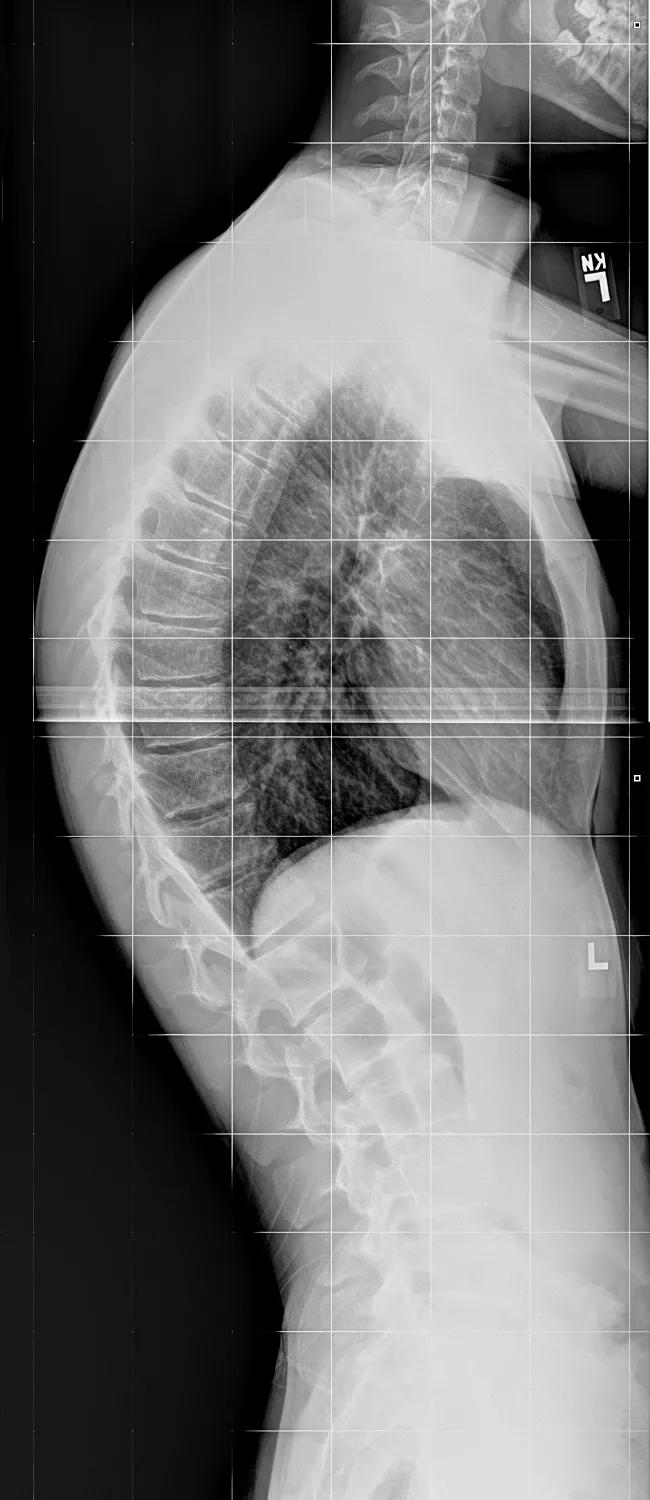
Image content: This image is available to view online.
View image online (https://assets.clevelandclinic.org/transform/fddd3c35-42fa-459f-a958-e7cb05a61de3/16-ORT-2676-Goodwin-Inset-Image-01-650pxl-width_jpg)
A 15-year-old male with progressive kyphosis secondary to Loeys-Dietz syndrome.
We retrospectively reviewed all pediatric orthopedic surgical cases utilizing BMP across six sites between 2000 and 2013. We included 312 cases, including demographic information, surgical indication, procedure details and surgical complications. Each complication was classified using the Clavien-Dindo scheme, which grades complications from 1 to 5 given the severity of insult to the patient.
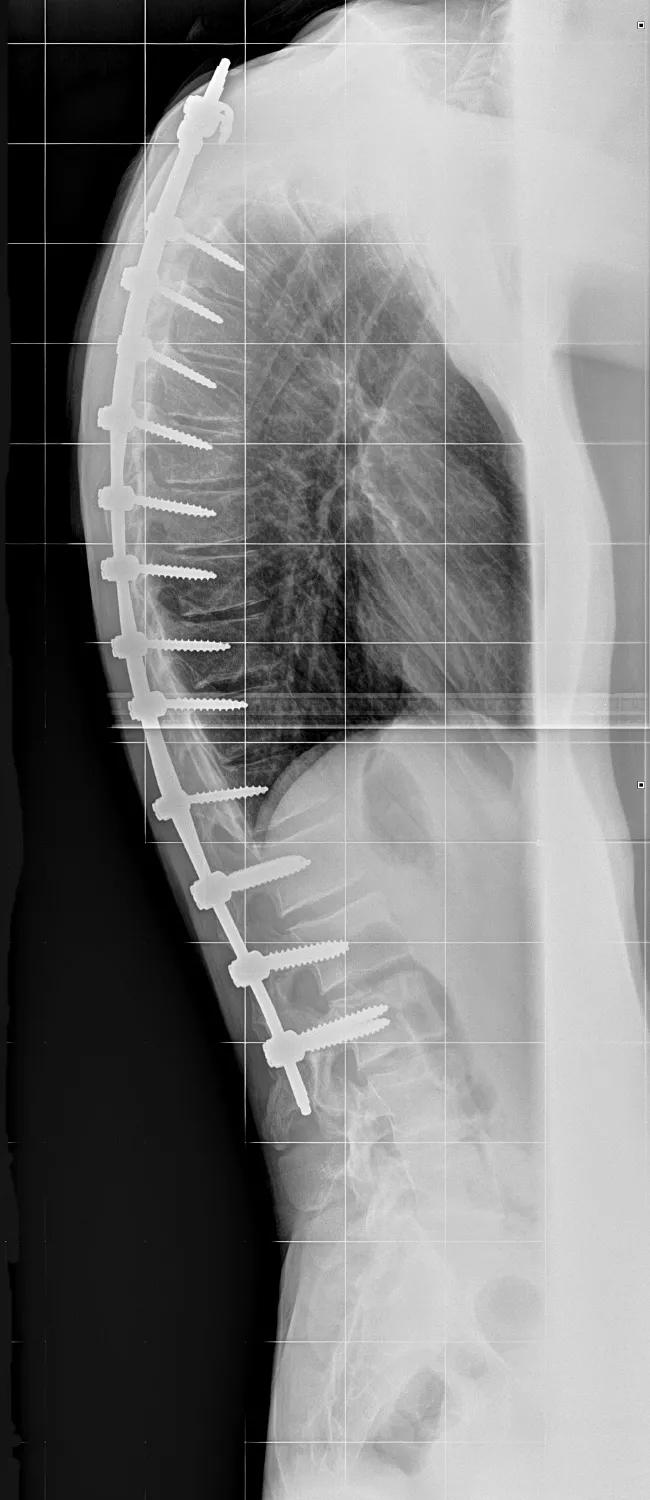
Image content: This image is available to view online.
View image online (https://assets.clevelandclinic.org/transform/4d010369-7845-4fa8-8226-ebe874282719/16-ORT-2676-Goodwin-Inset-Image-02-650pxl-width_jpg)
Surgical correction in the form of T2-L3 PSF with multiple osteotomies was performed. The procedure was complicated by T6 pseudarthrosis and failure of the proximal construct eight months postoperatively.
BMP was utilized for spinal fusion or revision in 86 percent of cases, and it was utilized for long-bone nonunion in 11 percent of cases. The overall complication rate was 21 percent, including 9 percent minor complications (wound breakdown, radiculopathy, resolved, temporary sensory deficit, etc.) and 12 percent major complications (infection, implant failure requiring revision, unresolved motor or sensory deficit, etc.). Of these complications, seven (three radicular pain, three temporary sensory deficit and one heterotopic ossification) appeared to be directly related to BMP use.
Advertisement
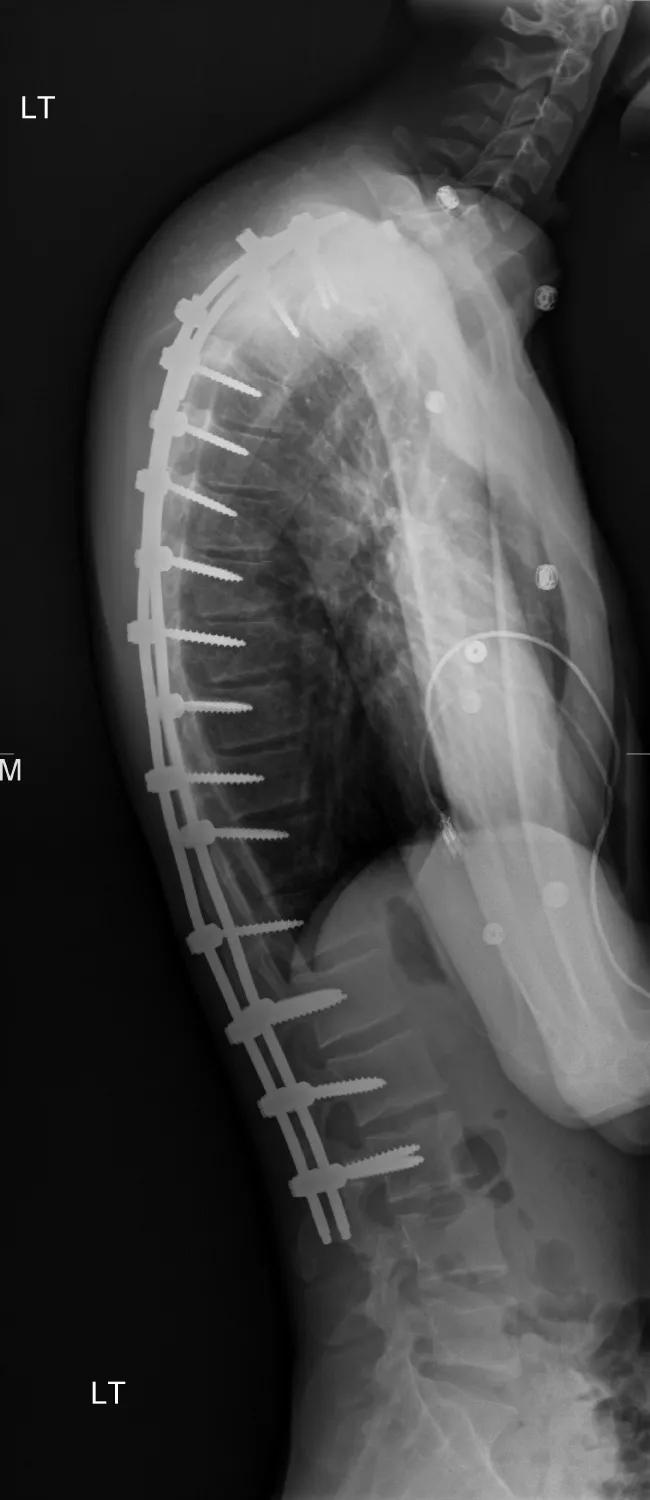
Image content: This image is available to view online.
View image online (https://assets.clevelandclinic.org/transform/8b1fcad2-3a50-40d6-9500-1bb25fca95f0/16-ORT-2676-Goodwin-Inset-Image-03-650pxl-width_jpg)
Revision of instrumentation and fusion was performed, using BMP as an adjunct. The patient went on to heal uneventfully, and he is asymptomatic today.
In our study, the overall complication rate was very high at 21 percent. However, given the complexity of the procedures in which BMP was utilized, this complication rate is consistent with previously published studies. Only 2 percent of cases in which BMP use could be directly linked to a complication (7/312), with only one of these cases resulting in a major complication. Thus, the results of our study suggest that BMP use does not lead to greater complication rates than would be expected to accompany these complex procedures at baseline. We recommend, however, that physicians are honest and forthright about the relatively unestablished safety and efficacy of BMP use in children.
Dr. Joel Kolmodin is a pediatric orthopaedic surgery fellow. Dr. Goodwin is Director of the Center for Pediatric and Orthopaedics and Spine Deformity, Assistant Program Director for the Orthopaedic Surgery Residency and Assistant Professor at Cleveland Clinic Lerner College of Medicine.
Advertisement
Advertisement
Biologic approaches, growing implants and more
Study reports zero infections in nearly 300 patients
How to diagnose and treat crystalline arthropathy after knee replacement
Study finds that fracture and infection are rare
Center will coordinate, interpret and archive imaging data for all multicenter trials conducted by the foundation’s Osteoarthritis Clinical Trial Network
Reduced narcotic use is the latest on the list of robotic surgery advantages
Cleveland Clinic specialists offer annual refresher on upper extremity fundamentals
Cleveland Clinic orthopaedic surgeons share their best tips, most challenging cases and biggest misperceptions
 Search