Locations:





Nurse-led study examines adherence to safety policies
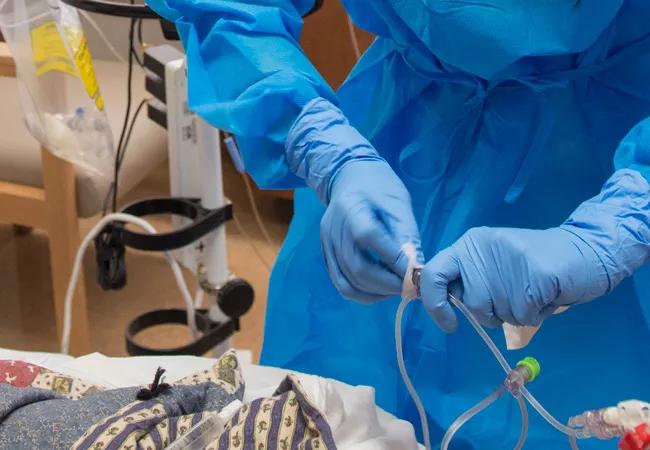
Image content: This image is available to view online.
View image online (https://assets.clevelandclinic.org/transform/0cd1b82d-8987-44b6-82c8-906aefa28941/safe-handling_650x450_jpg)
safe-handling_650x450
Several years ago, Christina Colvin, MSN, RN, AOCNS, a clinical nurse specialist in the Cleveland Clinic Cancer Center, noticed a trend among nurses nationwide in ambulatory infusion areas: Pregnant nurses and those considering pregnancy were increasingly raising concerns about their safety with regard to chemotherapy. This trend led Colvin to ponder three questions: What is the current accepted practice for safe chemotherapy handling? Are nurses aware of the recommendations? Do they adhere to them?
Advertisement
Cleveland Clinic is a non-profit academic medical center. Advertising on our site helps support our mission. We do not endorse non-Cleveland Clinic products or services. Policy
Chemotherapy medications put nurses at risk for occupational exposure, a key nursing safety concern. Hospitals such as those in the Cleveland Clinic healthcare system have procedures to mitigate those risks. “Cleveland Clinic has policies, procedures, education and equipment to enhance the safety of nurses who administer chemotherapy drugs. We have gloves, gowns, spill kits and closed system devices. We really are top-notch,” says Colvin. Yet she wondered how closely nurses were adhering to safe practices. “I knew what was being taught to our nurses, but I couldn’t honestly say what was being done day-to-day,” she says.
Colvin began with a literature review, which yielded no information on nurses’ actual adherence to following chemotherapy handling practices compared to nurses’ perceptions of how often they abided by practice expectations. She then developed a prospective, comparative mixed-methods study to look at nurse behaviors. “The aims of the study were to examine actual and subjective ambulatory oncology nurse adherence to chemotherapy safe-handling guideline recommendations that were developed to prevent chemotherapy exposure,” says Colvin.
Colvin’s research entailed two parts: microethnography, or observation, of nurses working with chemotherapy in the ambulatory infusion area, followed by a nurse self-assessment questionnaire of safe handling of chemotherapy practices. For the first part, Colvin trained three observers to collect data in the Cleveland Clinic Cancer Center, from January 2012 through March 2013. The observers witnessed 22 cases of chemotherapy handling, noting behaviors such as the following:
Advertisement
In the second part of the study, Colvin’s questionnaire asked ambulatory infusion area nurses to provide self-perceptions of adherence to expected behaviors for chemotherapy handling; response options used a Likert scale. Thirty-three percent of department nurses completed questionnaires. In analysis, Colvin used a Fisher’s exact test to assess differences in the rates of safe chemotherapy handling between nurses who were assessed by observation and the self-assessed questionnaire responses.
The research project methods and findings were accepted for publication in the Clinical Journal of Oncology Nursing, with a print date scheduled for December 2016. “In general, nurses thought they were following safe practices at a rate that was higher than what was observed,” says Colvin.
“Exposure can happen at any point, not just during administration of chemotherapy,” says Colvin. “If a current healthcare provider follows a healthcare provider who did not adhere to all recommended safe-handling practices, the current provider might be walking into an area of chemotherapy exposure.” Therefore, Colvin believes it’s critical to make sure all necessary personal protective equipment is readily available. Further, she encourages nurses to hold one another accountable.
When Colvin shared the study results with the ambulatory infusion nursing team at Cleveland Clinic Cancer Center, it raised their awareness of the importance of safe chemotherapy handling. She has increased her in-service education to both novice and seasoned nurses. “Protection from occupational exposures should be an ongoing continuous improvement plan on everybody’s radar,” says Colvin.
Advertisement
Advertisement

Nurses play key role in comprehensive lifetime treatment program
Customized bots improve speed, efficiency by streamlining daily clinical, clerical tasks

Nurses play pivotal role in patients’ ability to recover in the comfort of their own homes

New protocol reduces costs, increases patient and caregiver satisfaction

Advocating for patient safety is imperative in fast-paced surgical settings

M-Power program improves the perinatal experience for people who have survived abuse

Advice for those pursuing a WOC nursing career

Veteran nurse shares his experience as a caregiver and community volunteer
 Search