Locations:





 Search
Device shows efficacy in a preclinical model
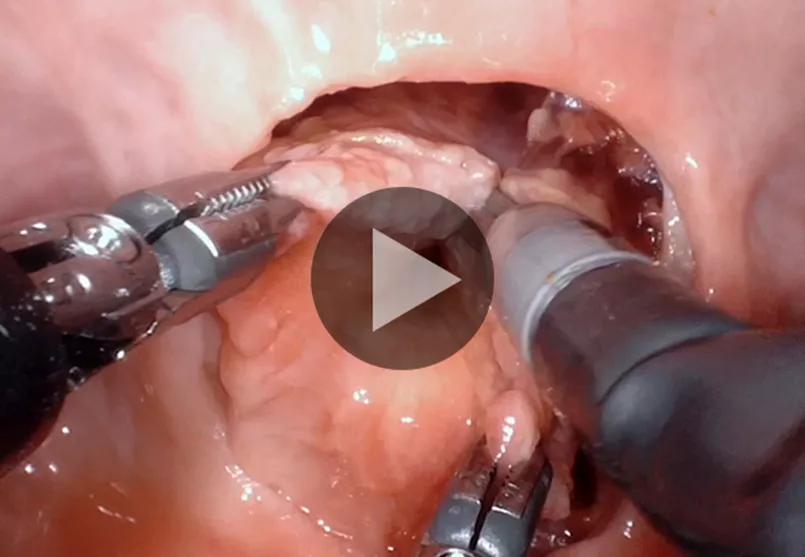
Image content: This image is available to view online.
View image online (https://assets.clevelandclinic.org/transform/e4912777-bafa-4d44-ab3d-11303b8d1120/805x-Inset-18-URL-797-QD-Robotic-Transvesical-Partial-Prostatectomy-1_jpg)
805x Inset 18-URL-797 QD Robotic Transvesical Partial Prostatectomy
Advertisement
Cleveland Clinic is a non-profit academic medical center. Advertising on our site helps support our mission. We do not endorse non-Cleveland Clinic products or services. Policy
Partial prostatectomy has been proposed as an alternative treatment for energy-based ablation of localized prostate cancer. We undertook a study to evaluate the feasibility of a transvesical robotic approach for partial prostatectomy (SP-TVPP) using a novel purpose-built single port surgical platform in a preclinical model.
Three male cadavers were placed in a lithotomy position. A 3 cm midline incision was made in the suprapubic area 4 cm from the symphisis pubis. After opening the Retzius space, a single-port mini device (GelPOINT, Rancho Margarita, California) was introduced percutaneously directly into the bladder. The da Vinci SP1098 robotic platform (Intuitive Surgical, Sunnyvale, California) was docked to the GelPOINT by inserting a novel single port cannula through the GelSeal Cap.
En bloc anterior prostatectomy were performed with these surgical steps:
All cases were completed successfully without conversion or the need for additional ports. Mean total operative time was 49.3 minutes. Step-specific times are listed in Table 1.
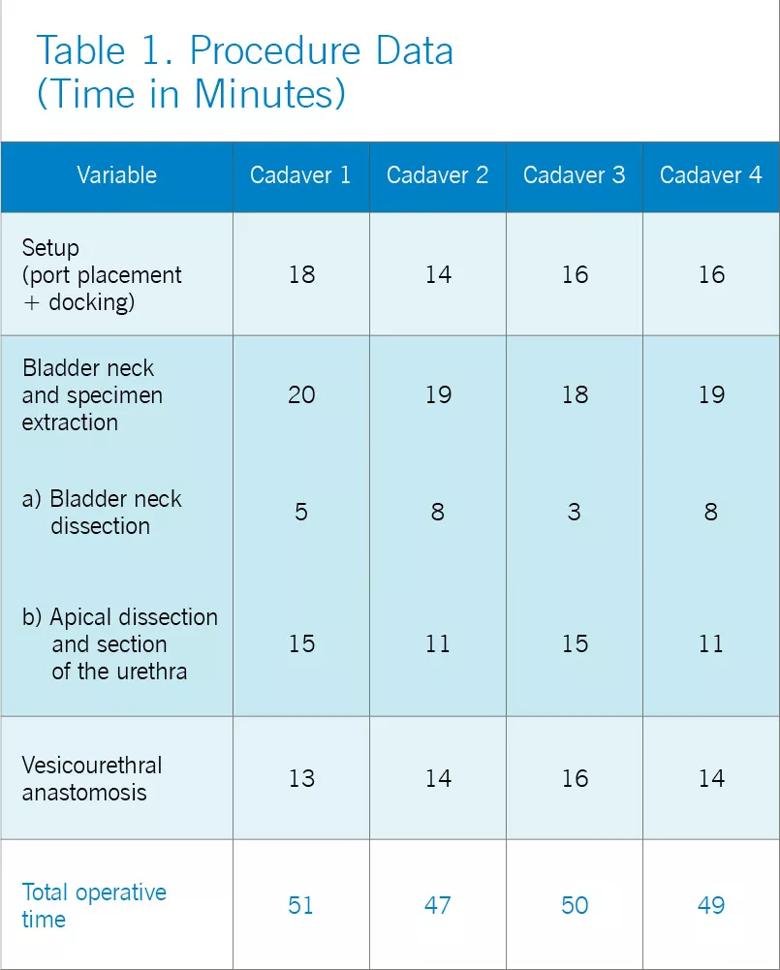
Image content: This image is available to view online.
View image online (https://assets.clevelandclinic.org/transform/09391c88-8b18-4734-bfd1-15b9d7a37bc5/18-URL-797-QD-Chronic-Kidney-Disease_jpg)
Transvesical robotic partial prostatectomy proved feasible with a novel purpose-built single port surgical platform in a cadaver model. Future clinical evaluation is needed to assess its effectiveness in patients with anterior localized prostate cancer. Prospective comparison with other surgical platforms and standard techniques are warranted.
Advertisement
This video was produced with the help of Clinical Fellows Daniel Sagalovich, MD, and Juan Garisto, MD. Intuitive Surgical provided funding.
Video content: This video is available to watch online.
View video online (https://www.youtube.com/embed/LuabS_YHUEY?feature=oembed)
Advertisement
Advertisement

Clinicians should individualize dosing practices based on patient risk factors and preferences
Pioneering and refining the approach in pyeloplasty, nephrectomy and more
Fully-automated process uses preop CT, baseline GFR to estimate post-nephrectomy renal function
Could mean earlier treatment, but also could have negative effects

Unlike earlier pills, new drugs do not cause liver toxicity

Male factors play a role in about half of all infertility cases, yet men often are not evaluated
Surgeons choreograph nearly simultaneous procedures, sharing one robot between two patients

Identifying barriers in the renal genetic assessment of Black patients