Locations:





 Search
An attractive alternative for recurrent UPJ obstruction
Recurrent ureteral pelvic junction (UPJ) obstruction is a challenging surgical problem. Ureteral devascularization, fibrosis with renal fixation and dense stricture formation interfere with our ability to create a tension-free anastomosis. A high rate of recurrence leads to progressively complex repairs.
Advertisement
Cleveland Clinic is a non-profit academic medical center. Advertising on our site helps support our mission. We do not endorse non-Cleveland Clinic products or services. Policy
Robotic salvage pyeloplasty with buccal mucosal graft (BMG) is a potentially more effective approach in the management of recurrent UPJ obstructions after failed prior surgical intervention when compared to more extensive and invasive procedures.
In this video, Cleveland Clinic Glickman Urological & Kidney Institute urologists perform robotic salvage pyeloplasty with BMG for two patients with recurrent left UPJ obstruction, both experiencing chronic left flank pain and hydronephrosis. Both patients had previously undergone primary and redo pyeloplasty, and both had a lower pole renal artery as the underlying etiology of the UPJ obstruction. The result is a tension-free, watertight, patent repair in both patients, who previously endured multiple failed pyeloplasties. It is an attractive alternative technique in the management of recurrent UPJ obstruction.
The patients were both placed in a flexed flank position, and a 12 mm camera port was placed at the semilunar line superior to the umbilicus with three subsequent ports based on this position. Both patients required extensive lysis of adhesions secondary to prior surgeries. Watch the video below to see how the procedures progressed and learn the specific techniques.
Video content: This video is available to watch online.
View video online (https://www.youtube.com/embed/kmjOfxbcgy0?feature=oembed)
The video, produced by Georges-Pascal Haber, MD, PhD, Chair of the Department of Urology; Anna Zampini, MD, MBA, MS, staff in the Department of Urology; Ryan Nelson, DO; Jeremy Reese, MD, MPH, M.Ed., and Kenneth Angermeier, MD, staff in the Department of Urology, from the Glickman Urological & Kidney Institute, was presented at the American Urological Association’s 2017 annual meeting.
Advertisement
Advertisement
Clinicians should individualize dosing practices based on patient risk factors and preferences
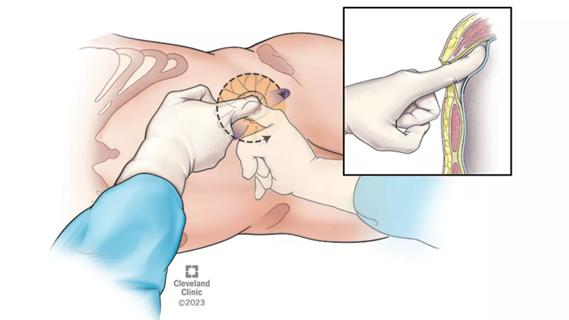
Pioneering and refining the approach in pyeloplasty, nephrectomy and more
Fully-automated process uses preop CT, baseline GFR to estimate post-nephrectomy renal function
Could mean earlier treatment, but also could have negative effects

Unlike earlier pills, new drugs do not cause liver toxicity
Male factors play a role in about half of all infertility cases, yet men often are not evaluated
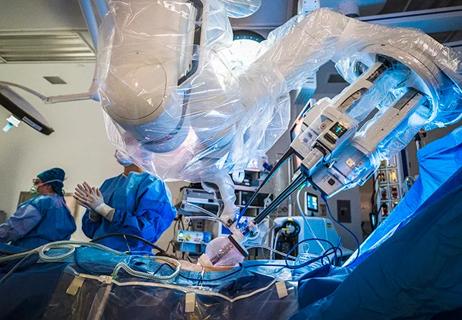
Surgeons choreograph nearly simultaneous procedures, sharing one robot between two patients

Identifying barriers in the renal genetic assessment of Black patients