Locations:





A closer look at healthcare disparities using Multicenter Orthopaedic Outcomes Network (MOON) data
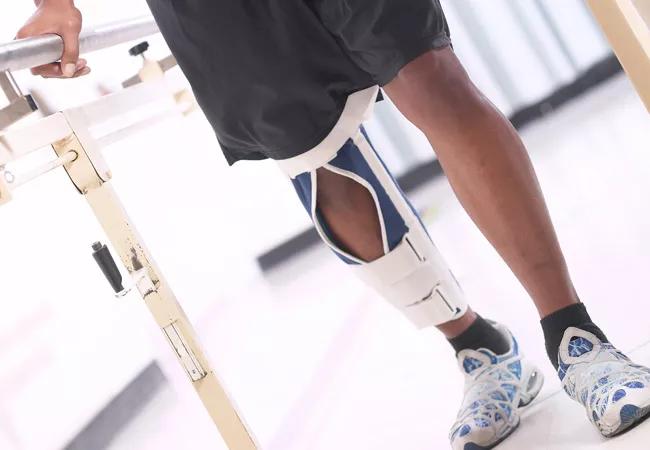
Image content: This image is available to view online.
View image online (https://assets.clevelandclinic.org/transform/c185cd96-ed1e-4719-8f12-e5ff6434731c/20-ORT-1002-ACLR-CQD_jpg)
20-ORT-1002-ACLR-CQD
Orthopaedic surgeons at Cleveland Clinic examined risk factors linked to failure to complete (i.e. loss to follow-up) patient-reported outcomes in a cohort of patients who underwent anterior cruciate ligament reconstruction (ACLR). They reported their findings in The American Journal of Sports Medicine.
Advertisement
Cleveland Clinic is a non-profit academic medical center. Advertising on our site helps support our mission. We do not endorse non-Cleveland Clinic products or services. Policy
“Patient-reported outcome measures [PROMs] guide clinical practice and improve the quality of evidence-based patient care,” remarks Kurt Spindler, MD, Vice Chair for Research in Cleveland Clinic’s Orthopedic and Rheumatologic Institute, Director of the Amy and David Krohn Family Orthopaedic Outcomes Center and senior author of the study. “In order for PROMs to be effective, we must understand systemic exclusions in the data and identify strategies to improve patient follow-up.”
The orthopaedic community stands to benefit from PROMs data, the study authors emphasize. Musculoskeletal disorders pose significant health and economic burdens across the U.S, particularly in people age 50 or older. And unlike patients with long-term chronic disease who require routine in-office follow-up for medication management, orthopaedic intervention doesn’t typically necessitate routine postoperative surveillance.
“Our goal was to gain a deeper understanding of outcomes associated with this group of patients,” says Prem Ramkumar, MD, MBA, a resident in the Department of Orthopaedic Surgery and first author on the study. “This provides a foundation to later examine specific barriers that may limit their ability to follow-up.”
The research team examined data from the Multicenter Orthopaedic Outcomes Network (MOON), an NIH-funded consortium, which launched in 2001, that comprises outcomes data of enrolled patients who have undergone unilateral primary or revision ACLR.
The researchers examined 3,202 patients, all of whom met inclusion criteria, consented to the study and completed a questionnaire designed to glean baseline demographics, details of the injury, sports participation level, comorbidities, knee surgical history and PROMs.
Advertisement
The central study coordinating site operated as a hub to facilitate PROMs by sending patients paper questionnaires by mail (envelopes were self-addressed and stamped). Secondary attempts to reach these patients involved surgeons following up with their patients by phone. In this study, loss to follow-up was defined as patients who did not return PROMs data within two years from the date of surgery.
Of note, the two-year follow-up rate was 88% (2,821 of 3,202), a number that the researchers agree was higher than anticipated. But understanding the missing 12% was still critical to paint a full picture of patients who are lost to follow-up.
Researchers completed a multivariate analysis to control for confounding factors and determine an independent association between patient variables and completed postoperative PROMs data. Findings showed that sex (male: odds ratio [OR], 1.80), race (black: OR, 3.64), and preoperative knee injury and osteoarthritis outcome score (KOOS) (lower: OR, 0.98) were significantly associated with PROMs follow-up.
The researchers note that understanding the implications of the underrepresentation of patients in the data is critically important. “This is arguably the richest databases we have for ACLR, and our findings suggest that a large patient demographic — specifically nonwhite males — are being overlooked,” says Dr. Ramkumar. “Systemic exclusion from the literature propagates healthcare disparities and may impact the delivery of care for these patients.”
Advertisement
While these findings represent an important first step in risk factors associated with loss to follow-up, addressing this issue is an entirely separate question that will require a closer look at platforms and outreach strategies to optimize access and communication with this patient demographic.
Dr. Spindler adds, “Ultimately, this reinforces the importance of designing healthcare systems — and in this case, specifically, outcomes systems — that are more equitable and inclusive. This is true in orthopaedic surgery and across all other medical specialties.”
Advertisement
Advertisement
Biologic approaches, growing implants and more

Study reports zero infections in nearly 300 patients
How to diagnose and treat crystalline arthropathy after knee replacement
Study finds that fracture and infection are rare
Center will coordinate, interpret and archive imaging data for all multicenter trials conducted by the foundation’s Osteoarthritis Clinical Trial Network

Reduced narcotic use is the latest on the list of robotic surgery advantages
Cleveland Clinic specialists offer annual refresher on upper extremity fundamentals
Cleveland Clinic orthopaedic surgeons share their best tips, most challenging cases and biggest misperceptions
 Search