Locations:





Anatomical considerations critical to disease excision

Image content: This image is available to view online.
View image online (https://assets.clevelandclinic.org/transform/bdaead0c-facf-488a-8279-95c435f0bfee/16-OBG-2127-ASRM-Twitter-CQD_jpg)
16-obg-2127-asrm-twitter-cqd
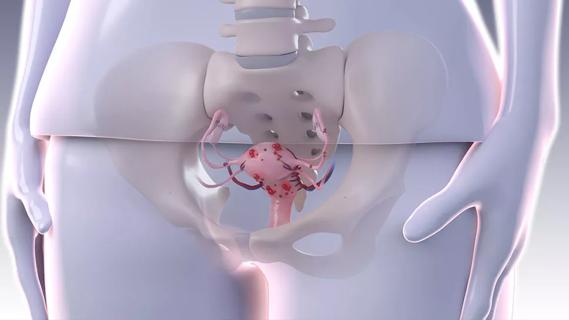
Successful resection of deeply infiltrating pelvic endometriosis requires a clear understanding of the anatomy of the pelvic sidewall and the ability to identify landmark pelvic structures.
Advertisement
Cleveland Clinic is a non-profit academic medical center. Advertising on our site helps support our mission. We do not endorse non-Cleveland Clinic products or services. Policy
In this compilation video of animations and surgeries performed via laparoscopic resection, Ob/Gyn & Women’s Health Institute Chairman Tommaso Falcone, MD, explains how to identify those landmark pelvic structures and use them as guides to access the retroperitoneal space and safely excise endometriosis implants in stage IV endometriosis patients.
Dr. Falcone and Julian Gingold, MD, PhD, will present their findings at the American Society for Reproductive Medicine (ASRM) 2016 Scientific Congress & Expo in Salt Lake City, Utah.
Video content: This video is available to watch online.
View video online (https://www.youtube.com/embed/FUn-j5W6JvU?feature=oembed)
Advertisement
Advertisement

Counseling and careful surgical considerations are key

Deprivation is linked to impaired glucose intolerance and racial disparities

Perioperative prophylaxis and class III obesity
Artesunate ointment is safe well and tolerated patients with vulvar intraepithelial neoplasia
Endoscopic balloon dilation during pregnancy helps optimize outcomes
Researchers examine waste and implore colleagues to take action

Mode of delivery does not affect patient satisfaction
 Search