Locations:





Trial examines cotton versus synthetic fiber linens
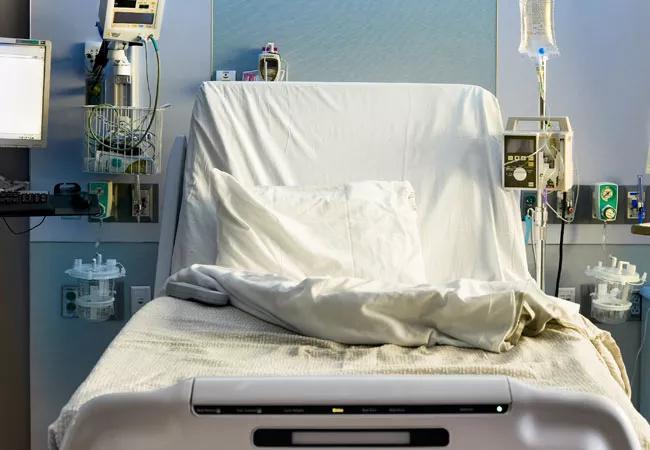
Image content: This image is available to view online.
View image online (https://assets.clevelandclinic.org/transform/79747363-1d31-49b9-a1b8-62306f5bd924/20-NUR-90339241-Research-Silk-Like-Sheets-CQD-650x450-1_jpg)
20-NUR-90339241-Research-Silk-Like-Sheets-CQD-650×450
Each year, more than 2.5 million people in the U.S. develop hospital-acquired pressure injuries (HAPI), according to the Agency for Healthcare Research and Quality. Although there are many causes, in laboratory studies researchers found that different types of fabrics were associated with changes in skin moisture, friction, shear and temperature that may predispose patients to pressure injury.
Advertisement
Cleveland Clinic is a non-profit academic medical center. Advertising on our site helps support our mission. We do not endorse non-Cleveland Clinic products or services. Policy
Mary Montague-McCown, DNP, APRN, ACNS-BC, CWOCN, spearheaded a research study at Cleveland Clinic on the effect of hospital linens on HAPI. “The purpose of the study was to see if linens made out of silk-like fabric could prevent pressure injuries from occurring,” says Montague-McCown, Manager APRN/PA of the Wound Care Consult Team at Cleveland Clinic.
The cluster randomized controlled trial took place on five adult medical intensive care units. Each MICU was randomly assigned to standard cotton fiber or synthetic fiber linens for six months; then, after a 14-day washout period, they were switched to the alternate group for an additional six months.
All patients admitted to one of the five units after the study began were included in the trial, with more than 3,000 patients in the study. For the first two months of the study, nurse researchers rounded on the MICUs daily and conducted patient chart audits to obtain information on pressure injuries, which were documented using the National Pressure Injury Advisory Panel’s staging classification system.
“When we were confident that the nurses were documenting correctly and assessing skin for alterations properly, nurse researchers did not go up to the units every day,” says Montague-McCown. “We relied on clinical nurses’ documentation to determine who developed pressure injuries and who did not.”
Montague-McCown says that when the research team launched the study, she hypothesized that the synthetic fiber linens could be impactful because the silk-like, smooth sheets affect the microclimate, thereby reducing shear force that contributes to HAPI. “The big finding was that there were no differences in pressure injury rates between synthetic and cotton linen groups,” she says.
Advertisement
After analysis, Montague-McCown speculated that the reason there were no significant differences between the two groups could be due to nurses’ adherence to evidence-based protocols related to HAPI and implementation of rigorous preventive interventions. “Our ICU leaders and all ICU caregivers are accustomed to high-acuity patients and are proactive in putting measures in place to prevent HAPI. Nurses are trained in accurate interpretation of skin changes and know what actions to take, or who to contact when unsure of next steps,” she says. “Facilities such as hospital ICUs with few long-term patients or lower overall acuity and nursing homes that may not have adequate resources or robust prevention protocols in place may benefit from the silk-like sheets.” However, Montague-McCown adds that a randomized controlled trial would need to be conducted to learn if benefits would be present in specific settings.
Advertisement
Advertisement
Nurses play key role in comprehensive lifetime treatment program
Customized bots improve speed, efficiency by streamlining daily clinical, clerical tasks

Nurses play pivotal role in patients’ ability to recover in the comfort of their own homes
New protocol reduces costs, increases patient and caregiver satisfaction

Advocating for patient safety is imperative in fast-paced surgical settings

M-Power program improves the perinatal experience for people who have survived abuse

Advice for those pursuing a WOC nursing career

Veteran nurse shares his experience as a caregiver and community volunteer
 Search