Locations:





Study looks at the effect of Magnet status on publication
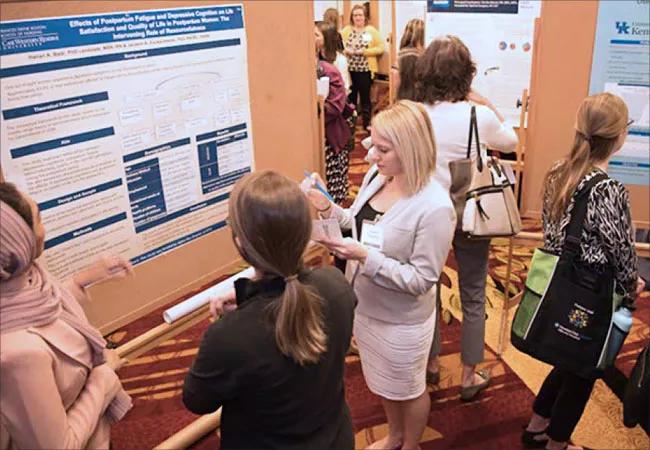
Image content: This image is available to view online.
View image online (https://assets.clevelandclinic.org/transform/c1897d63-1b57-485a-8756-4a320f502417/18-NUR-998-nrsResearchCncl-650x450_jpg)
18-NUR-998-nrsResearchCncl-650×450
Through the years, clinical nurses at Cleveland Clinic have increasingly contributed to research publications as the first author of peer-reviewed journals. Leaders in the Office of Nursing Research and Innovation wondered if the same were true for other hospitals, especially those that had ANCC Magnet® recognition.
Advertisement
Cleveland Clinic is a non-profit academic medical center. Advertising on our site helps support our mission. We do not endorse non-Cleveland Clinic products or services. Policy
“Important components of nurse professionalism that are integral to Magnet designation are to assure that nursing practices are evidence-based and to implement interventions aimed at improving clinical outcomes and nursing efficiency,” says Nancy Albert, PhD, CCNS, CHFN, CCRN, NE-BC, FCCM, FAHA, FHFSA, FAAN, Associate Chief Nursing Officer of Nursing Research and Innovation at Cleveland Clinic. “Conducting nursing research contributes to the profession through new knowledge, innovations and improvements. Completed research must be shared with the nursing community to be of value. Thus, dissemination of new knowledge through publication in a peer-reviewed journal is integral to our ability to grow and strengthen our profession. Getting new knowledge published and available via a search engine to the nursing community is vital.”
Dr. Albert spearheaded a non-human subject research project examining articles published in 18 peer-reviewed journals, most of which were the official journals of clinical U.S.-based nursing organizations or organizations focusing on professional practice. Dr. Albert and her co-investigators wanted to see if (a) journal publications were more likely to be led (first author) by a hospital-based nurse over time and (b) if any nurses listed as authors were listed as hospital-based contributors. Further, for each paper assessed that had a hospital-based author (first author or any author), the investigators wanted to know if the hospital site had Magnet designation. “We hypothesized that as Magnet designation grew over time, so would journal research publications led by hospital-based nurses,” says Dr. Albert.
Advertisement
Dr. Albert and her co-investigators reviewed a total of 5,767 full papers published during four time periods:
They cross-referenced author contributor data, when applicable, with information from the Magnet website, which listed hospitals that were Magnet-designated at the time the paper was published.
“We expected that we would see an increase in hospital-based nurses as first authors and as contributing authors (any status) of research publications over time,” says Dr. Albert. “We were very surprised to learn that the rate of growth during the four study periods was non-linear and quite minimal. For example, rates of hospital-based, nurse-led publications actually decreased from the first to the second study period, before increasing in the third study period.”
The number of overall papers with a hospital-based nurse as the first author increased by only 3% from the first study period to the most recent study period. “The results were statistically significant since our sample size was so large, but the actual percentage was very low,” says Dr. Albert. “It was surprising.”
Research investigators divided articles into two types: research and review articles. Most research-based articles involved qualitative, descriptive or correlational designs. Comparative designs accounted for less than 25% of all papers reviewed. The percent of research papers with a hospital-based nurse as the first author increased by 4%, while the number of review articles led by hospital nurses rose by only 2.1%. As hypothesized, the percent of research articles from Magnet-based hospitals grew dramatically over time.
Advertisement
“Based on our findings, hospital-based nurses need to conduct high-quality research that is generalizable and then, take steps to publish research findings so that new knowledge can be used clinically in practice,” says Dr. Albert. “The low percentage of increase in nursing publications that reflect pragmatic, clinically-based research in hospitals and ambulatory settings reflects growth, but at a slow pace. Nursing leaders need to support clinical research by nurses and also promote and facilitate publication of findings in peer-reviewed journals.”
Advertisement
Advertisement

Nurses play key role in comprehensive lifetime treatment program

Customized bots improve speed, efficiency by streamlining daily clinical, clerical tasks

Nurses play pivotal role in patients’ ability to recover in the comfort of their own homes

New protocol reduces costs, increases patient and caregiver satisfaction

Advocating for patient safety is imperative in fast-paced surgical settings

M-Power program improves the perinatal experience for people who have survived abuse

Advice for those pursuing a WOC nursing career

Veteran nurse shares his experience as a caregiver and community volunteer
 Search