Locations:





CTSN findings are changing practice across the U.S.
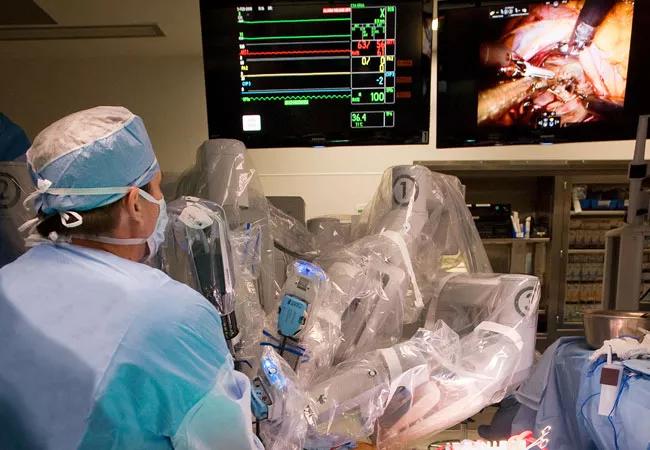
Image content: This image is available to view online.
View image online (https://assets.clevelandclinic.org/transform/34edbdde-4e89-43ad-a1cd-e77054084b0a/16-HRT-289-MitralRegurg-CQD-650x450_jpg)
Mitral Valve Repair
While mitral valve repair remains the gold standard for treating degenerative mitral valve disease, the preferred treatment of severe ischemic mitral valve regurgitation has now changed.
Advertisement
Cleveland Clinic is a non-profit academic medical center. Advertising on our site helps support our mission. We do not endorse non-Cleveland Clinic products or services. Policy
Two-year results from a randomized trial comparing mitral valve replacement with repair have led investigators to conclude that replacement should be the treatment of choice for severe ischemic mitral regurgitation. The multicenter study was published in the New England Journal of Medicine early this year by the NIH-funded Cardiothoracic Surgical Trials Network (CTSN), of which Cleveland Clinic is a member.
“We were surprised by the results,” says Cleveland Clinic cardiothoracic surgeon A. Marc Gillinov, MD, who was among the study’s lead authors. “This is already changing practice across the country.”
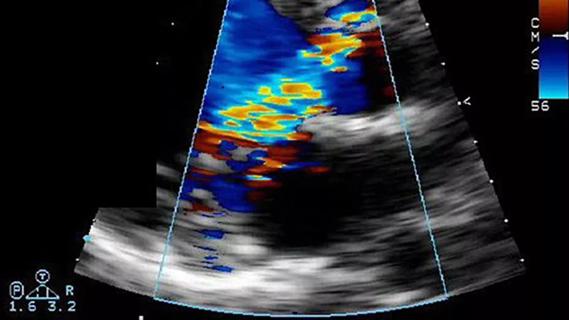
Severe ischemic mitral valve regurgitation has a different etiology from degenerative mitral valve disease. The condition is caused by a heart attack that remodels the left ventricle, which distorts the valve and causes it to leak. The goal of surgery is to stop valve leakage.
“Patients are coming in for surgery for a combination coronary artery bypass graft and leaky mitral valve,” explains Dr. Gillinov.
The CTSN study randomized 251 patients with severe ischemic mitral regurgitation to mitral valve repair or replacement and monitored their clinical and echocardiographic outcomes for two years. There were no significant between-group differences in survival or left ventricular reverse remodeling, but while mitral valve replacement stopped leakage for at least two years in all but 4 percent of patients, 59 percent of patients undergoing mitral valve repair had recurrent leakage within two years (P < .001).
Advertisement
The study authors write that the “deficiency in the durability of correction of mitral regurgitation is disconcerting” since recurrence predisposes patients to heart failure, atrial fibrillation, and repeat interventions and hospitalizations.
“There’s no way to predict which patients will have a repair that lasts,” Dr. Gillinov notes, “so replacement should be the first consideration.”
For more of Dr. Gillinov’s perspectives on this study, check out the short video here.
Advertisement
Advertisement

A sampling of outcome and volume data from our Heart & Vascular Institute
Concomitant AF ablation and LAA occlusion strongly endorsed during elective heart surgery
Large retrospective study supports its addition to BAV repair toolbox at expert centers

Young age, solid tumor, high uptake on PET and KRAS mutation signal risk, suggest need for lobectomy
Surprise findings argue for caution about testosterone use in men at risk for fracture
Residual AR related to severe preoperative AR increases risk of progression, need for reoperation

Findings support emphasis on markers of frailty related to, but not dependent on, age
Provides option for patients previously deemed anatomically unsuitable
 Search