Locations:





Nursing caregivers advocate for smoke-free surgeries
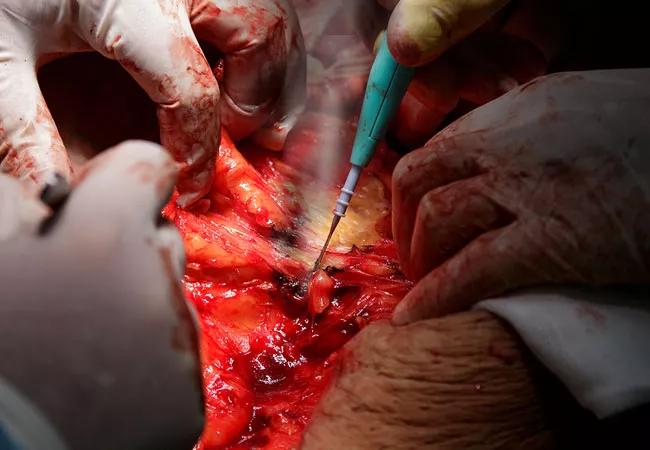
Image content: This image is available to view online.
View image online (https://assets.clevelandclinic.org/transform/7d2f8759-3891-4372-b81b-dc6a26e3de88/21-NUR-2459259-Pehotsky-SurgicalSmoke1-CQD_650x450_jpg)
surgical smoke
By Carol Pehotsky DNP, RN, NEA-BC, ACNS-BC, CPAN, Associate Chief Nursing Officer, Surgical Services
Advertisement
Cleveland Clinic is a non-profit academic medical center. Advertising on our site helps support our mission. We do not endorse non-Cleveland Clinic products or services. Policy
It’s not uncommon in operating rooms to smell surgical smoke, which is produced when human tissue interacts with laser or electrosurgical surgical devices. But it’s a problem. The Association of periOperative Registered Nurses (AORN) cites data published in the Journal of Occupational and Environmental Hygiene, which indicates that surgical smoke contains more than 150 hazardous chemicals.
In the U.S., an estimated 500,000 healthcare workers are exposed to surgical smoke each year and many perioperative workers are advocating for smoke-free environments.
To date, only three states have enacted legislation that prevents human exposure to surgical smoke, including Rhode Island (2018), Colorado (2019) and Kentucky (becomes law on Jan. 1, 2022). In Ohio, legislation is currently being reviewed by the state Senate.
As reported by OR Manager, the COVID-19 pandemic prompted The Joint Commission to become more aware of the dangers of surgical smoke – based on the potential dangers of aerosolization and the biological component of surgical plume. On December 15, 2020, The Joint Commission released “Quick Safety Issue 56: Alleviating the dangers of surgical smoke,” which was noted as the commission’s strongest statement to date for surgical smoke evacuation.
Reducing surgical smoke in ORs is a top priority at Cleveland Clinic. At the start of 2021, the organization set a goal that all surgical sites would adopt surgical smoke evacuation techniques and products. Integrating these solutions into the care we deliver (where clinically appropriate) is necessary to lower the exposure for caregivers and patients. To date, 90% of surgical locations have adopted smoke-free methods.
Advertisement
A few years ago, Cleveland Clinic’s Nursing Surgical Services Affinity Group determined smoke evacuation solutions weren’t often or consistently used across the health system due to the healthcare industry’s lack of surgeon-friendly smoke evacuation technology. Technologies that were available at the time weren’t conducive to delicate surgeries or were loud.
The group outlined a plan to increase awareness and use of smoke evacuation solutions in Cleveland Clinic ORs. Initial work included updating all OR room suction systems to evacuate smoke/plume with an ultra-low penetration air filter and a pilot program to explore new smoke evacuation capabilities.
With the health system’s passionate surgical technologists and nurses driving the momentum, the pilot program took off. Through a system-wide grassroots effort, surgical caregivers took the data and information provided by the Surgical Services Affinity Group and championed for surgical teams to explore and adopt new smoke evacuation solutions emerging in the market.
The most effective way to reduce surgical smoke is to use equipment designed to capture and neutralize the smoke at the point of origin. The Surgical Services Affinity Group worked with Supply Chain to identify and evaluate a variety of cautery devices that reduce or eliminate surgical smoke to provide surgeons with a variety of options.
They introduced cautery pen/pencil options to surgical technologists and circulating nurses, who in turn asked surgeons they work with to trial the products. Vendors provided product-specific education and training sessions and feedback was gathered from surgeons, perioperative nurses and surgical technologists. Surgeons were encouraged to choose a preferred smoke evacuation product they would be comfortable using as a new standard of care.
Advertisement
Cleveland Clinic has set a goal for every surgical location to earn the AORN Go Clear Award™. The award is offered in three designation categories and criteria is based on a facility’s education performance, smoke evacuation compliance and OR equipment. Many Cleveland Clinic surgical sites have already earned the top award.
As organizations like AORN continue to push for the protection of all caregivers in the OR setting, smoke evacuation is expected to become our standard of care. While implementing smoke evacuation solutions may require an initial financial investment, the health and safety benefits are well worth the price tag. In addition to fulfilling the promise to safeguard patient and caregiver safety, eliminating surgical smoke is one more quality measure that supports recruitment and retention of top employees.
Advertisement
Advertisement
Nurses play key role in comprehensive lifetime treatment program
Customized bots improve speed, efficiency by streamlining daily clinical, clerical tasks
Nurses play pivotal role in patients’ ability to recover in the comfort of their own homes
New protocol reduces costs, increases patient and caregiver satisfaction

Advocating for patient safety is imperative in fast-paced surgical settings

M-Power program improves the perinatal experience for people who have survived abuse

Advice for those pursuing a WOC nursing career

Veteran nurse shares his experience as a caregiver and community volunteer
 Search