Locations:





New analysis is one of the first studies specific to this population
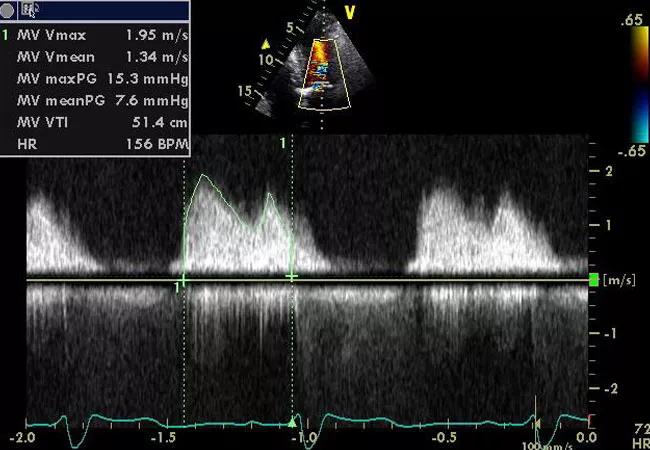
Image content: This image is available to view online.
View image online (https://assets.clevelandclinic.org/transform/05fca78f-bdf5-4997-bb5f-62d2d805154e/19-HRT-6007-mitral-valve-echo-650x450_jpg)
19-HRT-6007-mitral-valve-echo-650×450
Long-term survival following surgery for mitral valve disease is substantially reduced among patients with radiation-associated cardiac disease (RACD) compared with the general population of patients undergoing mitral valve surgery, according to a new analysis from Cleveland Clinic.
Advertisement
Cleveland Clinic is a non-profit academic medical center. Advertising on our site helps support our mission. We do not endorse non-Cleveland Clinic products or services. Policy
“Our group previously reported reduced longer-term survival following surgical aortic valve replacement among patients with radiation-associated cardiac disease, but data are much scarcer on how prior mediastinal radiation therapy affects outcomes of mitral valve surgery,” says Milind Desai, MD, Professor of Medicine at Cleveland Clinic Lerner College of Medicine and corresponding author of the study, published as a research letter in Circulation.
To help fill that data gap, he and colleagues identified and studied patients with RACD who underwent mitral valve surgery at Cleveland Clinic from 2000 to 2017. During that period, 146 patients with RACD developed significant mitral valve disease requiring surgery. All of these patients were free of cancer recurrence at the time of surgery and had complete clinical and echocardiographic data.
Among the 146 patients in the analysis, mean age was 60 years and the median time from radiation therapy to surgery was 17 years. Their mitral valve surgeries broke down as follows:
Thirty of the cases (21%) were reoperations. Only six patients underwent isolated mitral valve surgery, with the others undergoing concomitant surgery on other valves (n = 81), coronary artery bypass (CABG; n = 8) or other valve surgery plus CABG (n = 51).
At median follow-up of 2.8 years after surgery (interquartile range, 1.0-6.5 years), 74 patients (51%) had died. Six percent of those deaths were in-hospital deaths. The annualized mortality rate was approximately 18% per year.
Advertisement
“Despite low in-hospital mortality, we observed a five-year survival rate of only 55% in this population undergoing mitral valve surgery,” says co-author A. Marc Gillinov, MD, Chair of Thoracic and Cardiovascular Surgery at Cleveland Clinic. “That compares with five-year survival rates exceeding 95% in patients undergoing surgery for mitral valve prolapse. It seems clear that having mitral valve disease related to prior thoracic radiation therapy portends markedly worse outcomes for patients requiring mitral valve surgery.”
Older age, higher Society of Thoracic Surgeons (STS) score, reoperation, female sex and the presence of obstructive coronary disease were factors significantly associated with increased risk of death in this cohort (P < 0.01). On multivariate analysis with adjustment for concomitant operations, higher STS score was associated with increased mortality, whereas type of mitral valve surgery (repair vs. replacement) was not.
“This analysis helps confirm that the increased morbidity and mortality observed with radiation-associated cardiac disease extends to outcomes of patients requiring surgery specifically for mitral valve disease,” concludes Dr. Desai. “Earlier identification of RACD by way of routine clinical and echocardiographic surveillance may be helpful in blunting its impact in this population, as may emerging percutaneous valve replacement procedures.”
Advertisement
Advertisement
A sampling of outcome and volume data from our Heart & Vascular Institute
Concomitant AF ablation and LAA occlusion strongly endorsed during elective heart surgery
Large retrospective study supports its addition to BAV repair toolbox at expert centers
Young age, solid tumor, high uptake on PET and KRAS mutation signal risk, suggest need for lobectomy
Surprise findings argue for caution about testosterone use in men at risk for fracture
Residual AR related to severe preoperative AR increases risk of progression, need for reoperation

Findings support emphasis on markers of frailty related to, but not dependent on, age
Provides option for patients previously deemed anatomically unsuitable
 Search