Locations:





A love of research and new knowledge lives at the heart of this nurse scientist
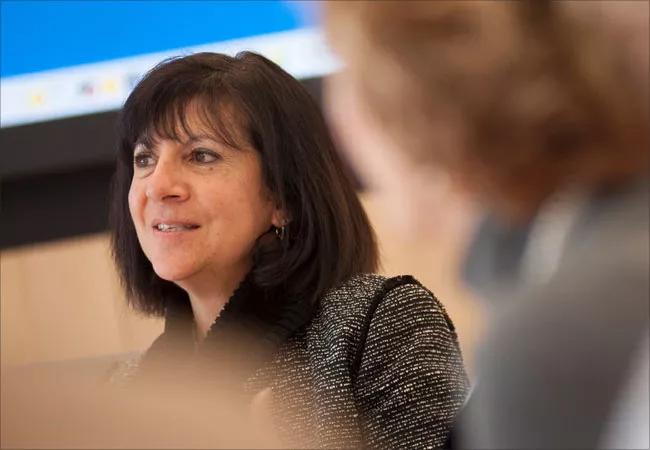
Image content: This image is available to view online.
View image online (https://assets.clevelandclinic.org/transform/08cc4c08-4ffd-4d21-a9a7-e52fc66f3e87/18-NUR-995-nancyAlbertSmmt-650x450_jpg)
18-NUR-995-nancyAlbertSmmt-650×450
Nancy M. Albert, PhD, CCNS, CHFN, CCRN, NE-BC, FAHA, FHFSA, FCCM, FAAN, is Associate Chief Nursing Officer at Cleveland Clinic’s Office of Nursing Research and Innovation. She has been a Fellow of the American Academy of Nursing since 2015, an honor that speaks to the impact she has made on the advancement of nursing as a science and as a profession. And she now serves as president (2020-2021) of the Heart Failure Society of America — a national multidisciplinary organization composed primarily of physicians, nurses and pharmacy professionals.
Advertisement
Cleveland Clinic is a non-profit academic medical center. Advertising on our site helps support our mission. We do not endorse non-Cleveland Clinic products or services. Policy
“I never imagined that a nurse would be selected to lead the organization, and am humbled and honored that I have had a chance to do so,” says Dr. Albert. the first person to be featured in a Consult QD series about the qualities of leadership in nursing.
Her trajectory in cardiac care began in nursing school, when she became fascinated with the heart.
“It’s such a small organ and so essential to life,” says Dr. Albert.
“I was intrigued by the heart’s connotation of love, and equally interested in the electrical and mechanical systems in constant play. Once I learned more about myocardial infarctions, heart failure, atrial fibrillation and other cardiac conditions, and observed an open heart surgery, my desire to learn more continued to grow.”
She started asking questions and finding answers by reviewing research literature and hearing experts speak on topics of interest at national meetings. She spent 14 years at a community hospital before moving to Cleveland Clinic.
“My first position at Cleveland Clinic was nurse manager of the coronary care unit,” Dr. Albert says. “There was a lot of research going on — medical research — and I was thrilled simply to be part of the team caring for patients who were in research trials.”
These days she conducts her own research and works alongside inquisitive colleagues. “New knowledge is exciting, no matter the theme and participant discipline or population. It helps us develop a firmer foundation of nursing science, which I believe is extremely important,” Dr. Albert says.
Advertisement
One of the first research studies she was involved with was designed to learn the level of knowledge of nurses caring for patients with heart failure. “Specifically, I wanted to know if they had adequate knowledge to teach patients about how to take care of themselves at home,” she says. “There was no tool available on the topic, so I had to create my own. That tool was my first ‘innovation,’ and I continue to receive requests to use it today.”
Her love of innovation extends well beyond cardiac care.
Advertisement
Advertisement
Nurses play key role in comprehensive lifetime treatment program
Customized bots improve speed, efficiency by streamlining daily clinical, clerical tasks
Nurses play pivotal role in patients’ ability to recover in the comfort of their own homes
New protocol reduces costs, increases patient and caregiver satisfaction

Advocating for patient safety is imperative in fast-paced surgical settings

M-Power program improves the perinatal experience for people who have survived abuse

Advice for those pursuing a WOC nursing career

Veteran nurse shares his experience as a caregiver and community volunteer
 Search