Locations:





 Search
Nurse practitioner is a big believer in patient-caregiver collaboration
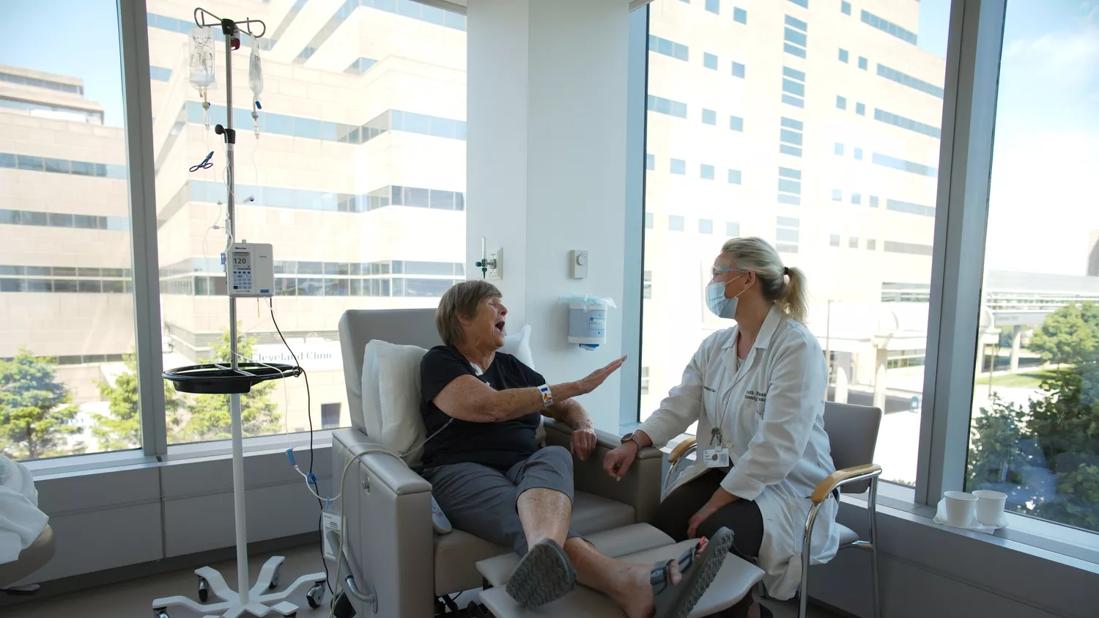
Image content: This image is available to view online.
View image online (https://assets.clevelandclinic.org/transform/d7d7b8bf-4a53-44e6-b936-895572b79d7e/L10P6991_jpeg)
Beth Faiman
Cleveland Clinic nurses find countless avenues for pursuing meaningful careers while expanding knowledge and contributing to an ever-growing national community of care. This series, “Qualities of Leadership,” highlights nurses whose dedication has made a difference within and beyond the Cleveland Clinic health system.
Advertisement
Cleveland Clinic is a non-profit academic medical center. Advertising on our site helps support our mission. We do not endorse non-Cleveland Clinic products or services. Policy
Beth Faiman, PhD, APRN-BC, AOCN, FAAN, found her calling early in her career. She specializes in
the diagnosis and management of patients with plasma cell disorders, a trajectory that began when she was a Cleveland Clinic nursing assistant and was sent to work in Hematology and Medical Oncology. She quickly realized the positive impact that care, compassion and education can make for patients and their caregivers.
She earned her BSN in 1996 and her MSN degree and nurse practitioner certification in 2002, and became a nurse practitioner in the Multiple Myeloma program at Cleveland Clinic in 2004. A decade later, she earned her doctoral degree from Case Western Reserve University.
Over the years, Dr. Faiman has led numerous efforts in her field.
Advertisement
Dr. Faiman’s work as a nurse scientist informs her publications and presentations.
“I collaborated with a national cancer symptom expert in a study that affected nursing practice. I learned that nurses could be taught to perform clinical assessments to identify neuropathy promptly and intervene early in neuropathy symptoms,” she says. “In a second collaborative study, myeloma patients were given tablet devices and asked about common symptoms. Based on responses, we created a personalized, evidence-based care plan of reported symptoms and concerns.”
In her clinical practice, she recognized that peripheral neuropathy and diarrhea were common, chronic and debilitating but understudied symptoms of myeloma. She conducted studies to test the effect of glutamine on neuropathy symptoms and to explore whether diarrhea could be a sign of an effective anti-myeloma immune response or related to immunodeficiency.
In collaboration with Medscape Nurses, Dr. Faiman developed a web-based, accredited myeloma program. Within four months, this activity reached 12,654 learners, generated 3,560 nursing certificates of program completion, and led to three additional programs.
She also believes in shared decision-making and allowing patients and caregivers to collaborate with medical teams. “Having worked at other organizations and in collaboration with international nurses, I feel very fortunate for the support that is given to me and our departments with regard to staffing, time off and patient care decision-making, and hope this will continue,” she says.
Advertisement
Advertisement
Nurses play key role in comprehensive lifetime treatment program
Customized bots improve speed, efficiency by streamlining daily clinical, clerical tasks
Nurses play pivotal role in patients’ ability to recover in the comfort of their own homes
New protocol reduces costs, increases patient and caregiver satisfaction
Advocating for patient safety is imperative in fast-paced surgical settings

M-Power program improves the perinatal experience for people who have survived abuse
Advice for those pursuing a WOC nursing career

Veteran nurse shares his experience as a caregiver and community volunteer