Locations:





News from the web that caught our eye

Image content: This image is available to view online.
View image online (https://assets.clevelandclinic.org/transform/95df84c7-a274-42c1-82d9-9755524d2631/16-HRT-1463-Dont-Miss-Beat-CQD-650x450-2_jpg)
16-HRT-1463-Dont-Miss-Beat-CQD-650×450-2
Advertisement
Cleveland Clinic is a non-profit academic medical center. Advertising on our site helps support our mission. We do not endorse non-Cleveland Clinic products or services. Policy

Image content: This image is available to view online.
View image online (https://assets.clevelandclinic.org/transform/05300260-1e82-4f59-a41b-0ffcf9379dab/Svennson-inset-600x400-1_jpg)
From promised but elusive drug price cuts to a still-yawning “statin treatment gap,” the past couple of weeks were chock full of news of note to the cardiovascular care community. Here are a few items that drew the attention of Cleveland Clinic Miller Family Heart & Vascular Institute Chairman Lars Svensson, MD, PhD.
Many still waiting on HF drug price cuts — Bloomberg reports that at least half of 23 U.S. hospital systems and purchasing groups it contacted in mid-September hadn’t yet seen discounts on one or both of the heart failure drugs from Valeant Pharmaceuticals that brought the company under fire early this year for alleged price gouging. After Valeant acquired Isuprel and Nitropress last year, it hiked their prices by 525 percent and 212 percent, respectively. In response to broad backlash, the company promised discounts would be forthcoming.
Real-world evidence of healthcare value — CMS saves money when Medicare patients have major surgery at a high-quality hospital rather than a low-quality hospital, concludes an analysis of 2011-2012 Medicare data published in Health Affairs. Most of the savings stem from postoperative care costs. “In much of healthcare, better care costs more money, but surgery may be one situation in which getting care at a high-quality hospital not only saves lives, but also saves money,” the study’s senior author told RealClear Health. The analysis looked at five major surgeries, including three cardiothoracic procedures: heart bypass, abdominal aortic aneurysm repair and removal of part of a lung.
Advertisement
Two in five diabetics fall into ‘statin treatment gap’ — Thirty-eight percent of middle-aged patients with diabetes — nearly two in five — are not being prescribed statins by their cardiologists despite widespread guideline recommendations that they should be. That’s the upshot of an analysis of data from 204 U.S. cardiology practices published by the Journal of the American College of Cardiology. HealthDay reports that a past president of the American Heart Association calls this so-called statin treatment gap “more dramatic than I expected” and “unacceptable.”
The dark side of public reporting? — An interesting Cardiovascular Business post focuses attention on the potential for unintended consequences of public reporting of outcomes in its recap of several articles in the September issue of JAMA Cardiology. The issue includes analyses showing consistently lower rates of PCI and revascularization for patients with acute MI complicated by cardiogenic shock in a reporting state (New York) compared with several nonreporting states, even after statistical adjustment for potential confounders. An editorial in the issue argues that even a 2006 New York state policy change specifically intended to curb risk aversion “still did not do enough to encourage physicians to care for the sickest patients who had the most to lose.”
Nearly 40 percent of U.S. physicians now hospital-employed — So finds a new study from Avalere Health as reported by Becker’s Hospital Review. The study also reveals that hospital ownership of physician practices surged by 86 percent from 2012 to 2015, with 31,000 physician practices acquired during that period. As of mid-2015, one in four physician practices was hospital-owned.
Advertisement
One step forward, two steps back — For every hour of direct clinical face time with patients, almost two hours is spent on EHR and desk work during the clinic day. So finds an American Medical Association direct observation study of physician time in ambulatory practice across four specialties: cardiology, family medicine, internal medicine and orthopaedics. The results are published in the Sept. 6 Annals of Internal Medicine and covered by Thoracic Surgery News.
Advertisement
Advertisement

A sampling of outcome and volume data from our Heart & Vascular Institute
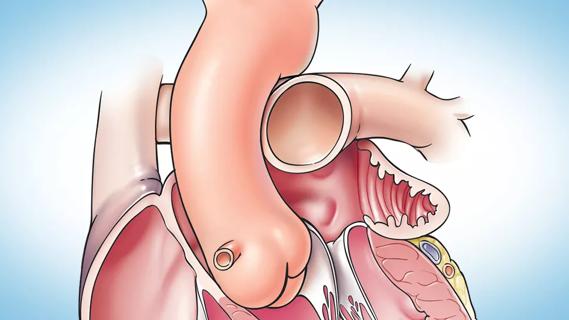
Concomitant AF ablation and LAA occlusion strongly endorsed during elective heart surgery
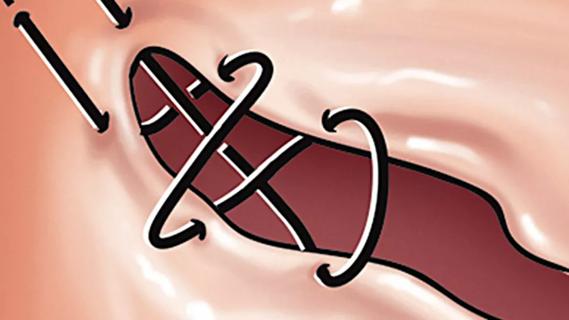
Large retrospective study supports its addition to BAV repair toolbox at expert centers

Young age, solid tumor, high uptake on PET and KRAS mutation signal risk, suggest need for lobectomy
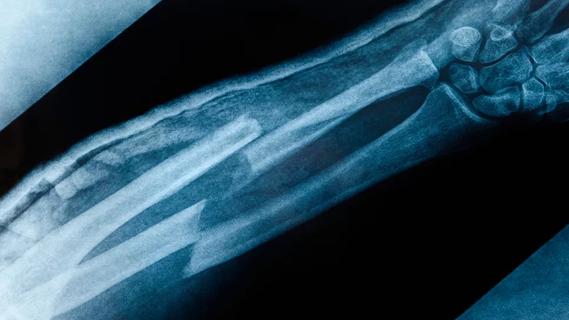
Surprise findings argue for caution about testosterone use in men at risk for fracture

Residual AR related to severe preoperative AR increases risk of progression, need for reoperation

Findings support emphasis on markers of frailty related to, but not dependent on, age

Provides option for patients previously deemed anatomically unsuitable
 Search