Locations:





Provocative Ergonovine Testing Can Rule Out or Confirm the Diagnosis
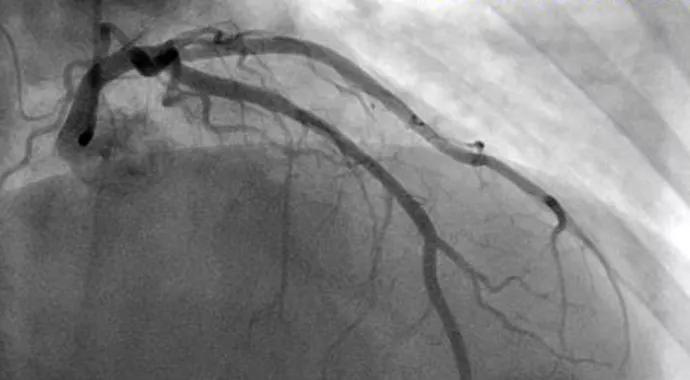
Image content: This image is available to view online.
View image online (https://assets.clevelandclinic.org/transform/1a46f383-8071-4597-995a-a4443d752cf7/Artery-690x380_jpg)
Artery-690×380
When catheterization reveals normal coronary arteries in a patient complaining of angina, the tendency is to suspect a noncardiac condition. But if the patient continues to have angina, the diagnosis of coronary artery (CA) spasm should be considered.
Advertisement
Cleveland Clinic is a non-profit academic medical center. Advertising on our site helps support our mission. We do not endorse non-Cleveland Clinic products or services. Policy
CA spasm producing angina in the absence of coronary artery disease (CAD) is a rare condition with certain characteristics that differentiate it from angina caused by ischemia. CA spasm angina predominantly occurs at rest, often awakening the patient at night or in the early morning. These episodes are transient, generally persisting for less than 15 minutes, and may cause syncope. Episodes can occur a few times yearly, a few times daily or infrequently.
The etiology of CA spasm is unknown. Most patients are aged 40 to 60. It is uncommon after age 70. Men and women are affected equally. In women, it may occur with menstruation. It is often associated with spasms in other arteries, causing conditions such as migraine or Reynaud’s syndrome.
Certain changes seen on EKG during an episode of spasm, most often ST elevation, can help make the diagnosis. The elevation generally resolves spontaneously in 10 to 15 minutes or in 1 to 2 minutes with nitroglycerin. Other patients may have ST-segment depression, ventricular tachycardia, ventricular fibrillation, complete heart block or asystole.
A Holter monitor makes it possible to capture some episodes of CA spasm. However, the quixotic nature of these spasms makes EKG documentation difficult to obtain.
At Cleveland Clinic, we consider provocative ergonovine testing the definitive test for diagnosing this discreet syndrome. We have used it regularly 1972 and have found it to be effective in ruling out or confirming CA spasm. We consider the test safe: In our experience, no patient has died or developed a myocardial infarction during the test.
Advertisement
Ergonovine is a smooth muscle constrictor used primarily to stop postpartum bleeding. When given in the coronaries, ergonovine constricts the smooth muscle cells in the epithelium and triggers angina.
Provocative ergonomine testing is conducted in the cath lab. We first image the coronaries to ensure they are free of obstructive CAD. A bolus of ergonovine is then injected intravenously. Most patients will respond within 5 minutes. We take a complete EKG every minute, as changes in the EKG sometimes appear prior to angina. As soon as angina occurs, we reimage the coronaries. The patient is then given a syringe of premixed nitroglycerine or verapamil to reverse the spasm. The EKG should immediately normalize.
Numerous methods of testing for CA spasm have been tried over the years. Hyperventilation can trigger CA spasm, as can putting the patient’s hand in ice water for five minutes—an inhumane test that was popular in the 1970s. Neither was very sensitive, but occasionally worked.
Some institutions conduct provocative testing with acetocholine. However, this agent tends to elicit CA spasm in patients with CAD. We have seen patients who underwent provocative acetocholine testing and were diagnosed with CA spasm. When we repeated the test with ergonomine, the results were negative.
Stress testing is usually not helpful in making a diagnosis, unless the angina occurs with exertion. This scenario is the exception, rather than the rule.
Once CA spasm is confirmed, calcium blockers can be used to control the spasms. A low dose is effective in some patients. Others require larger doses or even multiple calcium blockers.
Advertisement
Advertisement
Advertisement
A sampling of outcome and volume data from our Heart & Vascular Institute
Concomitant AF ablation and LAA occlusion strongly endorsed during elective heart surgery
Large retrospective study supports its addition to BAV repair toolbox at expert centers
Young age, solid tumor, high uptake on PET and KRAS mutation signal risk, suggest need for lobectomy
Surprise findings argue for caution about testosterone use in men at risk for fracture
Residual AR related to severe preoperative AR increases risk of progression, need for reoperation
Findings support emphasis on markers of frailty related to, but not dependent on, age
Provides option for patients previously deemed anatomically unsuitable
 Search