Locations:





Search is on for genetic markers in 500-patient sample

Image content: This image is available to view online.
View image online (https://assets.clevelandclinic.org/transform/7f6fd2c3-bf7f-4830-b6d3-9333e02c54d8/17-HRT-4542-Genetics-MV-Prolapse-CQD_jpg)
Probing the Genetics of MV Prolapse with Largest Population Study to Date
The genetics of mitral valve (MV) prolapse pose a bit of a mystery. The condition usually isn’t present at birth and generally develops over the course of many decades, yet at least three specific areas of the genome have been associated with prolapse in familial studies reported in the literature.
Advertisement
Cleveland Clinic is a non-profit academic medical center. Advertising on our site helps support our mission. We do not endorse non-Cleveland Clinic products or services. Policy
Cleveland Clinic researchers have published extensively over the past 15 years on various mechanisms by which MV prolapse develops, and now they’re turning their attention to how much of a genetic underpinning there is to prolapse development by conducting the largest population-based study of the question to date.
“We have gathered blood samples on 500 individuals with significant mitral valve prolapse that are now being evaluated to determine whether there are specific genetic markers in this population,” says Brian Griffin, MD, Cleveland Clinic’s Section Head of Cardiovascular Imaging and leader of the research project. “We’re looking for genetic signals that can help determine who is at risk for developing prolapse severe enough to require surgical intervention.”
“Mitral valve prolapse is one of the most common reasons that people require mitral valve surgery,” adds coinvestigator A. Marc Gillinov, MD, Chairman of Cardiothoracic Surgery. “While we know how to repair these valves, we don’t know what causes the problem. This research aims to unlock that mystery at the genetic level.”
The study builds on Cleveland Clinic’s enormous volume of patients evaluated and treated for MV prolapse each year. Over a period of approximately two years, 500 Cleveland Clinic patients with significant MV prolapse — most of whom required corrective surgery — consented to giving blood samples for genetic analysis. Their samples are being compared with blood from 1,000 control individuals without MV prolapse to assess for any areas of the genome where they differ.
Advertisement
“If we find specific areas of interest, we will do a deep dive into those areas to see which genes are implicated and whether they may be involved in the synthesis of proteins within the mitral valve or otherwise related to valve function,” explains Dr. Griffin.
The study will include examination of the three genome sites previously shown to be associated with MV prolapse in families with members from multiple generations affected by the condition. Dr. Griffin notes that those prior studies included roughly 20 or 30 individuals within a family, some of whom had prolapse and some of whom didn’t. “So those genome sites might be specific to those families,” he says. “We hope to learn whether they are or if they apply to mitral valve prolapse more generally.”
The study will also look for additional genome sites of interest, which Dr. Griffin says may emerge from this much larger sample in which most patients have MV prolapse severe enough to require surgery. “Ours is the first population study rather than a family-based study,” he observes.
In addition to co-investigator Dr. Gillinov, key collaborators on the project include cardiologist W.H. Wilson Tang, MD, Director of Cleveland Clinic’s Center for Clinical Genomics, and two of Dr. Griffin’s cardiovascular imaging colleagues, Patrick Collier, MD, PhD, and Serge Harb, MD.
The team expects to have data by spring 2018 and to publish findings later next year. “If we get a signal without the statistical power to clearly determine whether it’s real, we plan to enroll more patients,” Dr. Griffin says. “That’s one of the advantages of our sizable mitral valve patient population.”
Advertisement
The researchers are hopeful this study will yield insights for eventual application on several fronts, including:
Dr. Griffin adds that this new genetic study complements his team’s prior research on mechanisms behind the development of MV prolapse — such as the disproportionate part played by chordae weakening and the role of glycoproteins — by exploring whether these mechanisms have genetic underpinnings. “It’s like a detective story,” he observes.
Advertisement
Advertisement

A sampling of outcome and volume data from our Heart & Vascular Institute
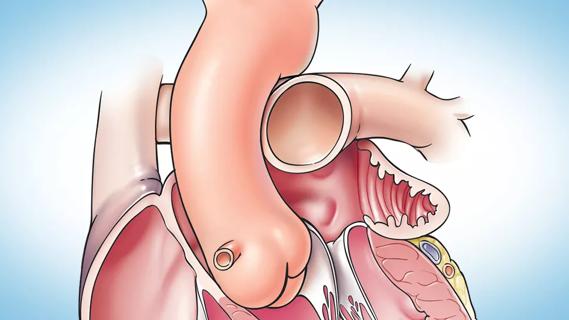
Concomitant AF ablation and LAA occlusion strongly endorsed during elective heart surgery

Large retrospective study supports its addition to BAV repair toolbox at expert centers

Young age, solid tumor, high uptake on PET and KRAS mutation signal risk, suggest need for lobectomy
Surprise findings argue for caution about testosterone use in men at risk for fracture
Residual AR related to severe preoperative AR increases risk of progression, need for reoperation

Findings support emphasis on markers of frailty related to, but not dependent on, age
Provides option for patients previously deemed anatomically unsuitable
 Search