Locations:





Observational findings lay groundwork for a future prospective study
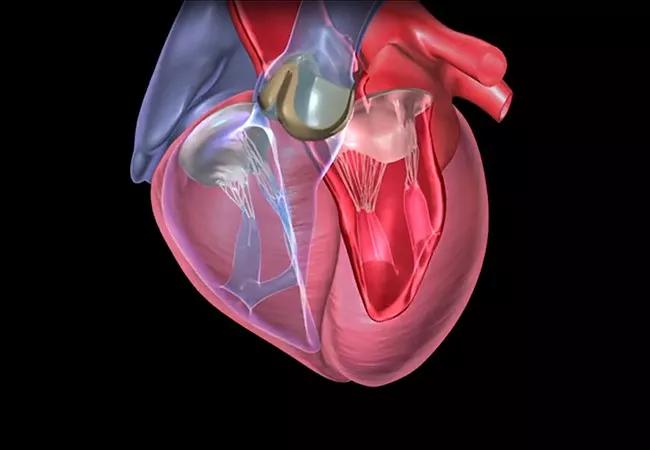
Image content: This image is available to view online.
View image online (https://assets.clevelandclinic.org/transform/07c0c9c7-3a06-4761-a894-cec79cc80f5b/19-HRT-5529-heart-failure-650x450_jpg)
19-HRT-5529-heart-failure-650×450
Selected patients with heart failure with reduced ejection fraction (HFrEF) characterized by low cardiac output, elevated filling pressures and preserved renal function can be successfully transitioned to angiotensin receptor-neprilysin inhibitor (ARNI) therapy in the cardiac intensive care unit (ICU), according to new observational research from Cleveland Clinic.
Advertisement
Cleveland Clinic is a non-profit academic medical center. Advertising on our site helps support our mission. We do not endorse non-Cleveland Clinic products or services. Policy
The findings make the case for prospective studies of this expanded use of ARNI therapy, the investigators note. “We have shown that patients with low-output heart failure with reduced ejection fraction can achieve hemodynamic benefit from sacubitril-valsartan therapy and be safely maintained on that therapy for at least a month,” says Cleveland Clinic cardiologist Randall C. Starling, MD, MPH, senior author of the study, which was published as a research letter in the Journal of the American College of Cardiology (2019;74:2326-2327).
Since its U.S. regulatory approval in 2015, the ARNI therapy sacubitril-valsartan (Entresto®) has become well established for use in patients with HFrEF who are hospitalized for acutely decompensated HF after initial hemodynamic stabilization. Yet its utility for initiation in the cardiac ICU in patients with HF with low cardiac output had not been explored.
“Many of the most vulnerable patients in the intensive care unit are started and discharged on oral vasodilators that are not ARNIs,” notes co-investigator Jerry Estep, MD, Section Head of Heart Failure and Transplantation at Cleveland Clinic.
“Transitioning patients in low-output heart failure from intravenous vasoactive therapy directly to sacubitril-valsartan appeared to be an opportunity to expand the utility of this evidence-based therapy in an important way to benefit more patients,” adds the study’s first author, Trejeeve Martyn, MD, a cardiovascular medicine fellow at Cleveland Clinic.
Advertisement
The researchers retrospectively reviewed all patients with HFrEF (ejection fraction < 40%) who were started on sacubitril-valsartan in cardiac ICUs at Cleveland Clinic between 2016 and 2019. Prior to their study, there were no available data on the acute hemodynamic response in patients receiving sacubitril-valsartan.
Hemodynamic data were obtained before and after the start of sacubitril-valsartan therapy, and the researchers specifically evaluated tolerability of the therapy to discharge, adverse events, reasons for discontinuation and rates of continued use at 30 days.
During the study period, 21 patients were started on ARNI therapy in the cardiac ICU. All but one had been admitted to the unit with a cardiac index below 2.2 L/min/m2. Twenty of the 21 patients were on intravenous therapy at the time of ARNI initiation: 15 were receiving sodium nitroprusside alone, four were receiving an inotrope (milrinone or dobutamine) plus sodium nitroprusside, and one was on dobutamine alone. All patients were weaned off intravenous vasoactive therapy before transfer from the cardiac ICU.
Key findings included the following:
Advertisement
Sacubitril-valsartan was initiated at a dose of 24 mg/26 mg in 15 patients and at a dose of 49 mg/51 mg in six patients. Among those on sacubitril-valsartan at hospital discharge, 31% were on 24 mg/26 mg, 50% were on 49 mg/51 mg and 19% were on 97 mg/103 mg.
“These findings demonstrate that patients can be successfully bridged from intravenous vasoactive medications to oral sacubitril-valsartan and achieve stable hemodynamic improvement without serious adverse effects,” says Dr. Starling.
In their research letter, the investigators note that this approach has the potential to shift the paradigm for management of decompensated heart failure with low cardiac output and broaden the use of sacubitril-valsartan to transition patients from intravenous therapies. Perhaps the most important implication of their findings, they add, is that more patients may end up being on optimal guideline-directed medical therapies at 30 days after hospital discharge.
The authors conclude that their observations lay the groundwork for a prospective study of ARNI therapy initiation in patients with heart failure with reduced ejection fraction and low cardiac output who are receiving intravenous therapies.
Advertisement
Advertisement

A sampling of outcome and volume data from our Heart & Vascular Institute
Concomitant AF ablation and LAA occlusion strongly endorsed during elective heart surgery
Large retrospective study supports its addition to BAV repair toolbox at expert centers
Young age, solid tumor, high uptake on PET and KRAS mutation signal risk, suggest need for lobectomy
Surprise findings argue for caution about testosterone use in men at risk for fracture
Residual AR related to severe preoperative AR increases risk of progression, need for reoperation

Findings support emphasis on markers of frailty related to, but not dependent on, age
Provides option for patients previously deemed anatomically unsuitable
 Search