Locations:





A new accurate, personalized assessment tool now available
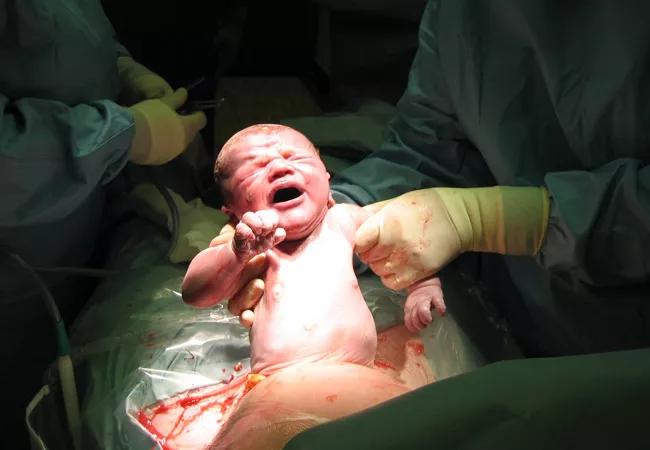
Image content: This image is available to view online.
View image online (https://assets.clevelandclinic.org/transform/5bf6fd3d-59e2-42c7-9db4-9457ba59a089/Cesarean-delivery_650x450_jpg)
Cesarean-delivery_650x450
Over 1 million cesarean deliveries (CD) were performed in the United States, accounting for 32 percent of all births in 2014. Recent estimates of postoperative infection after CD range from 3 to 20 percent, depending on institute and geographic location. These infections significantly increase health costs due to hospital readmissions, reoperations and home healthcare needs.
Advertisement
Cleveland Clinic is a non-profit academic medical center. Advertising on our site helps support our mission. We do not endorse non-Cleveland Clinic products or services. Policy
“In current obstetrical practice, providers have few strategies to counsel a woman regarding her specific risk of developing an infection in the postpartum period,” says Oluwatosin Goje, MD, MSCR, a specialist in reproductive infectious disease at Cleveland Clinic Ob/Gyn & Women’s Health Institute.
To address this issue, Dr. Goje and colleagues developed and validated a statistical model that can predict a woman’s individual probability of developing an infection after cesarean delivery. The model provides a predicted probability of an individual’s risk of postoperative infection while accounting for multiple risk factors, and is accurate in discriminating patients approximately 70 percent of the time.
“The net benefit of the model is that it identifies 35 more cases per 1,000 without increasing the number treated unnecessarily when compared with treating all patients with prophylactic antibiotics plus additional therapy (e.g., more antibiotics),” Dr. Goje says.
The study was published in The Journal of Maternal-Fetal & Neonatal Medicine.
“We collected data retrospectively of all women who underwent cesarean delivery at the Cleveland Clinic between January 2013 and December 2013,” she explains. The outcome of the model was defined as patient diagnosed with any infection within 30 days after delivery attributable to the surgical procedure. Infections included surgical site infections, urinary tract infection, endomyometritis, pneumonia, clostridium difficile infection and blood stream infection.
Advertisement
“All postpartum infections were grouped into one infectious outcome to determine a single estimate of risk for providers and patients to easily understand, and to help guide management of postpartum infection,” Dr. Goje explains.
“This individualized nomogram acknowledges the many surgical and patient risk factors that have been associated with postpartum infection over time and allows for improved provider-to-patient counseling regarding infectious outcomes.”
Using the model, providers can obtain a more specific individual risk while accounting for multiple risk factors. “If risk is elevated above a certain threshold, clinicians might consider additional therapy or closer surveillance during the postoperative period,” Dr. Goje notes. The model also supports the informed consent process by providing a better estimation of risks to the patient, which may heighten the patient’s awareness of signs and symptoms of infection in the postoperative period.
“Our nomogram provides obstetrical providers and patients with an accurate, personalized and tangible assessment of their individualized risk of developing an infection within the first 30 days after CD,” Dr. Goje explains.
She concludes: “The strength of our model is that it combines risk factors into a single prognostic probability that is easily interpretable to the patient and clinician. While many unique risk factors do contribute to each individual infection, our model provides a simple risk assessment that is helpful for patient counseling and treatment planning based upon patient, surgical and obstetrical variables. Identification of patients at risk for postoperative infection allows for implementation of multidisciplinary strategies for infection reduction and patient-specific counseling.”
Advertisement
Advertisement

Counseling and careful surgical considerations are key

Deprivation is linked to impaired glucose intolerance and racial disparities

Perioperative prophylaxis and class III obesity

Artesunate ointment is safe well and tolerated patients with vulvar intraepithelial neoplasia
Endoscopic balloon dilation during pregnancy helps optimize outcomes

Researchers examine waste and implore colleagues to take action

Mode of delivery does not affect patient satisfaction
 Search