Locations:





 Search
Quicker diagnosis holds promise for improved prognosis
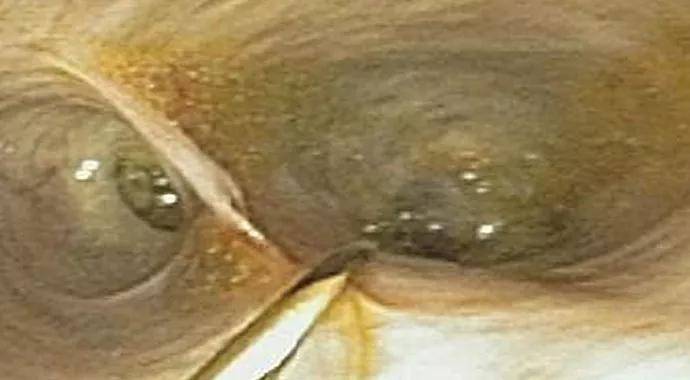
Image content: This image is available to view online.
View image online (https://assets.clevelandclinic.org/transform/938c266d-5d07-43eb-9b90-88f2d0287ac3/Parsi_biomarker-690x380_jpg)
Parsi_biomarker-690×380
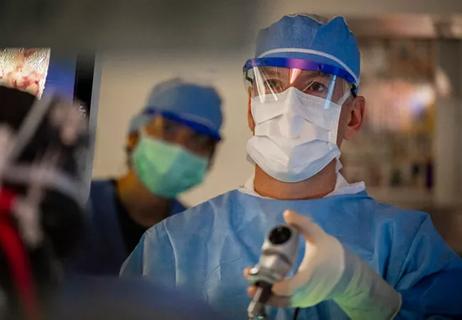
Determining benign from malignant biliary strictures can be challenging with current methods, but several Cleveland Clinic studies are shedding light on potential biomarkers and imaging techniques that are faster, more accurate and cost effective.
Advertisement
Cleveland Clinic is a non-profit academic medical center. Advertising on our site helps support our mission. We do not endorse non-Cleveland Clinic products or services. Policy
Mansour A. Parsi, MD, MPH, head of the Center for Endoscopy and Pancreatobiliary Disorders in Cleveland Clinic’s Digestive Disease Institute, says current endoscopic retrograde brush cytology methods used to look at biliary strictures provide good specificity, but sensitivity is low, leading to false negative results.
“When I get a negative result, I really don’t know if it is truly negative or false negative,” he explains. “That’s a problem. For that reason, we need better bio markers or imaging techniques to find out who has malignant disease and who does not.”
Dr. Parsi led several parallel pilot studies looking at a variety of markers in differentiating malignant and benign biliary strictures:
Advertisement
In addition to the biomarker studies, Dr. Parsi and his team are investigating various imaging techniques, including cholangioscopy with narrow-band imaging (NBI), to improve detection of malignant biliary diseases. These techniques are expected to enhance visualization of the bile ducts, improving diagnosis of patients with indeterminate biliary strictures
Dr. Parsi’s team evaluated high-definition cholangioscopy with NBI using prototype digital cholangioscopes as an adjunct to ERCP. The technique, an improvement on the currently available cholangioscopy systems, proved helpful in evaluating various biliary disorders. The results of these studies were published in the journals Gastroenterology, Clinical Gastroenterology and Hepatology,and Gastrointestinal Endoscopy.
For more information, contact Dr. Parsi at 216.445.4880 or parsim@ccf.org.
Advertisement
Advertisement

Strong patient communication can help clinicians choose the best treatment option
ctDNA should be incorporated into care to help stratify risk pre-operatively and for post-operative surveillance

The importance of raising awareness and taking steps to mitigate these occurrences
New research indicates feasibility and helps identify which patients could benefit

Treating a patient after a complicated hernia repair led to surgical complications and chronic pain
Standardized and collaborative care improves liver transplantations
Fewer incisions and more control for surgeons

Caregiver collaboration and patient education remain critical