Locations:





Large series finds excellent symptom palliation but high reflux rates
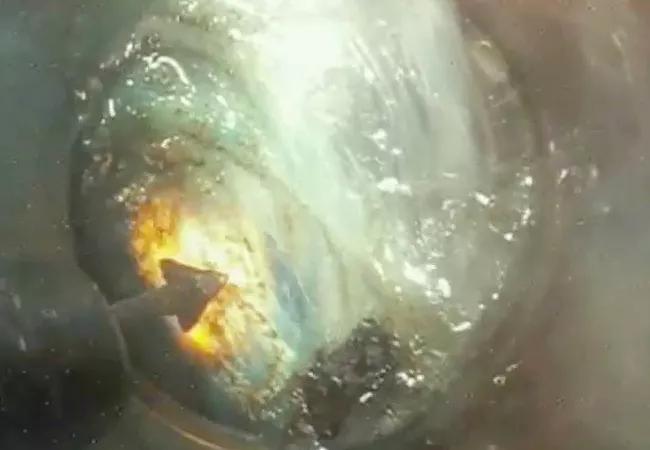
Image content: This image is available to view online.
View image online (https://assets.clevelandclinic.org/transform/a27ccb87-575a-41db-bfd6-ee6ac8516c51/16-HRT-1238-Raja-Hero-Image-650x450pxl_jpg)
Lessons Learned from POEM After Heller Myotomy for Achalasia
At experienced centers, per oral endoscopic myotomy (POEM) is a safe alternative to Heller myotomy for patients with achalasia, according to a large Cleveland Clinic case series presented May 1 at the AATS annual meeting. Yet while the study demonstrated excellent short-term symptom palliation and improvement in esophageal drainage, a high rate of abnormal acid exposure was noted.
Advertisement
Cleveland Clinic is a non-profit academic medical center. Advertising on our site helps support our mission. We do not endorse non-Cleveland Clinic products or services. Policy
“Laparoscopic Heller myotomy is the standard of care for treating achalasia, but POEM is quickly gaining ground in utilization,” says lead investigator Siva Raja, MD, PhD, a thoracic surgeon at Cleveland Clinic. “Beyond offering decreased invasiveness and shorter recovery, POEM is expected to offer potentially equivalent outcomes, but there is a paucity of definitive data to support that assumption. This report of our experience with 152 POEM procedures for palliation of patients with achalasia was intended to help shrink that data gap.”
Dr. Raja and colleagues reviewed all 152 patients who underwent POEM for achalasia at Cleveland Clinic over a recent four-year period. Achalasia diagnosis was confirmed with a combination of high-resolution manometry, timed barium esophagram (TBE) and upper endoscopy.
Patient selection during the study period was guided by an algorithm based on achalasia type, fitness for surgery and additional factors. Briefly, patients who were fit for surgery and had type II achalasia with a non-dilated esophagus were primarily offered Heller myotomy. For the remaining surgical candidates, POEM was also offered as an alternative to Heller myotomy.
Among the 152 patients (median age, 58 years), type II achalasia was the most common subtype (49 percent), followed by type I (28 percent). Thirty-three patients (22 percent) had a prior Heller myotomy.
End points of interest were the following measures of palliation at two months after the POEM procedure: Eckardt score (for subjective assessment) and integrated relaxation pressure (IRP) as well as TBE column height and width (for objective assessment).
Advertisement
POEM was successfully performed in all but three of the 152 patients (98 percent); in two of these patients the procedure had to be abandoned because of inability to establish a tunnel due to fusion of tissue planes. The median length of myotomy on the esophagus and stomach was 5 cm and 4 cm, respectively.
Changes in the primary outcome measures from before POEM to two months postoperatively were as follows:
“Our findings echo prior reports showing excellent palliation of symptoms,” notes Dr. Raja, “but in the past there’s been a lack of concordance between symptoms and esophageal emptying. The novel aspect of our study is that in addition to subjective assessment with Eckardt scoring, we demonstrated objective improvement in esophageal drainage with TBE assessment.”
There were no mortalities or major complications, and minor complications were minimal, the most common being bleeding (1.7 percent incidence) and mucosal perforation (1.3 percent).
Median operative time and length of stay were 95 minutes and 1 day, respectively. Interestingly, operative time substantially decreased over the study period, from a median of 120 minutes for the first 30 cases to a median of 75 minutes for the last 30 cases.
Patients’ median time to return to work or activities of daily living was 7 days.
Advertisement
Notably, 24-hour pH testing among two-thirds of patients in the series identified abnormal acid reflux in 49.5 percent of them.
“The obvious difference in the nature of POEM relative to Heller myotomy is the potential lack of a fundoplication,” notes Dr. Raja. “This would lead us to expect an increased rate of gastroesophageal reflux disease (GERD) with POEM, which is what we found — in fact at a rate nearly identical to rates reported by previous groups. This high rate of abnormal acid exposure, presumably attributable to the lack of a fundoplication, raises concerns about future sequelae such as esophagitis and stricture.”
For this reason and in the absence of long-term efficacy data for POEM, Dr. Raja concludes that continued study is needed to definitively confirm equivalent long-term palliation with POEM relative to laparoscopic Heller myotomy.
He adds, however, that current evidence has identified several subsets of patients who appear to benefit from POEM over Heller myotomy in terms of morbidity:
“POEM is an effective therapy for achalasia,” Dr. Raja concludes. “It has the advantage of being less invasive than current minimally invasive alternatives, which makes it especially compelling for frail patients. But until longer study is completed, minimally invasive Heller myotomy must always be offered to patients, especially those who stand to benefit from inclusion of an anti-reflux procedure.”
Advertisement
Advertisement
A sampling of outcome and volume data from our Heart & Vascular Institute
Concomitant AF ablation and LAA occlusion strongly endorsed during elective heart surgery
Large retrospective study supports its addition to BAV repair toolbox at expert centers
Young age, solid tumor, high uptake on PET and KRAS mutation signal risk, suggest need for lobectomy
Surprise findings argue for caution about testosterone use in men at risk for fracture
Residual AR related to severe preoperative AR increases risk of progression, need for reoperation

Findings support emphasis on markers of frailty related to, but not dependent on, age
Provides option for patients previously deemed anatomically unsuitable
 Search