Locations:





Preliminary results indicate that a patient education video contributes to enhanced recovery after surgery
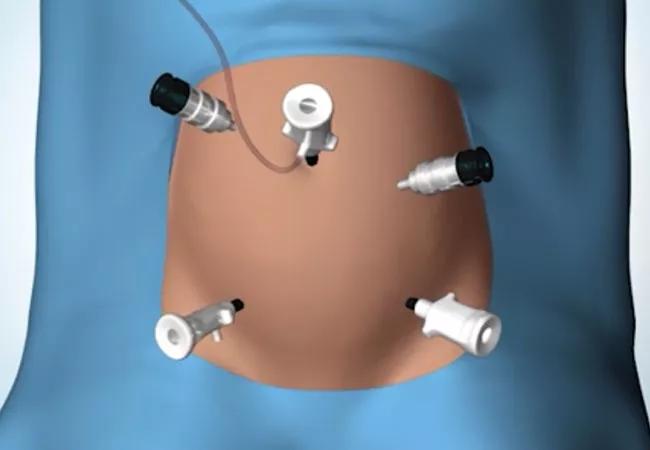
Image content: This image is available to view online.
View image online (https://assets.clevelandclinic.org/transform/534ba8d5-597f-498d-a6b8-7ecd4ab300b4/19-OBG-1297_CQD_650x450_Hero_jpg)
19-OBG-1297_CQD_650x450_Hero
With growing interest in using enhanced recovery after surgery (ERAS) protocols to help facilitate same-day discharge for gynecologic surgery, physicians from Cleveland Clinic’s Ob/Gyn & Women’s Health Institute developed a short, preoperative patient education video for minimally invasive sacrocolpopexy. The video, which is approximately 10 minutes long, will be presented at the American Urogynecologic Society and International Urogynecological Association Joint Scientific Meeting 2019.
Advertisement
Cleveland Clinic is a non-profit academic medical center. Advertising on our site helps support our mission. We do not endorse non-Cleveland Clinic products or services. Policy
“Preoperative patient preparation is essential for a successful same-day discharge,” says Lisa Hickman, MD, a fellow in Female Pelvic Medicine & Reconstructive Surgery. “It is also associated with increased patient satisfaction.”
Dr. Hickman’s research focuses on the use of ERAS in the urogynecology setting for patients undergoing sacrocolpopexy. The ERAS method uses published evidence for pre- and postoperative care and challenges the traditional ideas of prolonged fasting, mobility limitations, mechanical bowel preparation, routine use of drains and the slow return to eating.
Previous studies have supported the safety and feasibility of same-day discharge following minimally invasive hysterectomy and robotic-assisted sacrocolpopexy. “We were charged with implementing ERAS protocols in our pelvic floor patients, and felt that educating our patients on what to expect and how to care for themselves might be helpful,” states Marie Fidela Paraiso, MD, Head of Female Pelvic Medicine & Reconstructive Surgery and President of the American Association of Gynecologic Laparoscopists.
The team developed a patient education video, which includes animated details of the surgical procedure and sets patient expectations about the day of surgery. The video describes voiding trials and discharge procedures, as well as the care and rest that will be required in the first several postoperative days at home. Additionally, the education module includes postoperative restrictions (e.g., driving, intercourse and heavy lifting) and when to call a doctor. For purposes of this study, patients view the preoperative education video in the clinic, and may watch it again from home on YouTube.
Advertisement
Video content: This video is available to watch online.
View video online (https://www.youtube.com/embed/2NmUODS_QvI)
“The video is part of our ERAS protocols and has been well received by patients. We are in the process of collecting satisfaction data,” Dr. Paraiso says. “Anecdotally, we have noticed a positive difference in same-day discharge since implementing the ERAS protocols. As a group, we’ve decided to implement ERAS for all our pelvic floor surgery patients if they are amenable.”
Additional ERAS protocols adopted by minimally invasive surgeons include a perioperative order set, which ties nicely to the department’s narcotic medication initiative. “We give very few narcotics to our patients because we find that our patients undergoing surgery for pelvic floor disorders take very few doses. This has been confirmed by a recent randomized clinical trial in our section,” Dr. Hickman says.
“Strategies to decrease opioid abuse and enhance recovery after surgery are key initiatives in all surgical fields, especially urogynecology, since we have a growing aging population. These surgeries are elective with the end goals of improving bulge and pressure symptoms for patients with pelvic organ prolapse as well as maintaining or improving urinary, bowel and sexual function,” Dr. Paraiso notes.
Advertisement
Advertisement

Counseling and careful surgical considerations are key

Deprivation is linked to impaired glucose intolerance and racial disparities

Perioperative prophylaxis and class III obesity

Artesunate ointment is safe well and tolerated patients with vulvar intraepithelial neoplasia
Endoscopic balloon dilation during pregnancy helps optimize outcomes

Researchers examine waste and implore colleagues to take action

Mode of delivery does not affect patient satisfaction
 Search