Locations:





Fostering a culture of continuing improvement is central to our HVTI Advisory Services offerings

Image content: This image is available to view online.
View image online (https://assets.clevelandclinic.org/transform/628d9961-e198-49d0-bb10-7be57e3319ed/21-HVI-2225279-18Years_jpg)
21-HVI-2225279-18Years
Achieving clinical excellence is of limited value without parallel attention to sustaining clinical excellence. That’s a major emphasis of the counsel and guidance that the Advisory Services team of Cleveland Clinic’s Heart, Vascular & Thoracic Institute (HVTI) has been providing to external hospitals and healthcare organizations since 2003.
Advertisement
Cleveland Clinic is a non-profit academic medical center. Advertising on our site helps support our mission. We do not endorse non-Cleveland Clinic products or services. Policy
“Our approach is centered around how an organization can sustain excellence through fostering a culture of change,” says Suma Thomas, MD, MBA, Vice Chair of HVTI Strategic Operations, who directs the Advisory Services team. “We have learned that is one of the most essential ingredients for organizational success over our 18 years of providing these services.”
Notably, those 18 years of experience represent two-thirds of the 27 consecutive years that Cleveland Clinic’s HVTI has been recognized as the nation’s No. 1 cardiology and heart surgery program by U.S. News & World Report. “Over the years, Cleveland Clinic has recognized that helping other organizations achieve clinical excellence in cardiovascular care through the sharing of processes and best practices is an ideal way to foster our excellence by continually working to address new challenges,” notes Dr. Thomas.
The HVTI Advisory Services team is at the heart of those efforts. For nearly two decades, this multidisciplinary group has helped external healthcare organizations — hospitals/health systems and outpatient practices with employed, independent or mixed provider models — improve their clinical and operational performance and enhance care value.
The work of HVTI Advisory Services is carried out by a 20-member core team supported by cardiologists and surgeons across Cleveland Clinic’s HVTI. The core team consists of HVTI physicians, nurses, quality analysts, continuous improvement specialists, clinical consultants, project managers and administrative directors. All have many years of experience in diverse areas of cardiovascular care and operations at Cleveland Clinic.
Advertisement
“Our team of consultants leverages their deep knowledge and experience to provide affiliate hospitals with well-rounded recommendations in a variety of areas,” notes Edward Soltesz, MD, MPH, Director of Cardiac Surgery Affiliate and Alliance Programs.
Overall, HVTI Advisory Services are designed to help organizations’ cardiovascular programs achieve high-quality outcomes, optimize efficiency and resource allocation, develop and enhance their existing programs, and expand their services if desired. “We offer advice and education on patient care, strategic planning and clinical innovation,” says Dr. Thomas. “The goal is to help organizations realize a better return on cardiovascular investments for their patients, their institution and their community.”
For external programs, this collaboration generally begins with a comprehensive cardiovascular service line assessment by the HVTI Advisory Services team. Team members do on-site visits of the external program to conduct interviews, assess facilities, and observe procedures and surgeries. They also review the program’s cardiology and cardiothoracic surgery registry data as well as operational processes.
“It’s a deep dive into all aspects of the service line — covering cardiac surgery and various cardiology subspecialties such as electrophysiology, imaging, interventional and more,” explains Dr. Thomas. Areas assessed range from quality infrastructure — such as clinical outcomes and registry practices — to clinical care delivery issues like staffing and patient experience. Also assessed are cost containment methods — supply chain management and resource utilization practices — as well as programmatic strategy matters such as strategic planning, regionalization, and marketing and branding.
Advertisement
The assessment process typically takes four to six months and culminates in two main deliverables: a pair of webinars (one administrative and one clinical) for discussing findings and recommendations, and a final report identifying program strengths and prioritized opportunities for improvement. The latter includes specific recommendations for direct solutions and how to bring them about. “It’s an extensive clinical, quality and operational review of all areas of the service line,” says Dr. Thomas.
Service line assessments are the most popular Advisory Services offering in recent years, with at least 65 such assessments completed to date. They provide the recipient organization with a roadmap for ongoing improvement and also offer options to continue working with Cleveland Clinic’s HVTI. Some hospitals choose to engage the HVTI Advisory Services team to work with them to implement the recommendations, typically over a period of six months to a year.
Some organizations choose to build on their assessment by entering into an affiliation with Cleveland Clinic’s HVTI. An affiliation is a long-term (five to seven years) co-branded relationship that an organization can undertake with Cleveland Clinic if it meets certain quality standards and has a demonstrated culture of change and improvement. The Advisory Services team works with affiliates to implement specific solutions for clinical, quality or operational challenges identified in their initial assessment (see sidebar below for examples). Additionally, affiliates enjoy access to Cleveland Clinic’s protocols and policies, second opinions, Grand Rounds and other CME events, data and registry boot camps, executive and leadership education, on-site observations and more.
Advertisement
As of mid-2021, HVTI had 10 hospitals active in affiliations across the U.S. These include five organizations that renewed their prior long-term affiliations over the past year. “These affiliation renewals demonstrate that our Advisory Services team has effectively modified our offerings over time to ensure that affiliation with Cleveland Clinic offers enduring value beyond the initial five- to seven-year term,” says Dr. Thomas. “That is gratifying because it’s a testament to a successful culture of change.”
For more information on HVTI Advisory Services, email Amanda Lesesky at leseska@ccf.org.
| Sampling of Affiliated Programs’ Success Stories |
|---|
| Mastering data management: St. Luke’s Hospital in suburban St. Louis worked with Cleveland Clinic a few years ago to fine-tune its data management practices for its cardiovascular registries. Soon after adopting some recommended tools and implementing process changes, St. Luke’s achieved a three-star overall quality rating for coronary artery bypass graft (CABG) surgery from the Society of Thoracic Surgeons — a remarkable feat, given that St. Luke’s performed less than 200 CABG operations annually. St. Luke’s believes the registry management revisions contributed to the stellar rating. More at ccf.org/affiliateregistry. |
| Second-opinion case review: An affiliated program sought a second opinion from Cleveland Clinic cardiac surgeons on management of a patient with a rare cardiac tumor in the right ventricle immediately below the tricuspid valve. Despite this unsettling tumor location, joint review of imaging studies and surgical strategy by the affiliate and Cleveland Clinic surgeons resulted in a successful surgery and patient recovery. More at ccf.org/hvti-secondopinion. |
| Making the most of M&M conferences: When leaders at Deborah Heart and Lung Center in southern New Jersey learned how Cleveland Clinic had evolved its cardiovascular morbidity and mortality (M&M) conferences in recent years, they engaged Cleveland Clinic HVTI physicians to share and explain the changes. After virtual meetings and sharing of HVTI’s M&M guidelines, forms and dashboards, Deborah Heart and Lung Center restructured its own M&M conferences to promote use of objective metrics and a focus on nonpunitive, constructive discussion around quality improvement. Staff engagement in M&M conferences has since soared. More at ccf.org/hvti-m&m. |
| Continuous quality improvement: A recent HVTI Advisory Services review of cardiovascular service line assessments at more than 20 U.S. hospitals found widespread opportunities for efficiency improvement and cost reductions in three major areas: turnaround times in catheterization labs, operating room (OR) utilization, and scheduling of OR nurse start times to better align with OR case times. The analysis is detailed at ccf.org/hvti-affiliate-ci, and case studies of affiliate improvements in these realms are at ccf.org/cathlabefficiencies and ccf.org/eplabefficiencies. |
| Sampling of Affiliated Programs’ Success Stories |
| Mastering data management: St. Luke’s Hospital in suburban St. Louis worked with Cleveland Clinic a few years ago to fine-tune its data management practices for its cardiovascular registries. Soon after adopting some recommended tools and implementing process changes, St. Luke’s achieved a three-star overall quality rating for coronary artery bypass graft (CABG) surgery from the Society of Thoracic Surgeons — a remarkable feat, given that St. Luke’s performed less than 200 CABG operations annually. St. Luke’s believes the registry management revisions contributed to the stellar rating. More at ccf.org/affiliateregistry. |
| Second-opinion case review: An affiliated program sought a second opinion from Cleveland Clinic cardiac surgeons on management of a patient with a rare cardiac tumor in the right ventricle immediately below the tricuspid valve. Despite this unsettling tumor location, joint review of imaging studies and surgical strategy by the affiliate and Cleveland Clinic surgeons resulted in a successful surgery and patient recovery. More at ccf.org/hvti-secondopinion. |
| Making the most of M&M conferences: When leaders at Deborah Heart and Lung Center in southern New Jersey learned how Cleveland Clinic had evolved its cardiovascular morbidity and mortality (M&M) conferences in recent years, they engaged Cleveland Clinic HVTI physicians to share and explain the changes. After virtual meetings and sharing of HVTI’s M&M guidelines, forms and dashboards, Deborah Heart and Lung Center restructured its own M&M conferences to promote use of objective metrics and a focus on nonpunitive, constructive discussion around quality improvement. Staff engagement in M&M conferences has since soared. More at ccf.org/hvti-m&m. |
| Continuous quality improvement: A recent HVTI Advisory Services review of cardiovascular service line assessments at more than 20 U.S. hospitals found widespread opportunities for efficiency improvement and cost reductions in three major areas: turnaround times in catheterization labs, operating room (OR) utilization, and scheduling of OR nurse start times to better align with OR case times. The analysis is detailed at ccf.org/hvti-affiliate-ci, and case studies of affiliate improvements in these realms are at ccf.org/cathlabefficiencies and ccf.org/eplabefficiencies. |
Advertisement
Advertisement
A sampling of outcome and volume data from our Heart & Vascular Institute
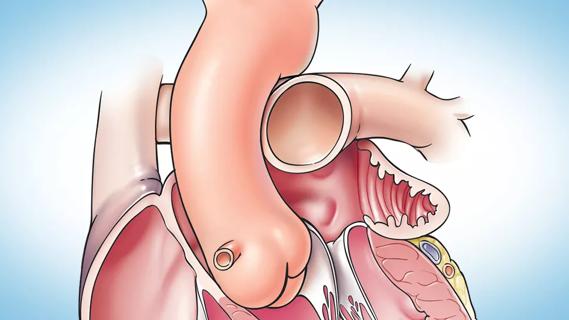
Concomitant AF ablation and LAA occlusion strongly endorsed during elective heart surgery
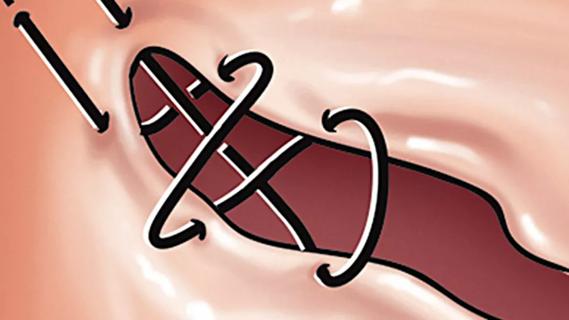
Large retrospective study supports its addition to BAV repair toolbox at expert centers
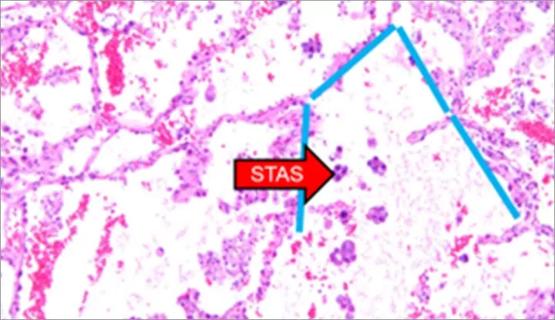
Young age, solid tumor, high uptake on PET and KRAS mutation signal risk, suggest need for lobectomy
Surprise findings argue for caution about testosterone use in men at risk for fracture
Residual AR related to severe preoperative AR increases risk of progression, need for reoperation

Findings support emphasis on markers of frailty related to, but not dependent on, age
Provides option for patients previously deemed anatomically unsuitable
 Search