Locations:





How to talk to patients about the importance of routine dental care during pregnancy
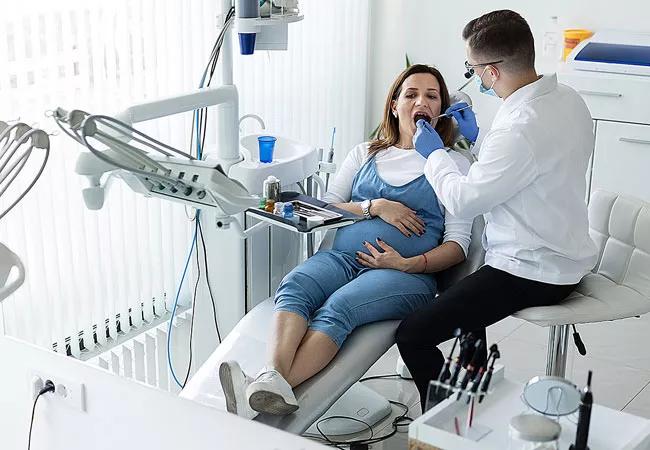
Image content: This image is available to view online.
View image online (https://assets.clevelandclinic.org/transform/6c27d019-fe2b-410a-9b60-53b548d4535e/20-WHI-2005355_CQD_650x450_1254366977_jpg)
Pregnant woman sees dentist for routine exam
Pregnancy is a time for many healthcare visits. It can be tempting for patients to skip dental check-ups during this time, but it’s an appointment that shouldn’t be put off.
Advertisement
Cleveland Clinic is a non-profit academic medical center. Advertising on our site helps support our mission. We do not endorse non-Cleveland Clinic products or services. Policy
Why? “Pregnancy puts patients at risk for dental problems, so it’s important to continue getting oral care,” says Cleveland Clinic Ob/Gyn Julian Peskin, MD.
In this Q&A, Dr. Peskin shares tips for talking with your patients about pregnancy and oral health.
Q. How does pregnancy increase a patient’s risk for dental problems?
A. The increased hormone load in pregnancy can cause swollen gums, which can trap food and result in gum disease or infection. Morning sickness is another hormone-driven concern. The acid in vomit can eat away at tooth enamel. Morning sickness can also make patients less likely to brush their teeth, because the gag reflex and nausea are so strong. Patients should be encouraged to maintain proper dental hygiene throughout pregnancy.
Q. What should an oral care regimen look like during pregnancy?
A. The keys to good oral health are the same whether or not patients are pregnant: they should b\rush twice daily with fluoridated toothpaste and continue to floss. They may also use a fluoridated mouthwash that doesn’t contain alcohol.
Q. Should patients seek dental care during pregnancy?
A. The benefits of seeing a dentist far outweigh the risks. If a patient needs:
Advertisement
Q. Are there risks to the pregnancy if a patient doesn’t see the dentist?
A. Severe periodontal disease can result in potential complications to pregnancy. Many studies link periodontal disease to:
Q. Is it safe to have dental work done while pregnant?
A. Some procedures can’t wait, like treatment for an abscess. It’s perfectly fine to have gum surgery or other major dental work performed during pregnancy. Patients should alert the dentist so they can choose an antibiotic that is safe during pregnancy.
Advertisement
Advertisement

Counseling and careful surgical considerations are key

Deprivation is linked to impaired glucose intolerance and racial disparities

Perioperative prophylaxis and class III obesity

Artesunate ointment is safe well and tolerated patients with vulvar intraepithelial neoplasia
Endoscopic balloon dilation during pregnancy helps optimize outcomes
Researchers examine waste and implore colleagues to take action

Mode of delivery does not affect patient satisfaction
 Search