Locations:





How caring can often be the best medicine
Advertisement
Cleveland Clinic is a non-profit academic medical center. Advertising on our site helps support our mission. We do not endorse non-Cleveland Clinic products or services. Policy
My 27-year-old patient was on a ventilator in the ICU, and I really didn’t expect her to survive. She had right-sided endocarditis — caused by years of drug abuse — septic shock, multiple pulmonary abscesses from septic emboli, and large vegetations on her heart valves. Everyone was convinced she would die.
So often we meet patients like this and are perhaps tempted to dismiss them because of an apparent personal failure like drug abuse. We don’t really understand what they’re going through. We see their physical suffering, but it’s actually only a small fraction of what they endure.
For this young woman, the suffering began at age 16. A back injury and subsequent surgery had left her with chronic pain and sciatica. Using pain medication turned into abusing pain medication. Her drug use resulted in a prison term — and then a second prison term when she relapsed.
After having her second child, in prison, she became desperate to be a better person and mother. She took advantage of every rehabilitation program the prison offered. Upon her release, she immediately registered for college and began rebuilding a stable home for her small family. When her craving for pain medication recurred, she sought help from a doctor and stayed sober by taking Suboxone®.
But three years later, in spring 2013, she ran into an old friend who introduced her to heroin. She “fell in love” with the drug, she said, and went from snorting to shooting within a few weeks. After three months of daily use, she began to feel sick, like she had the flu. It was hard to get out of bed. She was so tired and weak that she didn’t even desire heroin anymore.
Advertisement
Her parents knew something was wrong. They took her to a local emergency room, where she poured out her concerns about the flu-like symptoms and intense chest pain — so bad that it felt as if she couldn’t breathe at times. She admitted to using heroin. (There was no hiding the track marks on her arm.) But she hadn’t used it in weeks.
The ER personnel dismissed her symptoms as withdrawal. They refused to perform a chest X-ray or any other tests. They gave her Tylenol®, told her to stay off drugs and sent her home.
Less than a week later, her mother found her unresponsive. That’s when she was admitted to the ICU at Cleveland Clinic, where I met her. She couldn’t speak, but I knew she could hear me. I told her how serious her condition was and that she was lucky to be alive. I also told her I would do everything I could to help her, but she had to stay off drugs.
For three months, I visited her in ICU, where she received antibiotics to address her pulmonary abscesses and valve infections. We’d talk about her drug use and history with heroin and treatment options. She said it was the first time she felt that someone actually cared about her. It gave her hope, she said.
After many months in rehab, learning to walk again and regaining strength, she met with me to discuss her pending heart surgery. I reiterated how dangerous it would be for her to use illegal drugs after the surgery — that it would be tantamount to committing suicide. I told her if she damaged her heart again, I would not perform another surgery on her. She understood the gravity of the situation, but also sensed my intense concern for her.
Advertisement
In February 2014, I replaced her pulmonary valve and repaired her tricuspid valve. She did very well postoperatively and stayed well for six months. Then one day she called my office. The pain medication from her surgery had triggered a heroin relapse. She was desperate for help but couldn’t find a treatment facility to take her due to her heart surgery, among other issues.
Again, I talked to her frankly. My assistant Marianne also talked with her at length multiple times when she called in distress about difficulties finding a rehab center that would accept her due to insurance issues and her heart surgery. Marianne helped her explore treatment options and connected her with a rehab center that accepted her and helped put her back on the road to sobriety.
As of this writing, she has been clean for six months. She now has a sponsor, is attending Alcoholics Anonymous meetings and is back in college, studying criminal justice. She wants to help others like herself, she says.
My patient’s drug addiction will be a lifelong battle — but “so worth living to fight it,” she tells me. She knows now that because her life was worth saving, it is also worth living well.
As cardiovascular specialists, our medical and surgical accomplishments can be great, but sometimes they pale next to what we can help our patients accomplish outside the OR and the exam room. We are wise to remember that as caregivers, the most important thing we can do is simply care.
Dr. Pettersson is Vice Chairman of the Department of Thoracic and Cardiovascular Surgery and Section Head of Congenital Heart Surgery at Cleveland Clinic.
Advertisement
Advertisement
A sampling of outcome and volume data from our Heart & Vascular Institute
Concomitant AF ablation and LAA occlusion strongly endorsed during elective heart surgery
Large retrospective study supports its addition to BAV repair toolbox at expert centers
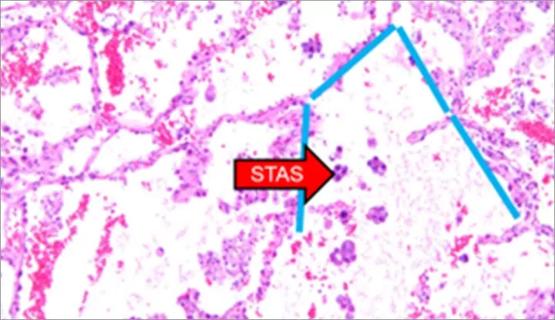
Young age, solid tumor, high uptake on PET and KRAS mutation signal risk, suggest need for lobectomy
Surprise findings argue for caution about testosterone use in men at risk for fracture
Residual AR related to severe preoperative AR increases risk of progression, need for reoperation
Findings support emphasis on markers of frailty related to, but not dependent on, age
Provides option for patients previously deemed anatomically unsuitable
 Search