Locations:





Research examines what’s taught in school and used in practice
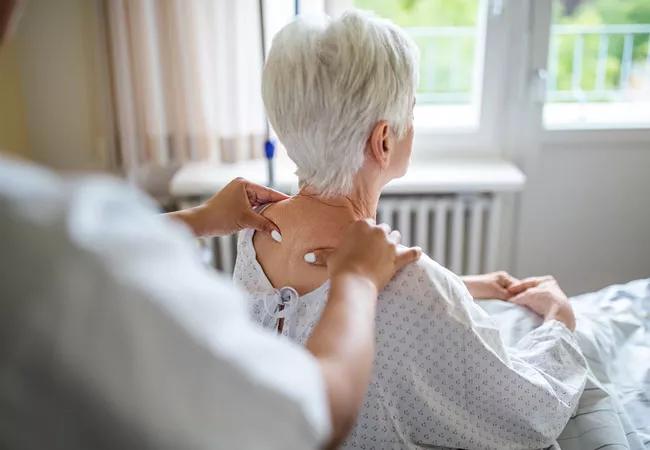
Image content: This image is available to view online.
View image online (https://assets.clevelandclinic.org/transform/da4c27e1-bf0e-4c8b-8a8e-5293d67ebadb/20-NUR-1902771-researchAltTherapies-CQD-650x450-3_jpg)
20-NUR-1902771-researchAltTherapies-CQD-650×450 (3)
In a 2012 survey by the National Center for Complementary and Integrative Health, more than 30% of adults indicated they used healthcare approaches that were not typically part of conventional medical care or that had origins outside of Western practice. These included therapies ranging from acupuncture and massage to music listening and meditation.
Advertisement
Cleveland Clinic is a non-profit academic medical center. Advertising on our site helps support our mission. We do not endorse non-Cleveland Clinic products or services. Policy
In a recent research project, Sandra L. Siedlecki, PhD, RN, APRN-CNS, FAAN, set out to study if complementary and alternative therapies, which continue to gain in popularity, are utilized in nursing practice. “I wanted to look at what complementary and alternative therapies clinical nurses are using and what academic nurses are teaching clinical nurses to use,” says Siedlecki, senior nurse scientist in Cleveland Clinic’s Office of Nursing Research and Innovation. “Essentially, we set out to see what nurses do, what academic nurses know and, when you compare the two, does one influence the other.”
The study examined 28 therapies commonly used around the world and recognized by the National Institutes of Health. “Complementary therapies are therapies used in addition to traditional medicine, and alternative therapies are therapies used in place of traditional medicine,” says Siedlecki.
Siedlecki sent a survey to 1,000 clinical and academic nurses nationwide asking simple questions about each of the 28 complementary and alternative therapies, including the following:
More than 450 nurses completed the survey, with 60% of the total responses from academic nurses and 40% from clinical nurses.
One of the biggest findings of the survey was that personal use of complementary and alternative therapies was high, while use in clinical practice and content taught in nursing school was low. “The majority of nurses use at least one complementary therapy personally, but we aren’t using it with our patients,” says Siedlecki. Therapies cited frequently for personal use included music listening, massage and aromatherapy.
Advertisement
Results between academic and clinical nurses did not differ significantly. “Although academic nurses used complementary and alternative therapies more than clinical nurses and perceived that they were a little more knowledgeable, both groups believed that lack of knowledge was the reason they either did not use complementary and alternative therapies in practice or do not teach them in nursing school,” says Siedlecki.
Based on findings of the survey, complementary and alternative therapies being used most often in clinical practice were those being taught in nursing school, including hot and cold application, exercise and diet.
“There are a lot of complementary and alternative therapies available for use, such as music listening, that have a lot of evidence to support use in regards to specific outcomes – for example, sleep, pain, depression and anxiety – but they are rarely used in clinical practice,” says Siedlecki. “There is a lot of room for us to improve.”
In 2005, results of a study convened by the Institute of Medicine were published in the report Complementary and Alternative Medicine in the United States. One of the recommendations was that curricula of conventional health professional schools should include complementary and alternative medicine.
“There are many facilitators and barriers to the use of complementary and alternative therapies, but it really comes down to a knowledge problem,” says Siedlecki. “There needs to be more emphasis placed on providing faculty with a good knowledge base on the use of complementary and alternative therapies. If faculty are comfortable teaching complementary and alternative therapies to students, including evidence that supports its use, more nurses will be comfortable using it in clinical practice.”
Advertisement
Advertisement
Nurses play key role in comprehensive lifetime treatment program
Customized bots improve speed, efficiency by streamlining daily clinical, clerical tasks
Nurses play pivotal role in patients’ ability to recover in the comfort of their own homes
New protocol reduces costs, increases patient and caregiver satisfaction
Advocating for patient safety is imperative in fast-paced surgical settings
M-Power program improves the perinatal experience for people who have survived abuse
Advice for those pursuing a WOC nursing career

Veteran nurse shares his experience as a caregiver and community volunteer
 Search