Locations:





 Search
Project is paired with OB resident education initiative
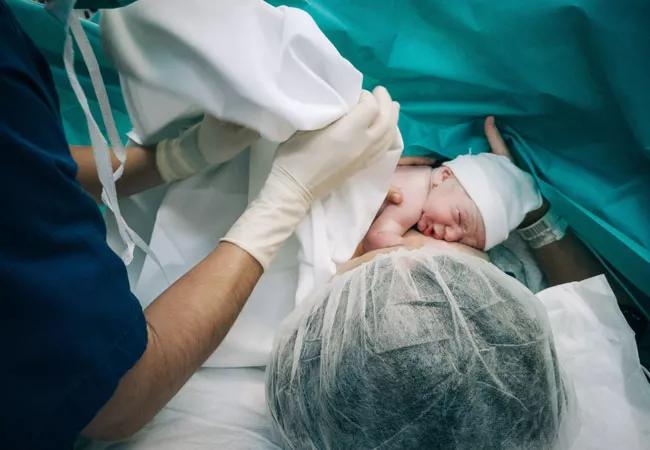
Image content: This image is available to view online.
View image online (https://assets.clevelandclinic.org/transform/36527f55-02c4-4fe9-913c-18321c9fe160/21-NUR-2062248-Research-OperativeVaginalDeliveries-CQD-650x450-1_jpg)
21-NUR-2062248-Research-OperativeVaginalDeliveries-CQD-650×450
In 2018, nearly 32% of all births in the United States were by cesarean delivery, according to the Centers for Disease Control and Prevention. The same year, the World Health Organization released its first guideline on non-clinical interventions to reduce unnecessary cesarean deliveries, noting the steadily increasing rates of C-sections worldwide.
Advertisement
Cleveland Clinic is a non-profit academic medical center. Advertising on our site helps support our mission. We do not endorse non-Cleveland Clinic products or services. Policy
Having spent eight years in obstetrics nursing, Constance Cottrell, PhD, MHA, RN, understands first-hand the motivation to decrease the number of cesarean sections — major surgery with potential short-term and long-term maternal risks, neonatal risks, and higher associated costs. Cottrell, who is now a nurse scientist in Cleveland Clinic’s Office of Nursing Research and Innovation, conducted an action research study to assess the incidence of maternal/neonatal complications and the rates of operative vaginal deliveries (OVD) and cesarean deliveries before and after an initiative to increase resident hands-on experience performing OVD.
The project’s impetus began with physicians completing their residencies in obstetrics. “They wanted more experience performing forceps deliveries,” says Cottrell. “I helped them set up a plan on how to gain more experience, then we came up with a research design to ascertain if operative vaginal deliveries are associated with fewer cesarean sections.”
Researchers included attending physicians and obstetric residents who collaborated during cycles of planning, action, observation and reflection to improve education and clinical practices related to operative vaginal deliveries. “They explored using forceps for women with prolonged second stage of labor,” says Cottrell. “After the delivery was complete – whether vaginal or cesarean section, with forceps or not – the team discussed the outcome, what went well and did not go well, and potential future modifications.” Using tenets of the action research model, they then incorporated agreed upon suggestions into their practice.
Advertisement
Cottrell conducted a medical chart review of a cohort of laboring women at a tertiary obstetric care center who were separated into two groups. The first were women admitted before the resident educational initiative and the second were women admitted post-initiative. There were 6,052 total deliveries during the two study periods.
Detailed results of the study have been accepted for publication in the Journal of Obstetrics and Gynecology Canada. One overarching finding was that increased operative vaginal deliveries did not contribute to a reduction in cesarean deliveries. “However, there was a statistically significant increase in the number of forceps deliveries and a decrease in vacuum deliveries post-initiative without any increase in maternal or neonatal complications,” says Cottrell.
A secondary goal of the research study was to consider whether future obstetrician training to perform OVD should be a resident education priority. “There are so many facilities in countries around the world that can’t afford simulation training, and many times they don’t have access to a physician who knows how to do forceps deliveries,” says Cottrell. “Our research added to the literature and supports that hands-on experience under direct supervision of appropriately experienced obstetricians is a viable alternative to simulation training.”
Advertisement
Advertisement
Nurses play key role in comprehensive lifetime treatment program
Customized bots improve speed, efficiency by streamlining daily clinical, clerical tasks

Nurses play pivotal role in patients’ ability to recover in the comfort of their own homes
New protocol reduces costs, increases patient and caregiver satisfaction

Advocating for patient safety is imperative in fast-paced surgical settings

M-Power program improves the perinatal experience for people who have survived abuse

Advice for those pursuing a WOC nursing career

Veteran nurse shares his experience as a caregiver and community volunteer